
Snapshots presents Jason Strother on 'Invisible Impact; Disability on Climate Change's Frontline'
The connections between climate change and disability are largely unexplored in research and under-reported in news media. I want to draw attention to this aspect of our global environmental crisis and point to some solutions that could in turn save lives.
Could you tell us more about your new documentary Invisible Impact; Disability on Climate Change’s Frontline?
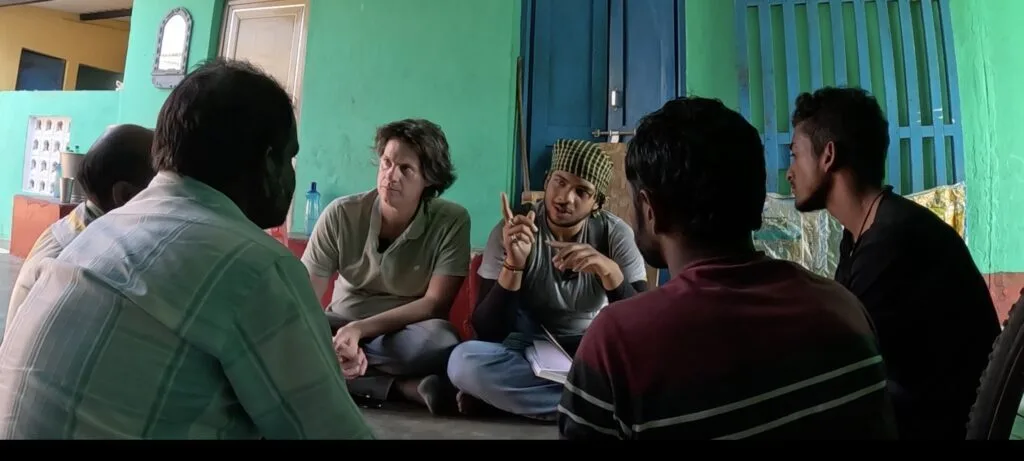
My short film looks at the ways climate change-driven disasters affect people with a disability in coastal South Asia. During reporting trips in 2022-23, I collaborated with filmmakers in Bangladesh, eastern India, Sri Lanka and the Maldives on this project and spoke with dozens of disabled people, advocates, officials and other stakeholders about these concerns. This is a part of the world where global warming contributes to intense storms, floods, sea level rise and other dangerous conditions. It's during these emergencies that individuals with various kinds of physical, sensory or developmental impairments face the greatest risks to their safety. But, their different needs are largely not part of disaster management measures.
This population already faces physical and social barriers that limit their inclusion in society and they are more likely to live in poverty. This exclusion makes them unseen by non-disabled people, including policymakers who create emergency protocols. For example, when first responders evacuate a village ahead of a tropical cyclone, are they issuing warnings that can be heard or seen by everyone? Can a parent with disabled children bring them to a shelter quickly enough? Or how long must someone wait to have their assistive devices replaced after a disaster? What I found is that not many people who wield power consider these issues.
As a multimedia journalist, can you share any more about why you wanted to create Invisible Impact?
The origin of this project goes back about a decade ago when I was covering the aftermath of a super typhoon in the Philippines. I was following a team of cadaver dogs through a mangrove swamp in Tacloban when I started to ponder how I, as someone with a low vision disability, would've survived a storm with 200 mph winds or if a tidal surge ripped through my town. That of course would be a precarious situation for anyone, but I'm not sure if I would be able to avoid flying debris, stay clear of downed power lines or reach a safe place as easily or quickly as someone without limited sight. It got me thinking that if climate change makes these kinds of emergencies more common, then the threats posed to disabled communities around the world will also increase.
A few years later I went back to the Philippines and filed what I'm pretty sure was the first on the ground report about these concerns in American Media. I subsequently received a grant from the National Geographic Society to continue reporting on these concerns in Bangladesh. And thanks to my Fulbright award, I was able to expand this project to include India, Sri Lanka and the Maldives. The connections between climate change and disability are largely unexplored in research and under-reported in news media. I want to draw attention to this aspect of our global environmental crisis and point to some solutions that could in turn save lives.
Invisible Impact came out of your field research as a Fulbrighter in India, Sri Lanka and the Maldives in 2023. How did your experiences as a Fulbrighter influence this documentary?
When I began my Fulbright research project about a year ago in the eastern Indian state of Odisha, I wasn't sure about what kind of output I'd create during my seven-month sojourn in South Asia. After speaking with stakeholders in the area and brainstorming with them on the best ways that I could tell these stories, it became clear that producing a short documentary film could have the most impact and reach the widest audience. I wanted to focus on communities that face the greatest risk of climate change-influenced disasters and that meant along the coasts of these three countries. Staying with that theme also allowed me to use interviews I conducted earlier in Bangladesh.
All along the way I had help from the Fulbright community, including alumni Asha Hans in Bhubaneswar and Waruni Anuruddhka Chandrasena in Colombo. Through this network I had the opportunity to meet so many brilliant people and was shown so many places that gave my film more depth. The stories I heard from people with a disability throughout the region who’ve personally experienced weather-related disasters completely informed and shaped this production. Without these connections made possible through my experience as a Fulbrighter, Invisible Impact would have never come to fruition.
About Jason
Jason Strother is a multimedia journalist and founder of Lens15 Media, a disability focussed news platform and consultancy. He’s also an adjunct professor at New Jersey’s Montclair State University, where he’s created several courses including one on disability representation in media. Jason is the recipient of a Fulbright South and Central Asia Regional Research Award as well as a National Geographic Explorer grant. In 2022, he was nominated to the advisory board of the National Center on Disability and Journalism at Arizona State University.
Follow Jason's work at Lens15 and connect with him on Linkedin
Invisible Impact; Disability on Climate Change’s Frontline: