

Snapshots presents Helene Tello on 'The Toxic Museum - Berlin and Beyond'
"as a Fulbrighter, I see myself as a qualified ambassador to find solutions for the challenges associated with contaminated non-European cultural assets in the US and to implement them in a future project in Germany."
Could you tell us more about your new book The Toxic Museum - Berlin and Beyond?
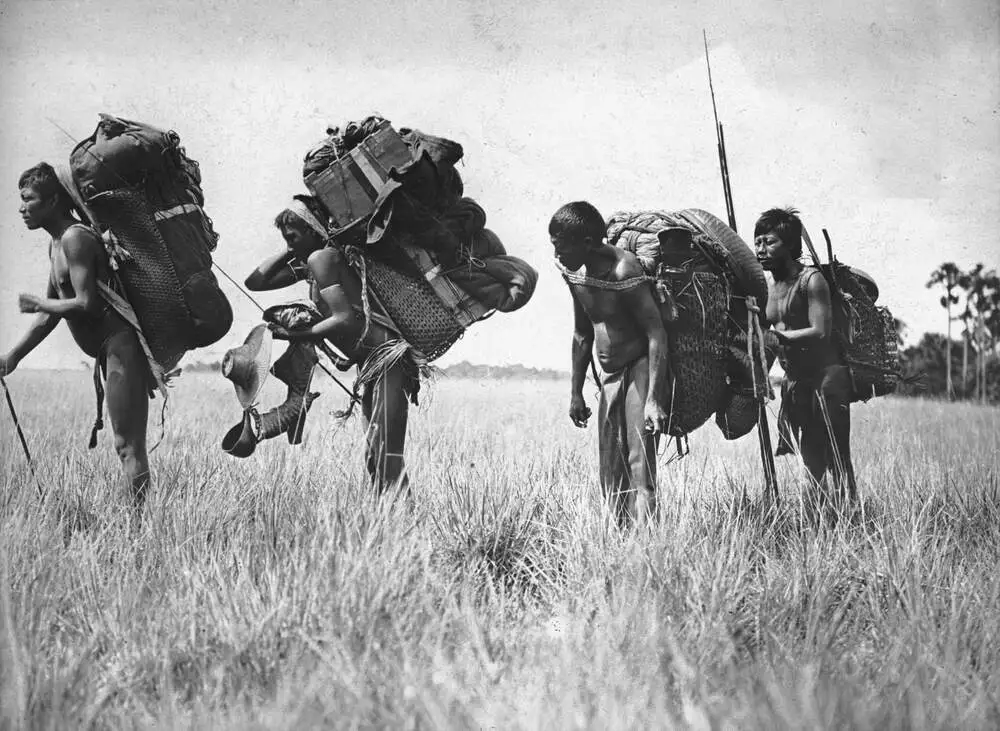
The Toxic Museum – Berlin and Beyond presents a case study of the use of pesticides in museum collections during the heydays of ethnological museums, within the context of the socio-political situation at the end of the 19th and early 20th centuries. It reconstructs the research of substances against harmful insects in museums within the history of the formation of nation states, colonialism, a strengthening chemical industry, World War I and the resulting and broad-based hygiene movement. The knowledge available in the studied museums is related to society, industry, and trade. Based on this, early forms of networking and knowledge transfer among museum experts emerged nationally and internationally. In this way, specific chemical means gained a certain "career", in the literal sense of the word, through trial and error. The Ethnologisches Museum of the Staatliche Museen in Berlin, Germany (EM) proves to be the best possible case study, as Berlin was the largest center for science and art during the period under review in Europe.
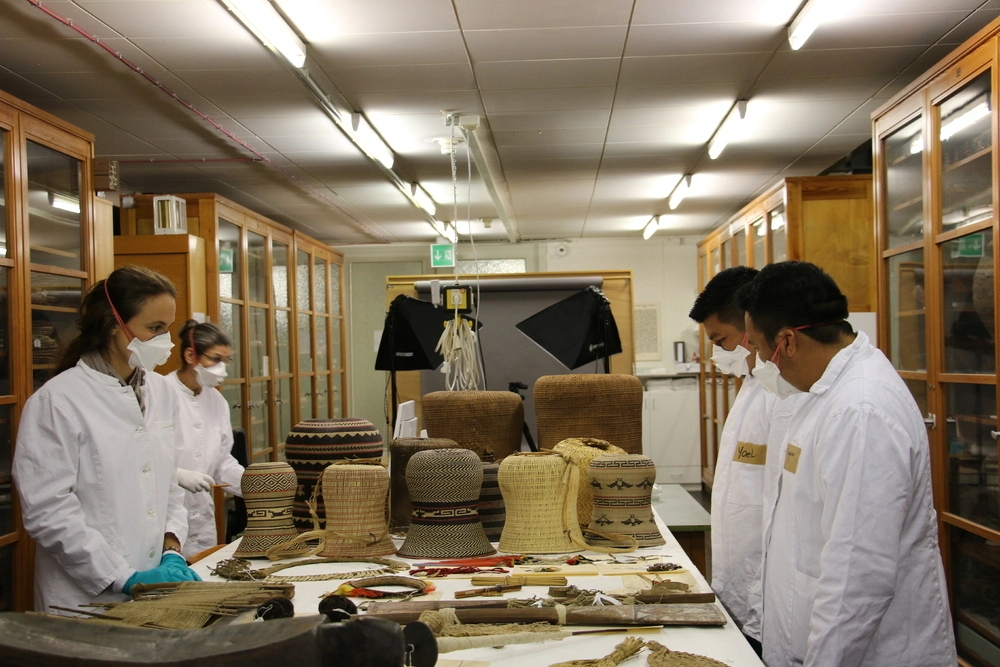
Due to their persistence, the consequences of the use of pesticides in museum collections are now unmistakable and documented in many places. Numerous objects are highly contaminated and are only accessible under difficult conditions regarding occupational health and safety. This creates new problem areas that must be considered for conservation and scientific processing as well as for mediation in the context of exhibitions and external loans. But the most particularly precarious and difficult situation arises when, in the context of the debates on neo-colonialism, non-European objects are repatriated to indigenous communities in their countries of origin. It is precisely these individuals who are exposed to a much greater threat, for example through masks worn in front of the face during spiritual ceremonies and cultural dances. In such cases, the toxins are directly transmitted to the human organism through skin contact and inhalation through the respiratory tract. Through my research, I have clearly demonstrated that museums with extensive collections from colonial contexts are significantly affected by the contamination of the objects held therein. In the EM in Berlin alone, two-thirds of the holdings, approximately 330,000 objects, have been poisoned with pesticides due to historical preservation measures. The legacy of these applications from the late 19th and early 20th centuries is increasingly coming to the fore in public interest through current debates in museums.
As a conservator, can you share any more about what inspired you to write The Toxic Museum?
The inspiration came through my work in the museum from the late 1990s onwards. Coming from the world of wood conservation, I looked after about 70,000 objects in the study collection of American Ethnology until June 2020. The collection items were stowed away in many cabinets, some of them completely overcrowded. These objects made of organic materials are exposed to constant danger against plant and animal pests, as well as mold. When the cabinets were opened, an unknown smell unfolded in the supervised collection, which on the one hand seemed pungent, biting; and on the other, musty-sweet. Next to the objects, on the shelves of the cabinets, small containers were filled with synthetic camphor to protect against harmful insects. However, the chemist Dr. Achim Unger from the Rathgen-Forschungslabor of the Staatliche Museen zu Berlin, drew my attention to the former use of pesticides in the collections. Initial investigations of material samples of individual objects soon led to the conclusion that these artefacts are contaminated with toxic substances such as synthetic camphor, heavy metals and/or organochlorine compounds. The study of ethnological objects that had been contaminated by formerly applied pesticides inevitably led me to the question of where the employees of the EM and the Rathgen-Forschungslabor had obtained their active ingredients and means for the prevention and control of harmful insects during the heydays of the museum.
How have your experiences as a Fulbrighter influenced this book?
I wrote my book before becoming a Fulbrighter. Until now, my commitment has focused mainly on Germany and Western Europe; now it is about establishing standards and advancing a societal concern from both sides of the Atlantic to other countries. Therefore, as a Fulbrighter, I see myself as a qualified ambassador to find solutions for the challenges associated with contaminated non-European cultural assets in the US and to implement them in a future project in Germany. In this context, my host university, the University of California, Los Angeles (UCLA) provides me with great opportunity for these studies.
I see museums with collections from colonial contexts as having a cultural and moral obligation to responsibly implement the processes of restitution and collaboration with all involved parties on an equal footing. In the US, the Native American Grave and Repatriation Act (NAGPRA) has existed for over thirty years. It has fostered intensive collaboration between indigenous groups, First Nations and North American museums. The integration of indigenous voices and perspectives within the context of museum work in the US and in Germany has thus far been approached through diverse methods and guidelines that need to be critically examined. A postcolonial critique has been gradually reshaping the conventional museum concept in Germany, which currently and in the future includes collaboration between peoples from source communities and German museums. Consequently, new fields of research as well as the preservation and the exhibition of non-European art and of cultural assets have emerged. In this respect, the NAGPRA has indeed gained increasing significance for museums in Germany. As a conservator and as a Fulbrighter, I see great opportunities in the transatlantic scientific exchange on contaminated cultural heritage between the US and Germany. This could provide common as well as new impetus to address the bottleneck issue of pesticides in museums. I'm deeply convinced that this bilateral research will contribute significantly to cultural reconciliation.
About Helene
Helene Tello has worked as a freelance senior conservator since 2020. Starting her career in 1980, she opened her own conservation studio in 1983. She then moved on to the Vonderau Museum in Fulda, Germany. Subsequently, she looked after the Indian collections at the Ethnologisches Museum of the Staatliche Museen zu Berlin, Germany, from 1998 to mid-2020. There, she encountered the topic of pesticides formerly used on objects. She conducts research on decontamination methods of such treated cultural assets as well as safe handling of them for everyone who has to deal with them. Due to the opening of museum collections to indigenous people, who started collaborating with the museums as well as repatriating their own cultural assets, her many years of expertise are extremely important in our time. Her knowledge is spread out through numerous journal contributions, teaching activities and lectures at home and abroad.