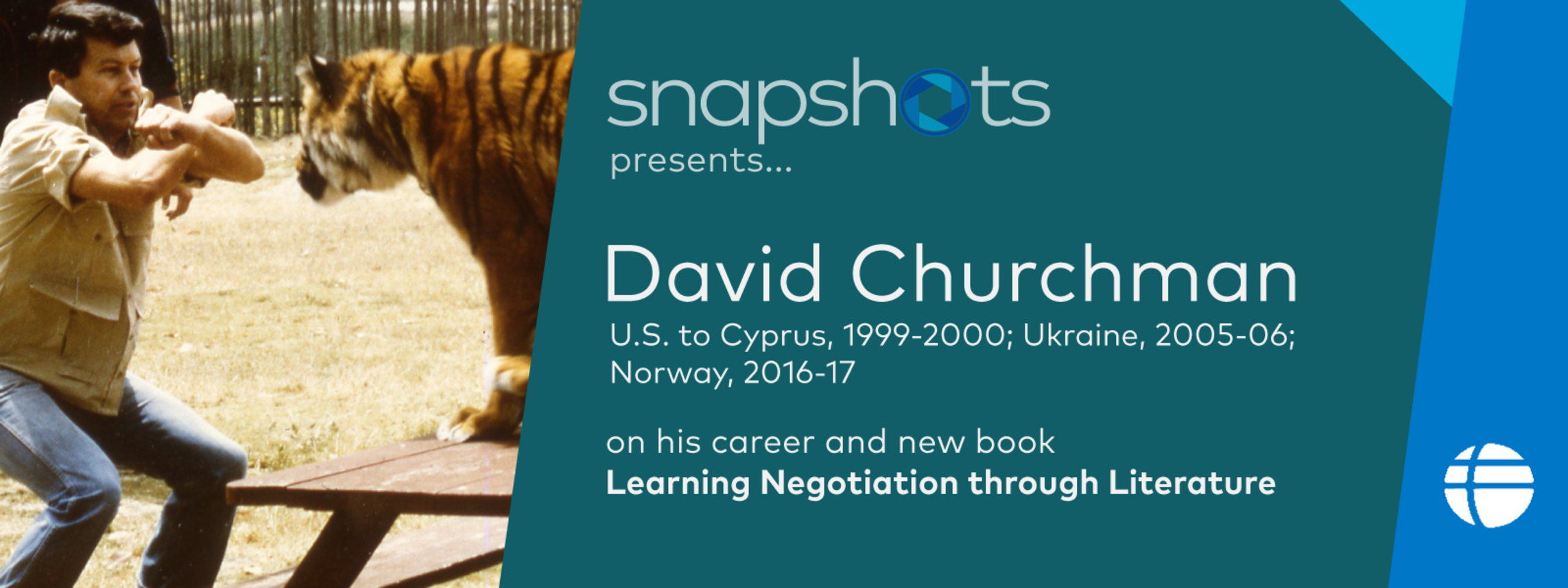
Snapshots presents David Churchman on his career and new book 'Learning Negotiation through Literature'
About
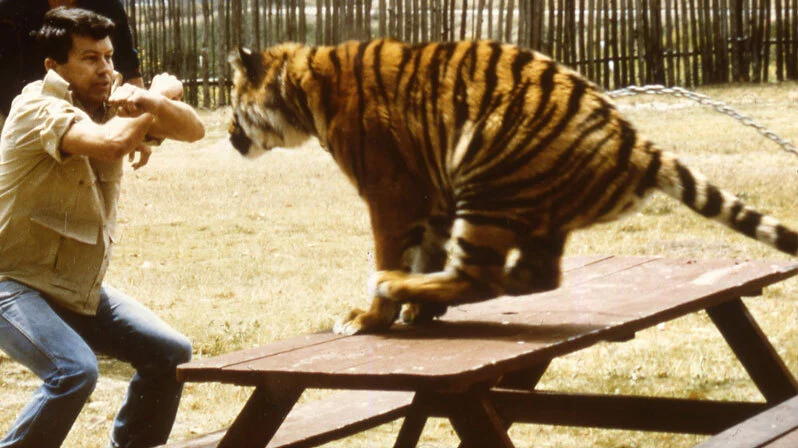
David Churchman has been an infantry officer, social worker, high school teacher and cross-country coach, and a National Science Foundation program officer. He is Professor Emeritus, California State University Dominguez Hills, where he held appointments as professor of Humanities teaching Middle East history and as professor and chairman of Behavioral Science Graduate Programs. He was a Fulbright scholar in Cyprus, Ukraine, and Norway, a Malone scholar in Saudi Arabia, and a National Science Foundation program officer. Based on a 1980 course he developed in negotiation he and colleague David Nasatir (Fulbright in Brazil) developed one of the earliest MAs in Conflict Management in 1982. About the same time, after an apprenticeship as an animal trainer for movies especially of big cats and raptors, he co-founded Wildlife on Wheels, a nonprofit and federally licensed zoo that provided wildlife education programs using non-releasable exotic animals. WOW also rescued, cleaned, and released birds after some 30 oil spills including Exxon Valdez.
After an apprenticeship as an animal trainer for movies especially of big cats and raptors, he co-founded Wildlife on Wheels, a nonprofit and federally licensed zoo that provided wildlife education programs using non-releasable exotic animals.
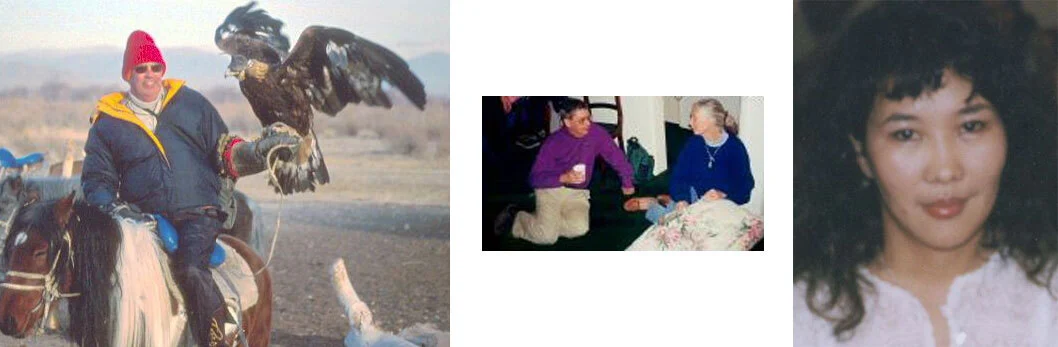
David has been to all fifty states and over 110 countries. In one trip he completed a behavioral study at Los Angeles, Melbourne, Singapore zoos of visitors that provides guidance on several aspects of zoo design. Retiring in 2003, he moved from California to southern Oregon soon becoming a volunteer at the Oregon Shakespeare Festival keeping the Wikipedia article up to date through 2020 and managing actor auditions and volunteer ushers.
Fulbright experiences
David flew to Cyprus to begin his first Fulbright in unique fashion by arriving as planned with his Mongolian fiancée beginning with a civil ceremony followed by a party arranged by the Greek Cypriot president’s daughter in the neutral zone that allowed both Greek and Turkish Cypriots to congratulate them. Two previous Fulbright scholars had focused on identifying and bringing Greeks and Turks together to discuss ways to reunite the divided country. They also taught mediation skills to about two dozen Cypriots who were not yet doing any actual mediation. Rather than more training when it apparently was not being put to use, David paired Greek and Turkish Cypriots to develop three workshops on local conflicts they could offer in Greek, Turkish, or English.
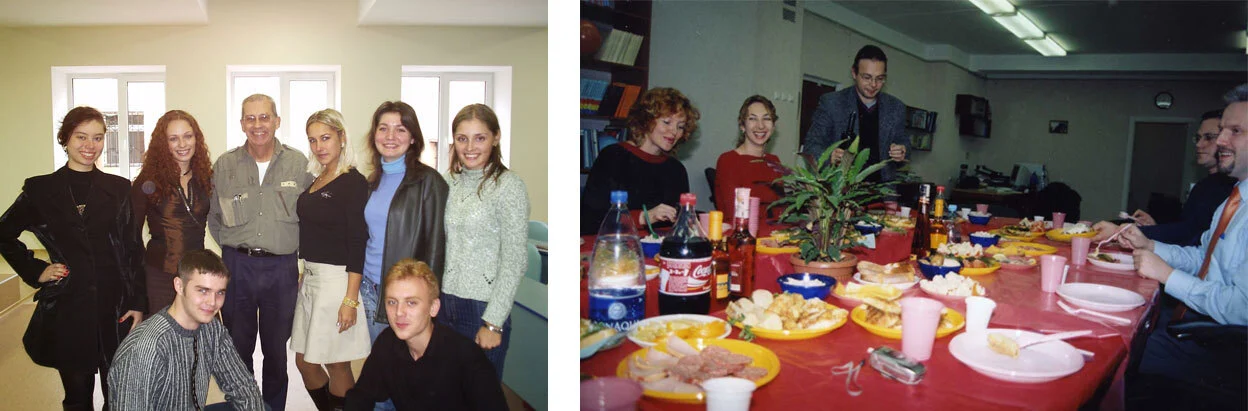
He included instruction in negotiation based on simulations. The students enjoyed the change from their lecture-only experience but had some difficulty at first with role-playing.
David’s second Fulbright was in Ukraine to teach conflict theory to English-speaking international relations students at Odessa’s National University and at the National Law Academy. He included instruction in negotiation based on simulations. The students enjoyed the change from their lecture-only experience but had some difficulty at first with role-playing. The major adaptation was to group students together to learn their roles before pairing them with a similarly prepared opponent for an actual simulated negotiation. He gave a public lecture on “Hard Choices and Grand Ideas in an Era of Terrorism and Rogue States.” He attended a meeting of Fulbright Scholars in Kiev, a meeting of Ukrainian Fulbright alumni in Lviv, and helped recruit Ukrainian Fulbright applicants, stressing the need for applications to be specific, feasible, and to provide a good reason for studying in the United States. He was interviewed for an article about “conflictology” and wrote a requested article for the Law Academy newsletter. He was interviewed on local television and participated in the opening ceremonies of a NATO resource center. Friday evenings, he joined the English Club, leaving each member with some simple souvenir he had brought from the U.S. such as a baseball hat (everybody had to try it on). Saturday afternoons he joined Ukrainians at the American Library to discuss aspects of American life based on documentary films.
David’s third Fulbright was for policy research at the Nobel Peace Institute. He focused on Iraq and Syria, leading to an article accepted for the Journal of Social Science for Policy Implications and a methodologically free synopsis on the 1 October 2017 History News Network webpage. There also were conferences, lunches with colleagues, and presentations to attend by invited Norwegian academics. Not everything was academic. There was a public celebration of his 80th birthday that the king watched from the palace balcony while several thousand were offered entertainment and free ice cream. The Fulbright meant access to a reserved area to view the four-hour parade celebrating Constitution Day. An early U.S. Independence Day celebration was held on 22 June at the U.S. ambassador’s residence because Norway closes down for a month-long holiday in July. There was a private tour of the Norwegian Parliament including a complimentary lunch in the members’ cafeteria.
Publications
As there are relatively few accessible verbatim transcripts of actual negotiations, examples from memoirs, novels, plays, and films, provide a rich source of how tactics interact in practice.
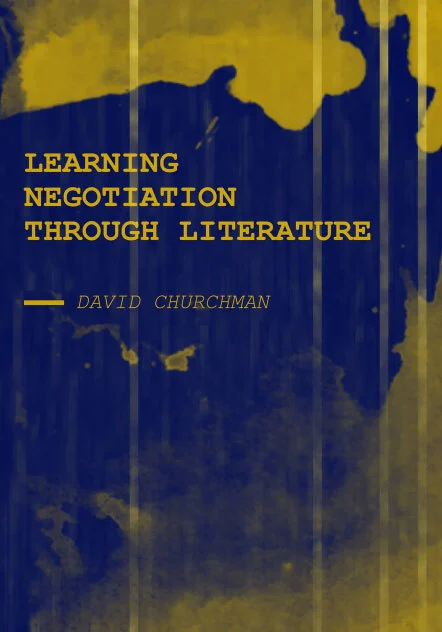
Two of David’s books focus on negotiation tactics. As there are relatively few accessible verbatim transcripts of actual negotiations, examples from memoirs, novels, plays, and films, provide a rich source of how tactics interact in practice. Learning Negotiation through Literature (2022) offers detailed analyses of verbatim examples of negotiations. Of the fifty examples, half come from fiction such as a fable by Aesop, Forsyth’s Day of the Jackal, Kipling’s Cat Who Walked by Himself, Monty Python’s Life of Brian, Shakespeare’s Merchant of Venice, Steinbeck’s Cannery Row, Twain’s Adventures of Tom Sawyer, and Monty Python’s Life of Brian. The 25 non-fiction examples are from the likes of De Gaulle, Gibbon, Herodotus, Robert Kennedy, Kissinger, Machiavelli, Thucydides. Each is analyzed line by line and in a closing comment on each illustrating the timelessness and complex flexible interplay of tactic and counter-tactic. Their variety often led readers to think of other examples and their own experiences and thus to realize how pervasive negotiation is and thus how useful it is to recognize them and learn how to do it well. The book is available in an expensive hard cover or as a paperback available apparently only directly from the publisher, Ethics International Press Ltd. As well as Learning Negotiation through Literature (2022). David also is the author of Negotiation: Process, Tactics, Theory (1995) and Why We Fight: The Origins, Nature, and Management of Human Conflict (2013) judging many theories against widely accepted standards for good theory.