
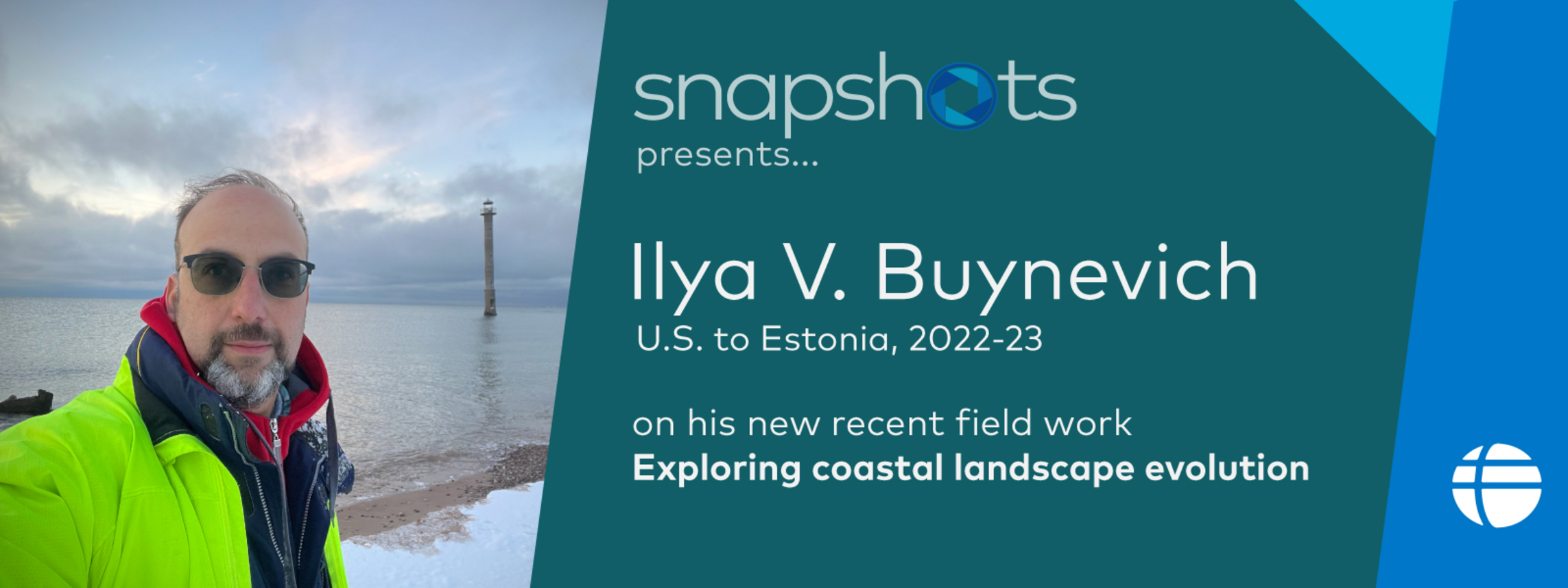
Snapshots presents Ilya V. Buynevich on his recent field work in Estonia
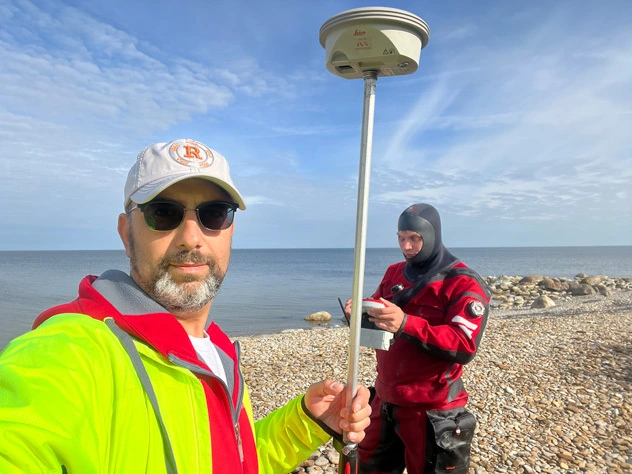
During nearly three decades of studying the archives of nature, learning from local residents about the ever-changing nature of their coast has been both educational and humbling.
Could you tell us a little about the importance of the geological study of coasts, and how it helps our understanding of our past (and can help us plan for the future)?
Coastlines are by far the most dynamic environments on Earth, with land-sea interface shaped by waves, tides, and winds. At times, extreme events (gales, storms, tsunamis) dramatically reshape our shorelines, with ever-increasing pressure from development putting more people and infrastructure at risk. With the majority of the population living along continental margins, forecasting the impact of future events has important societal implications. My work combines field and laboratory research to reconstruct historic and relict signatures of extreme events, including their frequency (how often?) and magnitude (how big?), to predict their future impact. Such efforts also help archaeologists to locate ancient settlements along the coast, conservation ecologists to protect endangered species (sea turtles), and coastal managers and residents to become educated about the dynamic nature of our coastlines.
What distinctive geological features initially drew you to undertake your Fulbright award in Estonia, and what did you discover while you were there?
During the fall of 2022, I spent many days in the field along the northern coast of Estonia and on both of its largest islands (Saaremaa and Hiiumaa), working with scientists from Tallinn University (Fulbright host institution), University of Tartu, and the Geological Survey of Estonia. In addition, scientists from Lithuania and Ukraine joined us in the field, all focused on finding, mapping, and analyzing the impact of past intense storms on coastal landscapes. Similar to my past decades of working just to the south in Lithuania, we employed geophysical methods to “X-ray” below the ground and collected sand samples that hold the story of past land-sea interaction. Using these geological signatures within relict beaches and dunes, which date back more than 10,000 years, we are working on putting together the story of ancient storms in the eastern Baltic Sea region.
During your career you’ve explored many landscapes – across Eastern Europe, the Atlantic Coast, Brazil and more. Is there a place that you’ve found particularly inspiring – from either a personal or professional perspective – and why?
During nearly three decades of studying the archives of nature, learning from local residents about the ever-changing nature of their coast has been both educational and humbling. Most exciting discoveries include finding ancient shipwrecks on the bottom of the Black Sea with a group of scientists led by Robert Ballard (discoverer of the resting place of the Titanic) and identifying “detective”-style many anomalies below the beach surface that represent ancient channels, sea turtle nests, and archaeological sites. Incorporating new findings into classes and open-access lectures, including those sponsored by the Fulbright Program, allowed me to share the most exciting aspects of research with a broad audience. In the end, it is the combination of personal interaction, multidisciplinary collaboration, and professional experience that make each challenging project a highly rewarding experience.
About Ilya
Ilya Buynevich is a geologist, who teaches coastal processes and geomorphology at Temple University and served as a 2022-2023 Fulbright U.S. Scholar in Estonia. He grew up and began his education in Ukraine, followed by a PhD from Boston University and a scientific position at the Woods Hole Oceanographic Institution. Buynevich conducted research projects in the USA, Ukraine, Lithuania, Latvia, Estonia, Brazil, Israel, Kuwait, Turkey, and the Bahamas. He uses scientific field methods to reconstruct coastal landscape evolution, particularly the geological signatures of extreme events (storm surges, winds, tsunamis). Another focus of his research is the use of animal traces to reconstruct paleo-environments (ichnology) and the analysis of the impact of large animals on sediments and landforms (zoogeomorphology). He is passionate about introducing young geoscientists to hands-on experience and exploring how lessons learned from the past can help us understand current issues facing our rapidly developing world.