
Emily Brearley on Her Book Launch and the Need for Improvements in Global Aid
Article written by Fulbrighter Emily Brearley
Fulbright Changed My Stars
I always wanted to save the world. Or at least, make it a little bit better. But a chance meeting on a rooftop in Peru led me to a Fulbright Scholarship, the academic ivory tower and an exciting but ultimately morally challenging professional journey in the international development business that tested the values I was raised with…
My first sentence as a toddler — because a single word was not enough — was “it’s not fair”. This was initially self-referential, but soon it applied to the whole world. I had so many questions. Why are some people poor and other people rich? Why are little children in sweatshops and not in school, and how can we allow anyone go hungry when I struggled to finish my salty bowl of porridge every morning?
My understanding of the world expanded through the causes of various international charities that I eagerly signed up for. I wrote letters to political prisoners for human rights organizations like Amnesty International; I did sponsored twenty-four hour fasts for starving African children; and I even took myself off to the post office on a solo adventure to inquire about sending dried fish in envelopes to Malawi — the country where I had ‘sponsored’ a little girl through an Oxfam program, a global charity that promised to fight inequality and injustice. They had told me that I should only send her ribbons (not cash or second day cod) in case it ‘sent the wrong message’.
Neo-classical economics also believed in creative destruction. Failing industries and businesses should be allowed to die and let new ones sprout up in their place. In Britain, Prime Minister Maggie Thatcher aimed her cuts to government subsidies most dramatically at the ‘inefficient’ coal mines. My friends and I thought this was needlessly cruel in its speed and lack of care for the wellbeing of the mining communities affected. What were these men supposed to do now? I saw the effects of these policies in my household. Money became even more tight; Christmas had to be cancelled.
It was in Peru, on my year abroad, that I first heard about the Fulbright Scholarship. On the roof of a hostel in Miraflores I met an American academic who showed me the power of asymmetric information — an economic concept I would learn two years later at graduate school. I was the first to go to university in my family and had no other way of knowing what I didn’t know.
I took her great advice and won a Fulbright scholarship to study as the School of Advanced International Studies at Johns Hopkins in Washington D.C. I went on to gain a PhD in development economics and at the World’s premier development institutions I worked to fulfil my childhood dream: to make the world a better place, just a little bit.
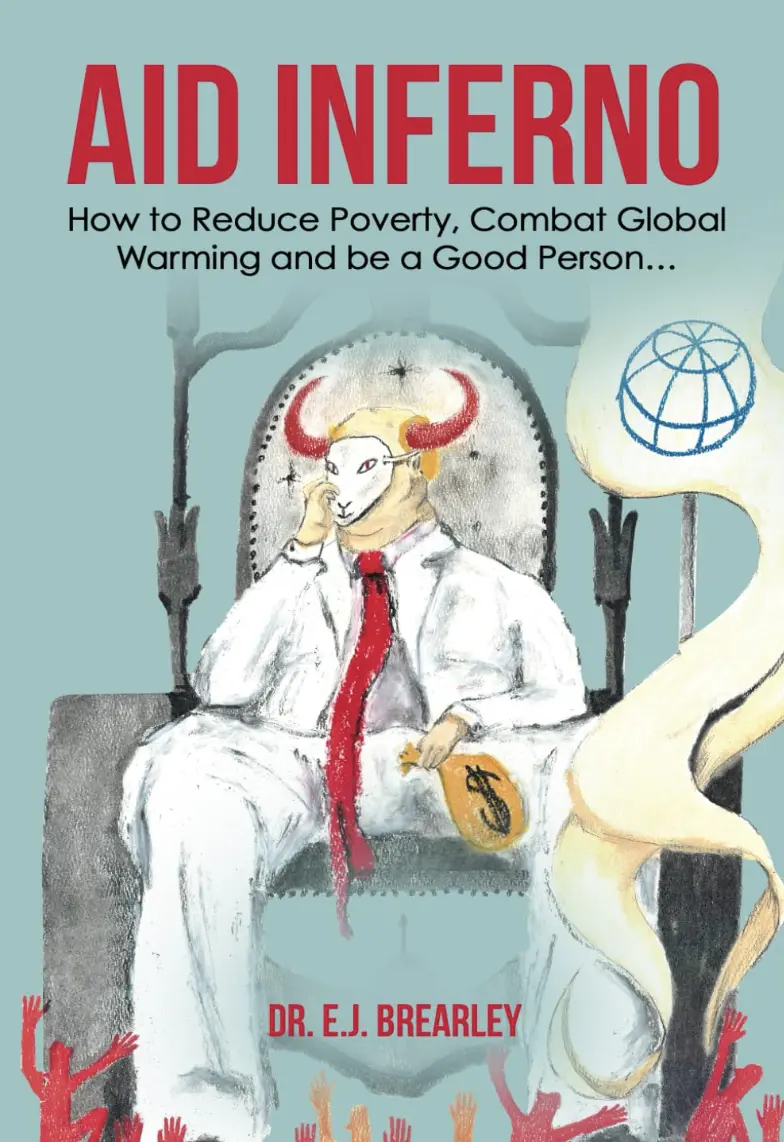
Aid Inferno
It only took a few months as a junior economist at the World Bank to realise how easy it is for good people to engage in the hopelessly naïve myopia that so often characterizes the development business. My euphoria from my new job wore off while I was knee-deep in pig shit on a failed Guatemalan coffee farm.
It's not as if I hadn’t been warned. Long before I was born, the grandfather of development economics, Albert O’ Hirshman, had studied a bunch of World Bank projects and come to the conclusion that failure was not a bug but a feature. He wrote: “I found, upon looking more closely, that not one of the projects I had selected had been free from serious problems.”
The simplest solution to what I call "Aid Inferno" is to shut it all down. Across the rich world, this is already happening. The more likely scenario is reform, which must focus on the intersection of the following three key criteria:
i) What the World Bank Does Well;
ii) What Can Be Done Transparently;
and
iii) What Global South Countries Want.
Writing my book, Aid Inferno: How to Reduce Poverty, Combat Global Warming and be a Good Person… has been a labor of love and I would be honored if you would read it and give me your opinions, fellow Fulbrighters, because I believe that of any group of people you share my desire to make the world a better place…just a little bit!