

Noel Cressie on his 50 Years of Contributions to Science
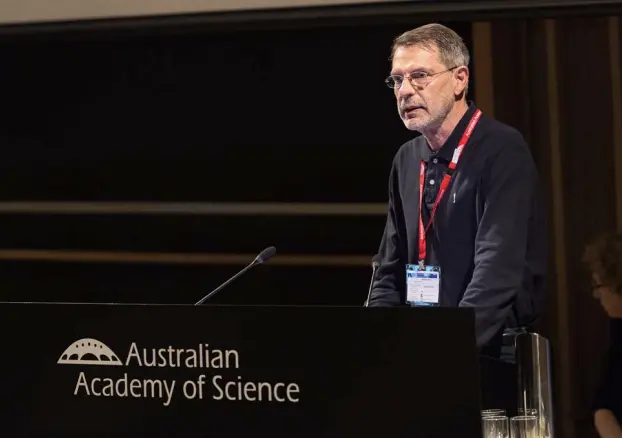
Distinguished Professor Noel Cressie, from the University of Wollongong (UOW), Australia, has recently been awarded the 2025 Hannan Medal from the Australian Academy of Science. This honor was granted to him exactly 50 years after he finished his PhD at Princeton University through a Fulbright Award.
His career as a scientist has been a long and fruitful one: his contributions have often been considered amongst the world's most relevant in several scientific fields, including spatial and spatio-temporal data and statistical methods in environmental science. In this Q&A interview, he talks about his achievements and his ongoing pursuit to make the world a better place. When asked about how he's able to work on so many fronts, his answer is decisive: "The secret is curiosity, working with people you like, and the ability to finish things, even the boring stuff."
Read more about Professor Noel's inspiring work - and his love for science - in the interview below.
You started your Fulbright Award in Princeton in 1972, so that is more than five decades ago. Do you remember how that came about?
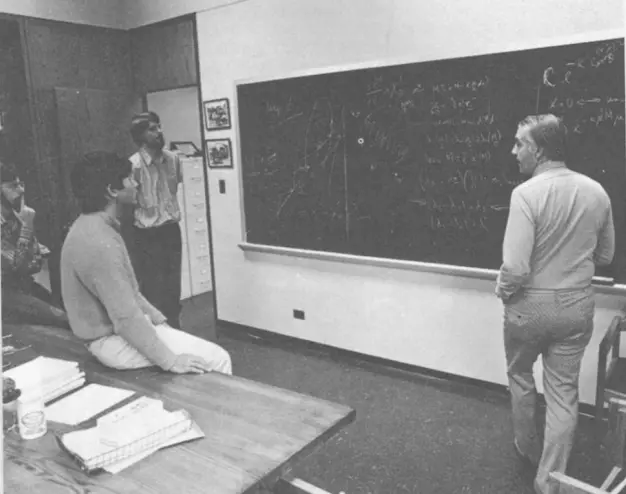
After graduating with a Bachelor’s from the University of Western Australia, I won a Fulbright Award that provided return travel to Princeton. I also had a Princeton University Research Assistantship working for my advisor, which covered my living expenses and student fees. I was really fortunate to graduate debt free in 1975 with a PhD in Statistics from Princeton University. The Fulbright Award finished with my return to Australia, and in 1976 I took up an academic job at Flinders University in Adelaide, South Australia. After being back as an academic in Australia for seven years, the call of better research opportunities in the U.S. was strong, and in 1983 I took up a tenured professorship at Iowa State University.
What was it like to be studying a PhD in Princeton in the 70s?
Undergraduates were (mostly) privileged, and graduate students were (mostly) not! We were from many countries, not very well off, and working on assistantships and our graduate degrees at the same time. In the Department of Statistics, we were about 20 PhD students at different stages, and we had a tradition of ‘beer seminars’ on Fridays where we talked about everything and everyone in the profession, followed by pizza at a place called The Old Mill.
What did you originally set out to research while there?
I didn’t have a clear idea. I had a summer job in Perth, Western Australia (where I studied for my Bachelor’s), writing programs to do mineral-resources estimation. I thought I might look at statistical methodology for this type of geological data, where the statistical-independence assumption does not hold. In the end, I decided to write my PhD thesis on something more theoretical: I developed statistical methods for detecting the presence of an unusual cluster of high values in a sequence of measurements on a transect, sometimes called “bump hunting”.
Did you always know you wanted to be a scientist? When did that become clear to you?
It became clear to me when I was a freshman at university. I liked the idea of being paid to solve mathematical problems and teach at a university level, of not having a 9-to-5 schedule, and of traveling overseas to give research seminars and enjoy the local customs and food.
You are, amongst many other things, a statistical data scientist who has focused on spatial statistics as well as environmental and climate related research over the years. How would you explain your most significant works and their impact in a way that the non-scientists who are reading us can easily comprehend?
A generous colleague wrote the nomination and the citation for my 2025 Hannan Medal Award, that I received from the Australian Academy of Science. I have chosen to use an excerpt of his introduction here, to help me answer this question:
"Professor Cressie is a world leader in the analysis of spatial and spatio-temporal data and a leading authority on statistical methods in environmental science, especially for large-scale phenomena such as oceanic and atmospheric processes and climate. He has developed powerful Bayesian statistical methodology … to capture uncertainties in scientific inference from large and complex datasets. His research has been instrumental in scientific applications that include global CO2 flux, regional climate, sea surface temperature, air pollution, disease mapping, ocean bio-geochemical cycles, soil-carbon dynamics, glacier movement, and river pollution (...)."
Talking about that, you've received the 2025 Hannan Medal from the Australian Academy of Science exactly 50 years after finishing your Fulbright Award. How did you feel when you first heard you were getting this Award?
The Hannan Medal is a career award that is given every two years for research carried out principally in Australia, which for me was research done since I joined the University of Wollongong in 2012. I felt honored to join the pantheon of brilliant statisticians and mathematicians who were awarded the medal before me. I was also very pleased that my passion for working on important science problems had been recognized by the awards committee.
You've gotten many other awards and recognitions over the years. Is there one that was especially significant to you?
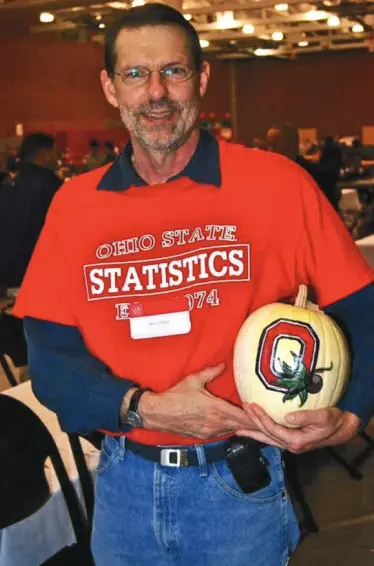
Yes, the 2006 Distinguished University Scholar Award at The Ohio State University, USA, which was awarded during my tenure as Professor of Statistics at Ohio State from 1998 - 2012.
You have had a very long and relevant career in science. What were some of the things you did not think were possible when you were starting that have become a reality today?
It seemed impossible in the 1980s to make statistical scientific inferences when there were no data that directly observed the quantity of interest. You do science with the data you have, not with the data you wish you had, although you could try to get more. I was a proponent of building physical-statistical models and putting them into a hierarchy of conditional probability distributions where the various uncertainties could be quantified. As often happens in developing modern statistical methodology, it is a computational breakthrough that makes the impossible possible. Here it was a Bayesian breakthrough in the 1990s called Markov chain Monte Carlo (MCMC).
What is it like to work with younger scientists? Do you think inter-generational exchange is beneficial to all parties?
I couldn’t tackle the problems I do without being in a team of different generations and different disciplines. The more different the skills and the more plasticity in the way of thinking, the better. My goal is to train the younger scientists I work with to know more than me, so they can then teach me.
You are currently working on projects related to Antarctica, Mars (where you are supporting NASA in efforts to identify ancient life and biohazards), carbon cycling and soil and carbon dioxide monitoring, just to name a few. In addition to that, you are the Director of the Centre for Environmental Informatics and a Distinguished Professor at the University of Wollongong, Australia, as well as an Adjunct Professor at the University of Missouri, in the U.S., and an affiliate at NASA’s Jet Propulsion Laboratory. What is the secret to tackling so many different topics and projects at once?
The secret is curiosity, working with people you like, and the ability to finish things, even the boring stuff.
You have been a NASA affiliate for over 10 years. What do you think are the most important topics that space research will be focusing on going forward?
I’ve always thought that “Mission to Planet Earth” is more critical than interplanetary space missions. Having said that, Mars fascinates me, and I think we will see a human step onto the red planet in about 15 years. However, it is not clear which country will plant the first flag.
With such a long and successful career, do you have a favorite project that you’ve worked on, or an accomplishment that you’re most proud of?
Mmmm, which child is my favorite? I love them all, but I’m proud of the statistical data science I’ve developed for atmospheric carbon dioxide (CO2) from NASA’s Orbiting Carbon Observatory-2 satellite. I’ve developed new statistical methodologies for retrieving and analyzing remotely sensed CO2 data.
You’ve recently said in an interview about your CO2 work: “if you measure, and monitor and map, then you have a chance to mitigate”. I thought that was a really good way to explain the challenges we are facing in a straightforward way. Where do you think we’re doing better and worse, when it comes to the 4 Ms you’ve described?
Unfortunately, the UN COPs (Conference of the Parties) held every year, have had very little effect on the steady increase and even recently, the accelerated increase of atmospheric CO2. So, the last M (Mitigation) is being superseded by an A (Adaptation). That means if we can’t stop global heating, we have to find a way to live with it, in which case its projection into the future (with uncertainty bounds) is critical.
You’ve also recently said that “you have a role to play to make this world a better place” and I thought that was a really remarkable sentence. What do you think is your role - and what advice would you give to non-scientists who want to find their roles in this collective project as well?
We’re all space travellers and Earth, our spaceship, is under stress: We need to monitor its integrity, repair components before they break, and establish long-term-maintenance protocols. The ‘carbon pressure’ in our ship is building, and its effect is a persistent increase in temperature in key compartments. The air-conditioning units at its poles are showing signs of stress and are leaking water, with a threat to the state of the ship’s other compartments. We Homo sapiens are not the only ones on board. Life on the ship relies on diverse ecosystems to provide a balanced and sustainable environment. However, lowering the carbon pressure is not easy, because the ship’s fuel supply is predominantly carbon-based and emits CO2 as a waste product.
Time is needed to develop other energy sources that may be ephemeral but result in storable perennial energy. Moreover, turning the ‘CO2 dial’ down will only have an effect on the ‘temperature dial’ on a time scale of decades, not a few years. Much of Earth’s energy sources would need to move away from burning fossil fuels. A maneuver of incredible difficulty is needed: The ship’s engineers need to keep the ‘fuel dial’ high enough, turn the ‘CO2 dial’ down, keep it down, and do this consistently over the next 30 years and beyond, so that the ‘temperature dial’ stabilizes.
My role is to work with carbon cycle scientists, to buy us time. This involves monitoring CO2 fluxes based on observations that are imperfect and processes that are not completely known. Not acting because we’re uncertain about them is an unwise strategy. A rational strategy is to quantify the uncertainties, something that statisticians are trained to do, and to produce estimates and projections (with uncertainty bounds) that inform mitigation/adaptation policies.
Non-scientists should vote for politicians and parties who look to science for solutions, and they should ask their children for advice! It is our generation who has the responsibility to hand over a well-maintained ship to our children.
What advice do you have for researchers who are just starting on their scientific journey?
Find the best researchers to work with, who also care about you and your career. Volunteer for service roles in your scientific societies and use the opportunity to network. Continue to learn. Finally, let me put in a plug for learning more Statistics, which is the language of the scientific method!