
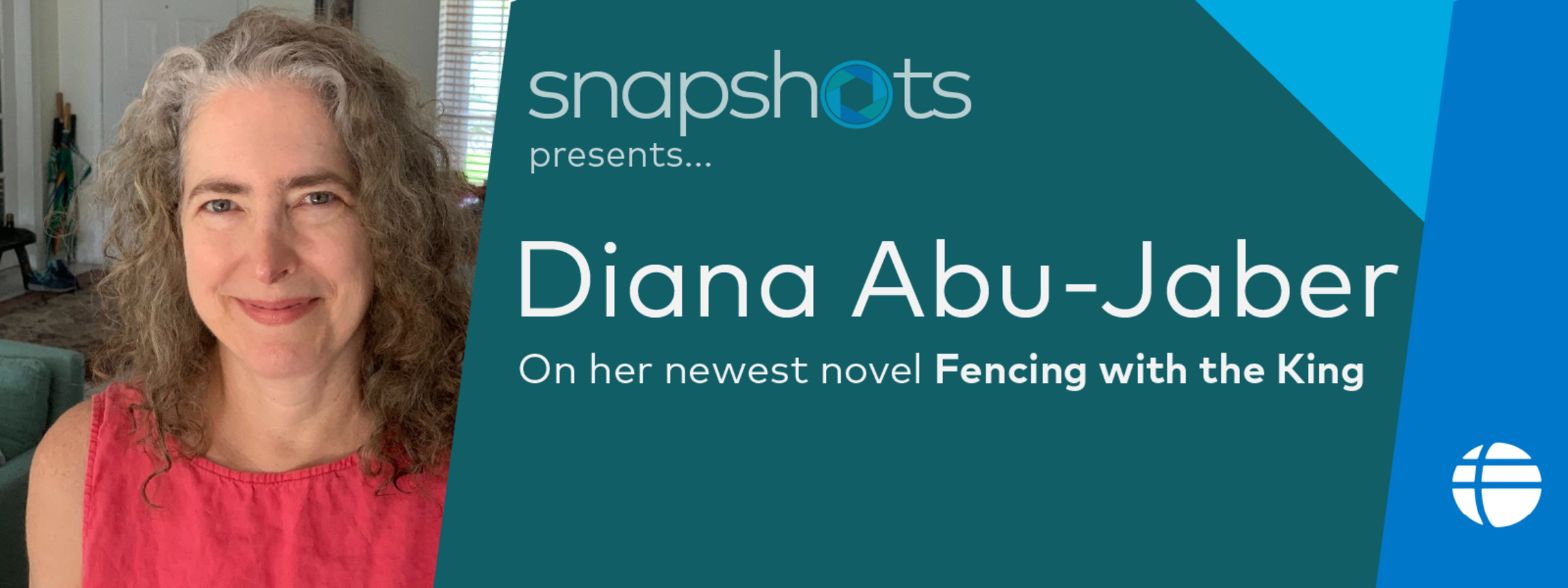
Snapshots presents Diana Abu-Jaber (Jordan, 1994/95) on her newest novel
I'm intrigued with the idea that travellers and immigrants have a bifurcated experience-- lives lived before and after emigrating-- and how, often, their children only know one of these selves.
Can you tell us more about your new book, Fencing with the King, and what inspired it?
During my Fulbright year to Amman, I was at a party at one of my uncles' houses: they were gossiping about my father (who was living in America) and I kept hearing them say, "Gus was the favorite, the favorite!" The favorite what? I asked. My uncle looked at me and said: He was King Hussein's favorite fencing partner!
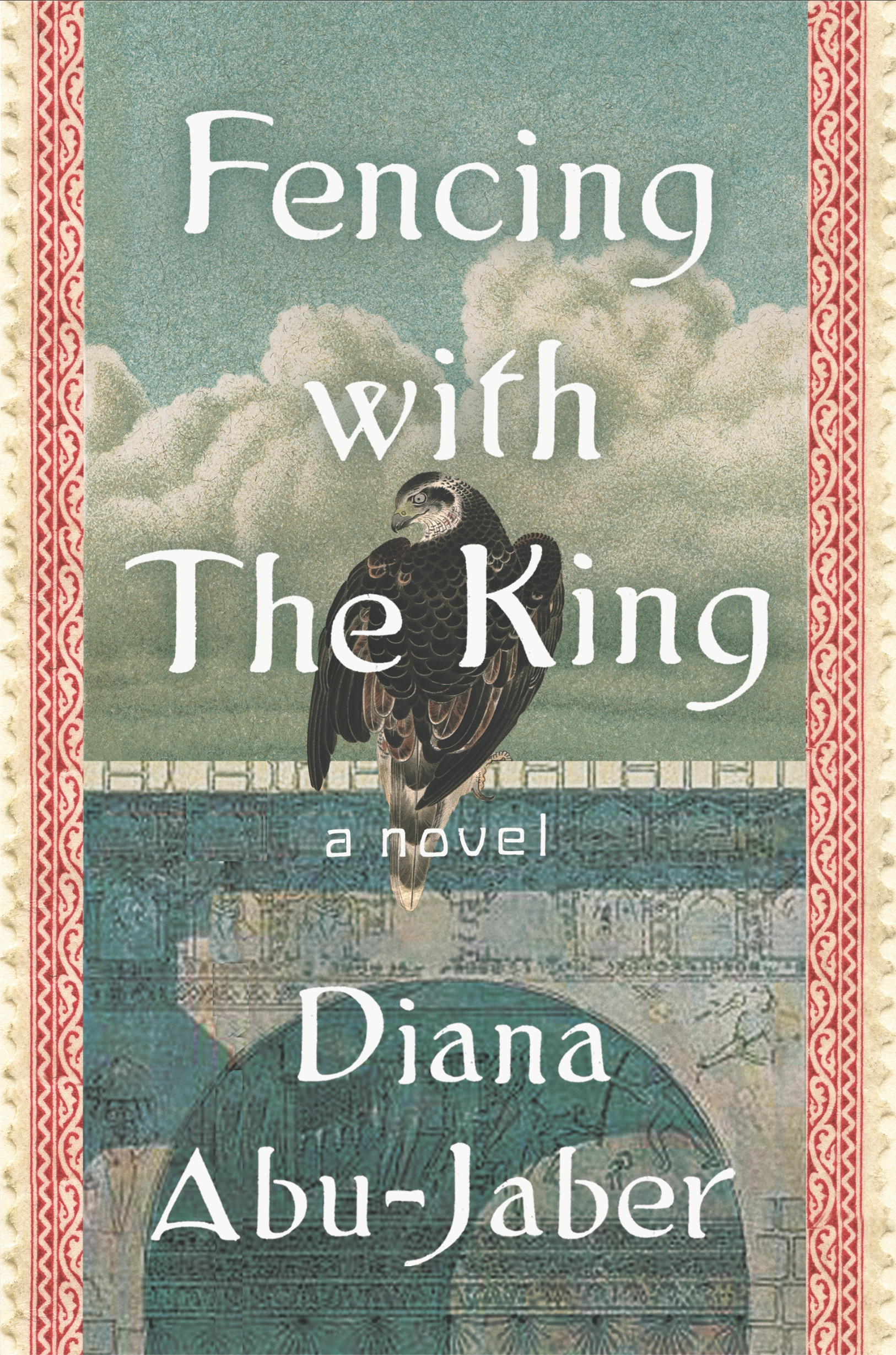
This was a surprise as I hadn't known my dad knew how to fence, much less doing so with the king. I started to mentally spin one of those what-if scenarios that writers love; in this case it was What-if...after three decades, someone were invited back to their home country to fight a rematch duel with the king? I'm intrigued with the idea that travellers and immigrants have a bifurcated experience-- lives lived before and after emigrating-- and how, often, their children only know one of these selves. In Fencing With the King, the father brings his daughter back to Jordan, to help her explore this part of her identity, and to investigate a family mystery alluded to in one of her grandmother's letters. I also wanted to address the issues of grief and trauma wrapped up in the refugee experience. Like Amani's grandmother in Fencing, my Palestinian grandmother had fled her homeland to try to build a new life from scratch in Jordan. Her personal loss of home and community became part of a shadow identity that haunted the family. By hunting for the truth about her grandmother's life, Amani is able to find the clues to her own fragmented sense of self, to listen to the echoes that reverberate through the refugee's experience.
Could you share any experiences as a Fulbrighter which may have impacted or inspired your new work?
Fencing With the King is literally filled with the sights, shapes, and tastes of Jordan that I soaked up during my Fulbright stay. The funny thing is that I thought I was writing a totally different sort of book when I was there--a compilation of testimonials from Jordanian and Palestinian women about their day to day lives. I recorded hours and hours of conversations from all sorts of different women of the region. But when the research was done, I struggled to find the thread that would bring it all together. Years after I returned to the States, I heard a story about one of my relatives and how they'd stolen millions of dollars of land from the rest of the family: suddenly, the structure for a novel began to take shape. I realized that all that collected research-- as well as the daily passive research of the senses--would create a sense of place and texture, to bring Jordan fully into life in my novel.
Which living person do you most admire?
Well, one of the lessons of Fencing With the King is to be careful who you admire because they usually turn out to be human. There are many, many writers and artists and educators that I admire, but today I'd pick Barack Obama-- for not only his visionary work, statesmanship, and integrity, but also for his personal courage, his patience, his humanity, and his good humor. We need many more of him.
About Diana
Raised between Syracuse, NY and Amman Jordan, Diana Abu-Jaber often writes about cultural identity.
Her latest work, Fencing With the King, a novel of Middle Eastern intrigue and cultural legacy, was featured by Apple books, Goodreads.com, and The Millions as one of this spring’s most-anticipated novels.
Her most recent novel, Silverworld, a fantasy-adventure with an Arab-American girl at its heart, was published last spring from Crown Books / Random House.
Her other award-winning novels include Silverworld; Birds of Paradise; Origin; Crescent; and Arabian Jazz.
Life Without A Recipe: a memoir, was described by Ruth Reichl as “bold and luscious.”
The Language of Baklava, her first memoir has been translated into over twenty languages and taught around the world.
Diana lives with her family in Fort Lauderdale, Florida. Sign up for her newsletter at www.DianaAbuJaber.com
You can also find her on social media, on Twitter, Instagram or Tiktok,
Fencing With the King is available for sale at all independent booksellers; Barnes & Noble; and Amazon