Margaret "Peg" Dunn-Snow on Art Therapy and her work in Iceland
Dr. Margaret "Peg" Dunn-Snow is a certified and licensed art therapist and mental health counselor who started her carreer as a first grade teacher. She is a co-editor of Art Therapy Through the Lifespan: A Collection of Case Studies and in this interview she discusses the importance of art as a mental health language and how she applied her knowledge in Iceland after being awarded a Fulbright teaching grant in 2014. "Art leveled the playing field for my students, allowing them to experience a sense of achievement , success and normalcy", she says.
Read the full interview below and make sure to reach out to her on Fulbrighter if you want to learn more about her inspiring work and how you can incorporate more art into your daily life!
How did you start in art therapy? Tell us a bit about your journey in this field.
I first became interested in art therapy while working as a special education teacher. I incorporated a strong art program into my curriculum for my students and, regardless of their learning disabilities, they could always compete with the entire school population, winning recognition and certificates for their art work. Art leveled the playing field for my students, allowing them to experience a sense of achievement, success and normalcy.
How would you define art therapy for someone who has not been familiarized with the term yet?
Art therapy is a treatment model based on strengths and interests to address concerns. Conducted through art-making and storytelling, art is seen as a language and viewed as self-talk, bringing insight and changes to beliefs and behaviors, while empowering a person beyond treatment sessions. Art therapy is grounded in psychological theories and requires therapists to have a working knowledge of human development. Its efficacy is also dependent on the relationship between the therapist and the person participating in the treatment.
You have co-edited a book called Art Therapy Through the Lifespan: A Collection of Case Studies. Could you share a few examples of how this therapy form can support human development and why you believe it to be important?
Child development from birth through approximately age nine can face numerous setbacks, with trauma being a significant factor. The Adverse Childhood Experiences (ACEs) study sheds light on how adverse experiences in young childhood can impact development and long-term well-being. Art therapy is effective for children who have experienced trauma because during this age range their language development is limited and they do not always have the words to explain what has happened to them. Children at this age draw what they know, not what they see. Developmentally, safety is among the major goals for these children in order to thrive.
Is it also benefitial to older children?
Yes. Between the ages of 12 to 22 we experience biological, mental, and social changes. Puberty marks physical growth and hormonal changes while abstract thinking, problem solving, and critical reasoning are blossoming. Socially, this age group experience includes increasing independence that leads to a shift from parental protection to peer acceptance. These changes are all part of discovering their identity. During this age of development, regulating thoughts, feelings, and actions can be challenging. This can lead to anger, misunderstanding, and issues of trust. Resistance is a common factor when working with this age group. As an art therapist discussing the aesthetic of an artwork before asking about the symbolic meaning of the art is one strategy to resistant behavior.
When it comes to late adolescence and young adulthood (from 15 to 26), finding personal and professional identities is the developmental hallmark. This is the age range that bridges children to adulthood so promoting autonomy is a major goal. A non-directed approach to art therapy is encouraged, so letting participants select the materials and subject matter for their artwork as well as the topics for discussion related to their work allows them the opportunity to practice autonomy in sessions. Using journals to write reflections about themselves and for artmaking outside of sessions is also encouraged for this age group.
How about older adults? Is art therapy something that can also benefit them?
Mid adulthood developmentally is a time of continued growth and development, together with change and transition. While some people celebrate career and family accomplishments to-date and want help in making decisions for the future, others feel a sense of urgency, in that time is 'running out' for them. They are asking themselves, 'If not now, then when?'. They redefine themselves and make major changes that could include moving, going back to school and changing careers. For some people it means changing their partner, for others, it is about redefining their identity beyond labels. It is also a time when many people begin to think about the legacy they will leave behind. Self-care is a major developmental goal during this time so creating a self-symbol, a vision board, or a gratitude journal are among activities that are introduced by art therapists to help them with their identity issues.
For elderly people, a life review is an activity that many art therapists encourage. It is a reaffirming activity that allows people to celebrate and reminisce their accomplishments and to clarify what their purpose was in life. It is an age group whose identity has been altered by age, illness, retirement, and the loss of family and friends, so art therapy can help them in reinventing themselves. It can bring tangible, symbolic proof to self identity and self understanding, correcting thinking about past events and bringing clarity and courage to pursue future goals, as well as the notion that life can be lived with purpose and dignity until the end.
So basically anyone can benefit from art therapy?
It benefits people, regardless of age, who are challenged with medical and mental health problems and it is also very helpful for people who seek emotional, creative, and spiritual growth. It supports the “lives of individuals, families, and communities and is used to improve cognitive and sensory-motor functions, foster self-esteem and self awareness, cultivate emotional resilience, promote insight, enhance social skills, reduce and resolve conflicts and distress, and advance societal and ecological change”, as per described by the American Art Therapy Association (AATA).
Can you describe a bit more about your art therapy project in Iceland? What kind of activities were you proposing?
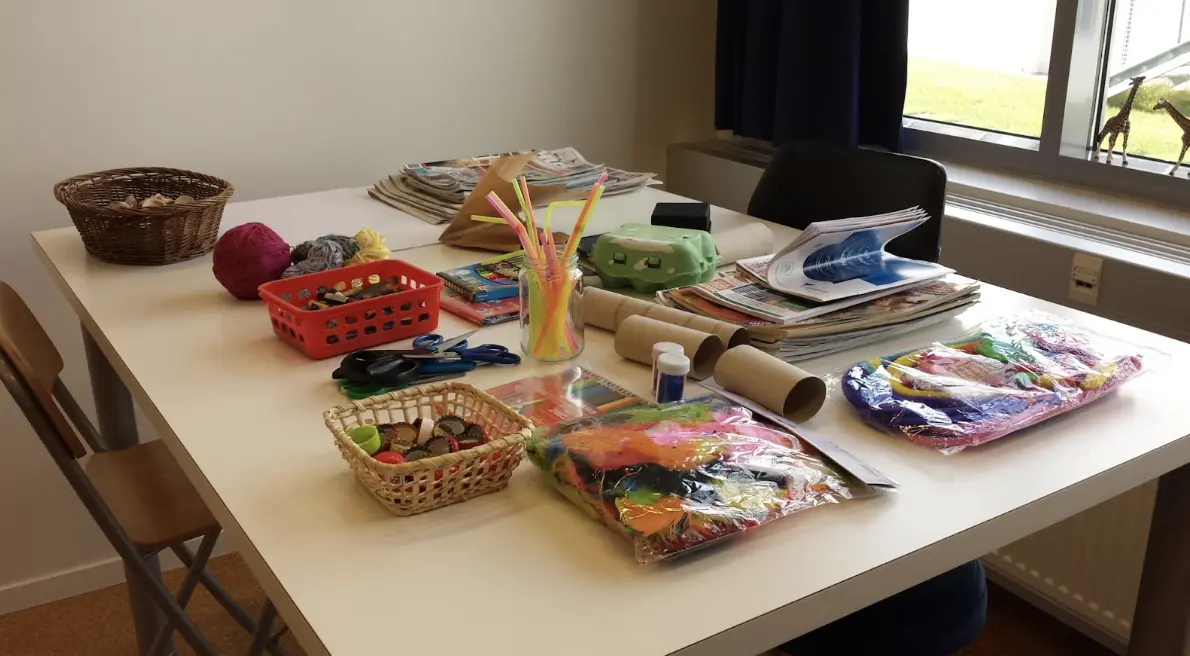
Through a series of lectures and experiential workshops, using the attendees' own artwork, I introduced the field of art therapy to three distinct audiences. The groups included staff and students at the University of Akureyri, elementary, public school teachers and members of the community-at-large, including nurses, parents, and preschool instructors. I also gave a lecture to all the incoming students at the university about art therapy as a profession.
It is really interesting to see how much a person reveals when introducing themselves to others through their artwork during a first meeting versus when being asked to introduce themselves with words only.
What would you say are the positive impacts art therapy can have on children with disabilities? How does it influence or impact their behavior or development?
Before I even knew what art therapy was, I realized, as a special education teacher, that art helped to normalize a child’s life with disabilities. In some cases the children even won prizes with their submissions to county-wide contests. Art gave them a ”voice” and a way to be seen, recognized and praised.
Can you give us some ideas of things we can do in our daily lives to practice art therapy?
Gratitude journals, vision boards, life-reviews, self -portraits and collage work are all beneficial activities. Simple things such as baking a cake or making cookies, arranging flowers or making cards for friends and family are all activities that can be redefined as therapeutic activities too.
What advice would you give to someone thinking about applying to a Fulbright Award in Iceland?
Do it! The people in Iceland were wonderful. During my short stay I was taken on day trips and invited to home dinners. I even had a walking companion each morning as I walked to work as a faculty colleague lived in the same neighborhood where I was living.