

Snapshots presents Pamela Glintenkamp on 'The Artist's Experience: 1950s London'
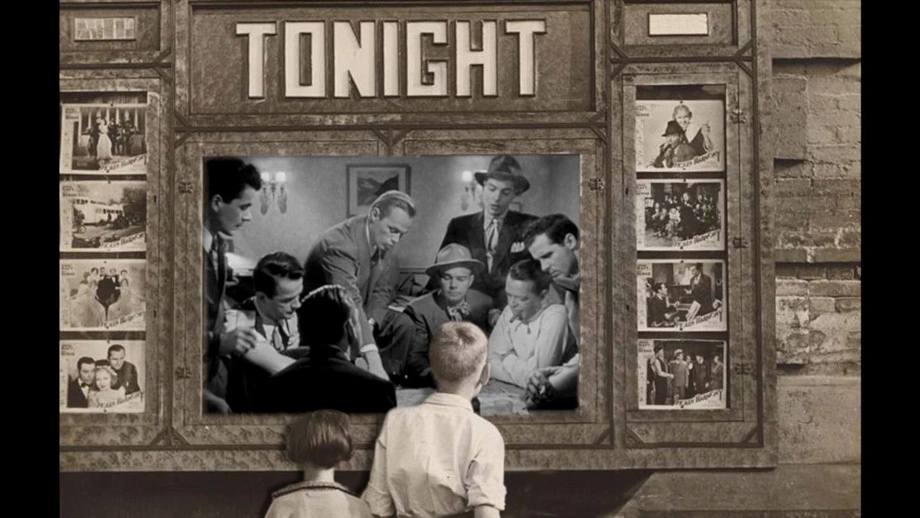
This is not a film about the work of the artists. Rather, it transports the viewer back in time to explore what the artists’ experiences were like.
1. Could you tell us a little about your new short film The Artist’s Experience: 1950s London?
The 'Developing Your Creative Practice' grant I received from Arts Council England made it possible for me to produce the short film The Artist’s Experience: 1950s London. The project explores how engagement with oral history recordings can be enhanced with a 'video collage' technique that uses diverse visual materials. The film brings to life the experiences and cultural milieu of early career artists in London during this period, and features the voices of artists Eduardo Paolozzi, Sandra Blow, Kenneth Armitage, Eileen Agar and Lynn Chadwick. The voice recordings are excerpts from the British Library’s 'Artists’ Lives' oral history archive. This is not a film about the work of the artists. Rather, it transports the viewer back in time to explore what the artists’ experiences were like. The imagery includes archival film footage from the British Council collection. I’ve used the video collage technique to combine film elements with a range of archival and manipulated contemporary imagery to create an impression of the experiences the artists had.
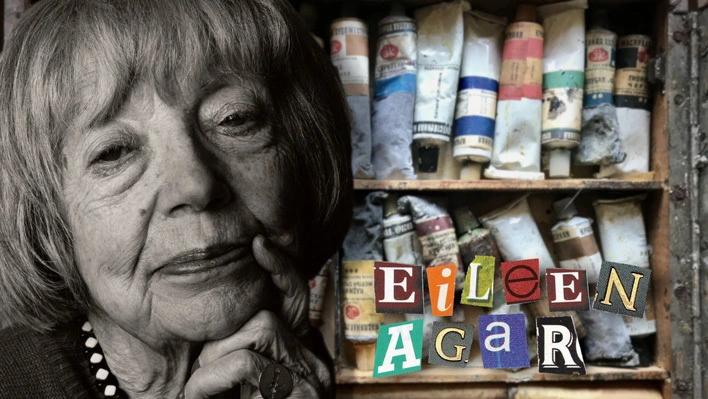
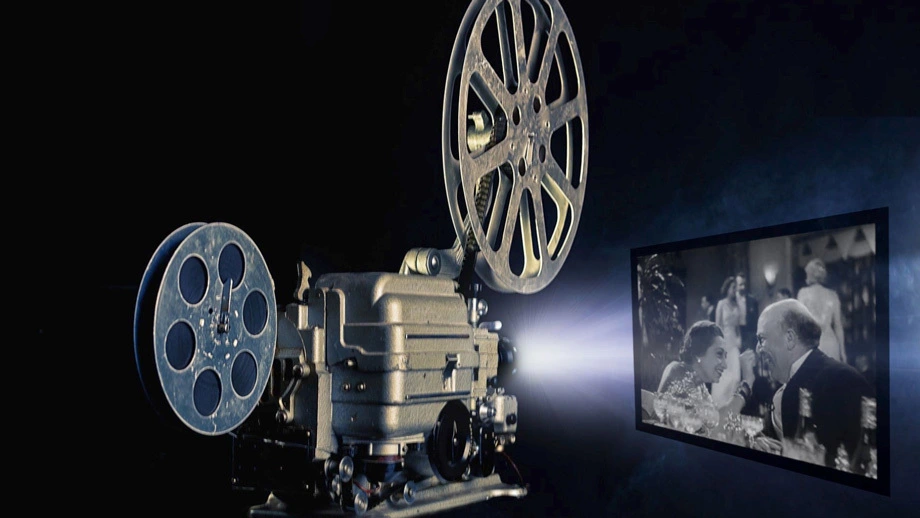
I’ve worked as a video and audio producer for cultural institutions for many years and have also recorded numerous oral history interviews. The Artist’s Experience film is an outgrowth of my previous professional work with archives, oral history and the collections of cultural institutions. The Artist’s Experience is inspired by my interest in bringing to life social and cultural environments that are described in oral history recordings.
2. How is your upcoming project on photographer and activist Tina Modotti building on the techniques you have developed for The Artist’s Experience?
The video college technique I developed for The Artist’s Experience will be expanded and used in a new film project I’m currently developing. The film will explore the intriguing world of photographer and political activist Tina Modotti in the 1920s.
The project will use a microhistory approach. A microhistory is different from a biography, in that it uses the events of an individual’s life to explore the era in which that person lived. Therefore, while Modotti is best known as a photographer, the film will not interpret her photographic work. Instead, the narrative of Modotti’s life experience will serve as a vehicle with which to explore the cultural context in which Modotti participated. The explorations will include the immigrant experience in San Francisco, bohemian culture in Los Angeles, the cultural renaissance in Mexico following that country’s revolution, and the cross-cultural creative relationships between Mexico and the United States in this period. Similar to the voices used in The Artist’s Experience film, the Modotti project will use recorded quotations from writings by Modotti and members of her cultural circle, including Edward Weston, Diego Rivera, Frida Kahlo and Jean Charlot. The collage of statements will comprise the soundtrack for the film. Visually, the statements will be brought to life through the digital manipulation of archival materials. The techniques used in The Artist’s Experience are a prototype for the development of the Modotti film.
Imagery relating to the development of the Modotti project can be found on Instagram: @modottifilms
3. How did your Fulbright experiences in the UK in 1989/90 shape your professional practice and development?
My Fulbright experience involved studying the history of design at the Victoria & Albert Museum in London. In addition to my coursework, I completed an extracurricular program in creating multimedia presentations, offered by the Royal College of Art. There, I produced a six-screen re-creation of the eighteenth-century pleasure garden Vauxhall. The work combines quotes from visitors to the garden with period visuals from museum and archival collections. This project was a first step toward merging my experience in film production with my academic work in art and design history.
Following the Fulbright I was award internship at the Getty Center for Education in the Arts in Los Angeles. My time at the Getty marked a turning point in my career; from that point forward, my work as a media producer (video, audio, interactive) was focused on creating content for museums, archives, historic sites, and conservation organizations.
During my year at the Getty I contacted my former tutor at the V&A, Sir Charles Saumarez Smith CBE. I proposed that the museum apply for funding from the Getty Grant Program to produce a film that would explore a key object in the Museum’s collection. I partnered with the V&A on the grant proposal. In 1991, the V&A received a grant from the Getty for the production of a film about Frank Lloyd Wright’s creative process in designing an office for Edgar J. Kaufmann. I wrote, produced, and edited the thirty-minute video Frank Lloyd Wright: The Office for Edgar J. Kaufmann. The film was presented at the Metropolitan Museum of Art and Museum of Modern Art (NY) as part of public programming for special exhibitions on Frank Lloyd Wright.
I would not have had the opportunity to produce the Frank Lloyd Wright film, if I hadn’t previously been based at the V&A on the Fulbright, had the opportunity to create the Vauxhall Gardens experience, and been in a position to propose pursuing funding to create a film inspired by an important object in the V&A’s collections.
Following the production of the film for the V&A, I continued to create video, audio and interactive programs for cultural institutions in the US. In 2006 I returned to London under what was then called the ‘Highly Skilled Migrant Programme’. The programme allowed me to pursue professional opportunities in the UK, and work towards obtaining UK citizenship. Since becoming a UK citizen in 2011, I’ve continued to work producing video and audio content for cultural institutions in the UK and the US, and have made London my permanent home. None of this would have been possible without my Fulbright experience.
About
I’m a filmmaker and audio producer. I received a BA in art history from Brown University. After graduation I worked in the feature film industry in Los Angeles where I gained practical experience in film production.
I didn’t feel that continuing a career in feature film production was the right path for me. I therefore applied for and was awarded a Fulbright to study history of design at the Victoria & Albert Museum in London.
Following my Fulbright year, I’ve produced video and audio programs for organizations such as National Portrait Gallery (London), National Gallery of Art (Washington), Royal Academy of Arts (London), the Lucasfilm Archive, the Terra Foundation for American Art (Chicago and Paris), The Music Center of Los Angeles County / Walt Disney Concert Hall, Zoological Society of London and Anish Kapoor’s Orbit in the Queen Elizabeth Olympic Park (London). Many of the projects I’ve produced make extensive use of archival materials. An introduction to my work, including an experimental film on a painting by Vermeer at the National Gallery of Art, can be found here. I’ve also worked extensively in the production of oral history projects. This includes my roles as Oral Historian / Video Producer for the Lucasfilm Oral History Project, and the Stanley Kubrick Archive, London. The audio tours for cultural institutions I’ve produced include the tour for Walt Disney Concert Hall, featuring architect Frank Gehry. Audio tour project samples and descriptions can be found here.
Website: www.glintenkamp.com
Linkedin: https://www.linkedin.com/in/pamela-glintenkamp-3758144/