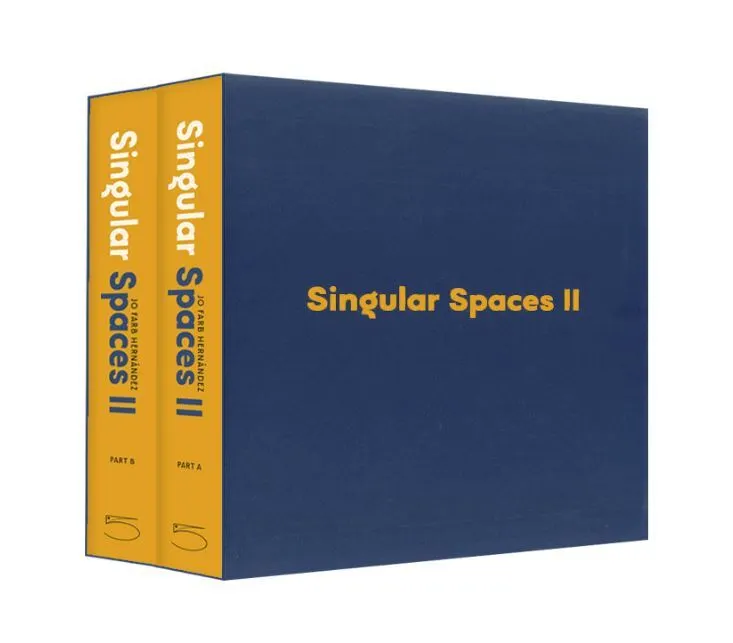
Snapshots presents Jo Farb Hernández on 'Singular Spaces II: From the Eccentric to the Extraordinary in Spanish Art Environments'
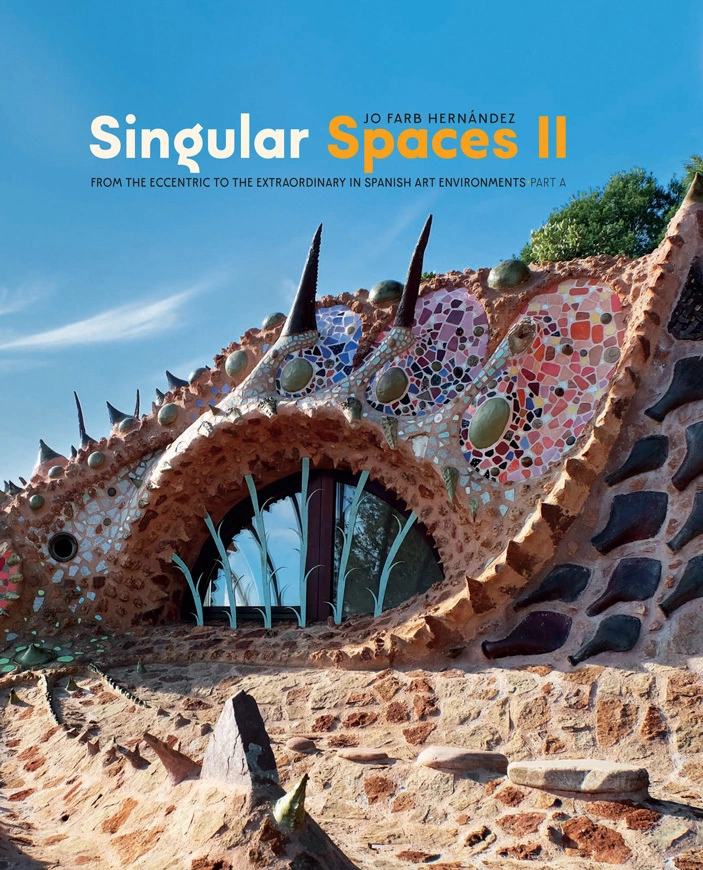
Creators such as those I have documented, working without ties to or understanding of the mainstream art world and without studies in art, architecture, or engineering, unselfconsciously reinvent not only architecture, landscape architecture, sculpture, painting, and sites of memory or devotion but also, in the process, themselves.
Could you tell us a little about your new book Singular Spaces II: From the Eccentric to the Extraordinary in Spanish Art Environments? How would you characterise the environments you explore, and what for you was the importance of documenting and critically analysing them?
Cultural histories have generally been written by those linked to mainstream genres and practices, and defined and interpreted in light of long-established academic classifications. This has left the research and analysis of the more personal and often idiosyncratic expressive manifestations of those without formal training to fall between the proverbial cracks.
I document and analyze monumental changes made by self-taught makers to their personal spaces: their homes, yards, farms. Developed additively and organically, without formal architectural designs, engineering plans, or public sanction, these personal, idiosyncratic constructions are generally immobile and massive in scale or number of components. They owe little allegiance to folk, popular, or mainstream art trends, nor do the makers have interest in or the intent to produce anything functional or marketable: these sites instead reflect personal and cultural experiences, availability of materials, and a desire for creative self-expression.
And while the genre of art environments is increasingly being recognized internationally, they have largely still been discussed in anecdotal terms: comprehensive scholarly interpretation remains sparse. My extensive analysis of these environments – which I define as art but which is not always defined as such by the makers themselves – draws on paradigms from folklore/folklife, vernacular architecture, anthropology, ethnography, popular religion, festival/performance studies, and the canons of both “outsider” and modernist/contemporary art history, so my intent with the publication of this encyclopedic set of books has been to explore new conceptual ground by breaking down typical academic categorizations, and help to fill that gap. There has been no other rigorous, long-term scholarly examinations of Spain’s exceptional art environments, and none are in process – in any language – beyond my own.
Also, fundamentally, bringing increased visibility to these artists and the impressively wide range of their production emphasizes how conventional art history has ignored an entire swath of human creativity – that which is not linked in any way to the marketplace. Creators such as those I have documented, working without ties to or understanding of the mainstream art world and without studies in art, architecture, or engineering, unselfconsciously reinvent not only architecture, landscape architecture, sculpture, painting, and sites of memory or devotion but also, in the process, themselves. And while my focus for the past 23 years has been on Spain, the universality of the need to create, and the issues that are confronted when one does so in a non-sanctioned and public way, are relevant to art and artists worldwide.
Your Fulbright to Spain in 2007 led to your first study of these environments (Singular Spaces: From the Eccentric to the Extraordinary in Spanish Art Environments [2013]). How did your experiences as a Fulbrighter and as a subsequent visitor to Spain deepen your understanding and appreciation of these so-called “outsider architects”?
I have studied art environments for fifty years; documentation and analysis of a selection of U.S. art environments even formed the basis for my M.A. thesis. But afterward, the demands of my career as a museum curator and director impeded extended periods of study; the Fulbright provided me with a concentrated period of time to focus on investigating new sites and to broaden the depth of my fieldwork and research.
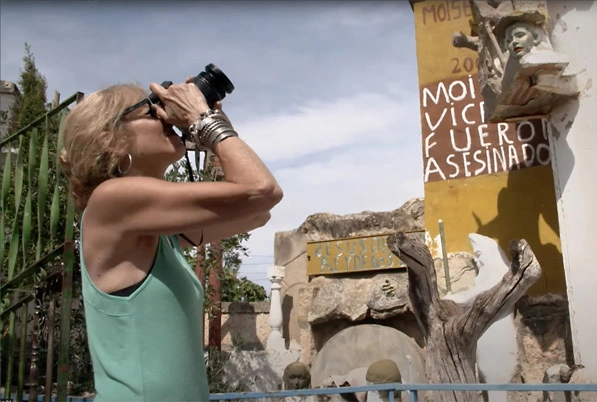
Photo: Sam Hernández
This was crucial, because while art environments are admittedly photogenic, it is not enough to stop by, take a few snapshots, perhaps chat with the artist, and call it a day. My methodology – grounded in the oral history training I received through my academic studies in folklore, linked to the various fields in the humanities mentioned above, and honed by my time as a Fulbright scholar – is built on long-term connections with the sites and their creators, tracking changes over time and drilling down to try to find the essential conceptual, intentional, and physical building blocks, as well as the personal, cultural, and geographic chronicles that inform and provide context for the work. This has meant repeated visits, repeated telephone calls, letters, emails, and text messages: the ongoing conversations that provide the backbone for a three-dimensional understanding of the artists’ works.
Although it is somewhat tangential to your question, it should be noted that the term “outsider” is not one that I use when discussing the work of these self-taught makers, although I understand that it has become a sometimes-helpful shorthand for those not intimately involved in the field. While their work may not fall within the parameters of what their neighbors think of as “art,” this does not necessarily imply that the creators are disconnected from their local community or that they lack the ability to function therein. It would be impossible for an art environment to manifest absolutely no cultural reference that the neighbors would not recognize, whatever their response to its aesthetics. More often than not, they accommodate these constructions as a “hobby,” a word often initially introduced by the builder-artists. The use of this non-judgmental term may help to neutralize the assertiveness of the site in the eyes of the community, and the art environment is thus rendered more entertaining and socially acceptable. But even when these sites do incite considerable questioning, concern and, at the extreme, demands for demolition, the creators, for the most part, remain very much part of their communities. Their neighbors may look askance at their productions or may decry them as “ugly,” but the makers are not “outsiders” and, for the most part, they are not estranged from their social or cultural milieux.
Is there an art environment – whether in Spain or elsewhere – that has had a particularly profound impact on you?
I would have to note the first art environment I saw in Spain, back in the year 2000, as it made me realize that the gap in the scholarly research into and documentation of such sites was huge – and, given my earlier decades-long investigations into this field in other countries, it was up to me to address that gap. This was Josep Pujiula i Vila’s series of towers and labyrinth, known as the Poblat Salvatge [Wild Village], in Catalunya, a site that I just happened to drive by – when the artist was 100 feet in the air, pounding away building one of his towers.
Photo: Sam Hernández
Over the course of the next sixteen years, I returned innumerable times to document the site in its various iterations: the municipal and regional governments demanded its demolition three times – which Pujiula complied with, but then immediately started rebuilding, each time with greater skill and aesthetic power. Pujiula’s site is emblematic of how the formalist visual impact art environments have on neighbors and visitors often creates tension between society’s recognition of the right of individuals to structure and adorn their living and working spaces as they see fit, and that same society’s right to a certain aesthetic consensus; he engineered the ultimate act of personal defiance against long-held assumptions about property laws and community codes regarding proprietorship, against governmental and quasi-governmental entities, and certainly, against what was generally acceptable within the boundaries of individual aesthetic expression. These tensions are rife within many aspects of our lives and, thus, art environments—whether one is focusing on co-existence or subversion—fit easily within the traditional paradigm of art mirroring a culture’s collective life. Since his death in 2016, I have continued to document the site, as parts of it have begun to slowly degrade, completing its life cycle.
During these years I also involved myself in political advocacy to try to safeguard and preserve the environment (as I have, and continue to do, with others), although it was not until the fourth iteration that we were ultimately successful. The area today is honored as a local site of public interest. Too, thanks to my nomination, in 2015 Pujiula was awarded a special honor at the International Awards for Public Art in New Zealand, representing all of Europe including the Russian Federation, the only self-taught maker to have ever been granted this recognition. Art environments challenge our artistic and social norms, so study of their manifestations cannot conscionably focus solely on documentation without advocacy. And these small successes, one by one, indicate positive progress towards greater inclusivity in art historical definition.
About
Jo Farb Hernández is Professor Emerita of the Department of Art and Art History of San José State University and Director/Curator Emerita of the nonprofit SPACES Archives. She worked in the museum field for over forty years while simultaneously continuing her professional research on the built environments created by self-taught artists: she has documented hundreds of these sites across Europe, North Africa, and the U.S. since 1973. She serves on the Editorial and/or Advisory Boards for various art journals and several art environments, and her exhibitions and scholarly publications have become models for the field. Her groundbreaking book, Singular Spaces: From the Eccentric to the Extraordinary in Spanish Art Environments, has been called “indispensable” and the “…most impressive single volume of research ever published in the field of self-taught art;” the second volume of this comprehensive study, with almost 1,100 pages and over 1,050 photos, was published in June 2023 by 5 Continents Press of Milano.
Visit www.jofarbhernandez.com for more information or contact [email protected]