Kateryna Ostrovska on How Being a Fulbrighter in California Changed Her
Article written by Fulbrighter Kateryna Ostrovska.
"I left my soul on Californian soil… And I never felt the same…" — London Grammar, Californian Soil
When I travel back in memory to my first days in the Golden State, I recall the enthusiasm of someone on the cusp of something transformative. I had come to broaden my understanding of a field I cared deeply about: labor economics, and health workforce planning in particular. My work as Health Workforce Optimization and Policy Workstream Lead at the USAID Health Reform Support Project had revealed as many questions as it had answered — blind spots that demanded further study, and concepts that needed to find their way into Ukrainian healthcare management.
I believed the Philip R. Lee Institute for Health Policy Studies at the University of California San Francisco would help me accomplish my research objectives, and I arrived full of admiration for Professor Joanne Spetz, an internationally recognized expert in nursing workforce planning, who so generously agreed to serve as my supervisor. But the program exceeded my expectations in ways I had not anticipated.
The deeper I immersed myself in workforce planning practices, the more I came to understand that the linear assumptions planners typically bring to this work do not hold up against reality — a complex, unpredictable reality that lies beyond the full control of any policymaker. This realization led me somewhere I had not planned to go: into the study of uncertainty itself, the very terrain where all mistakes about the future are made.
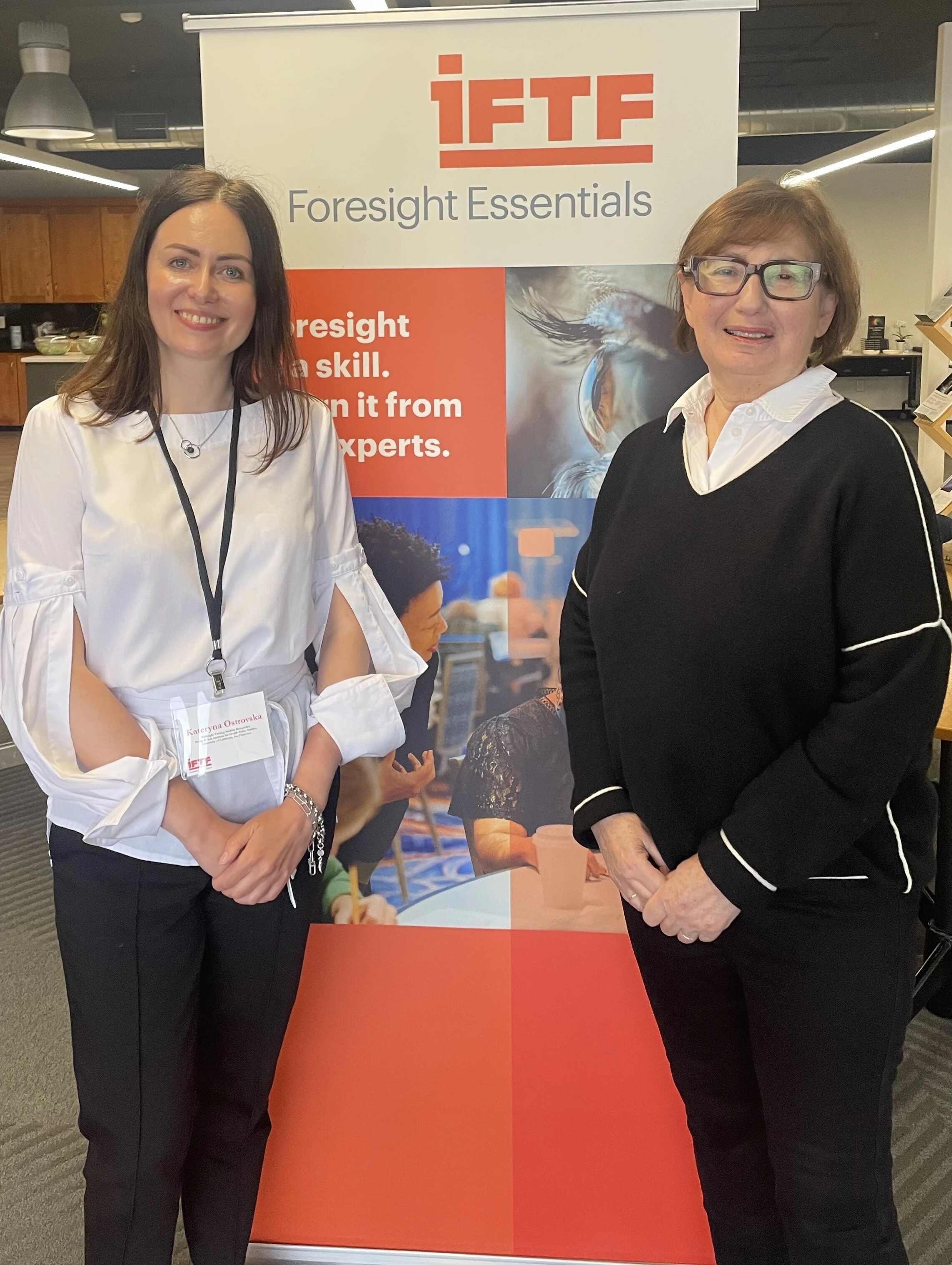
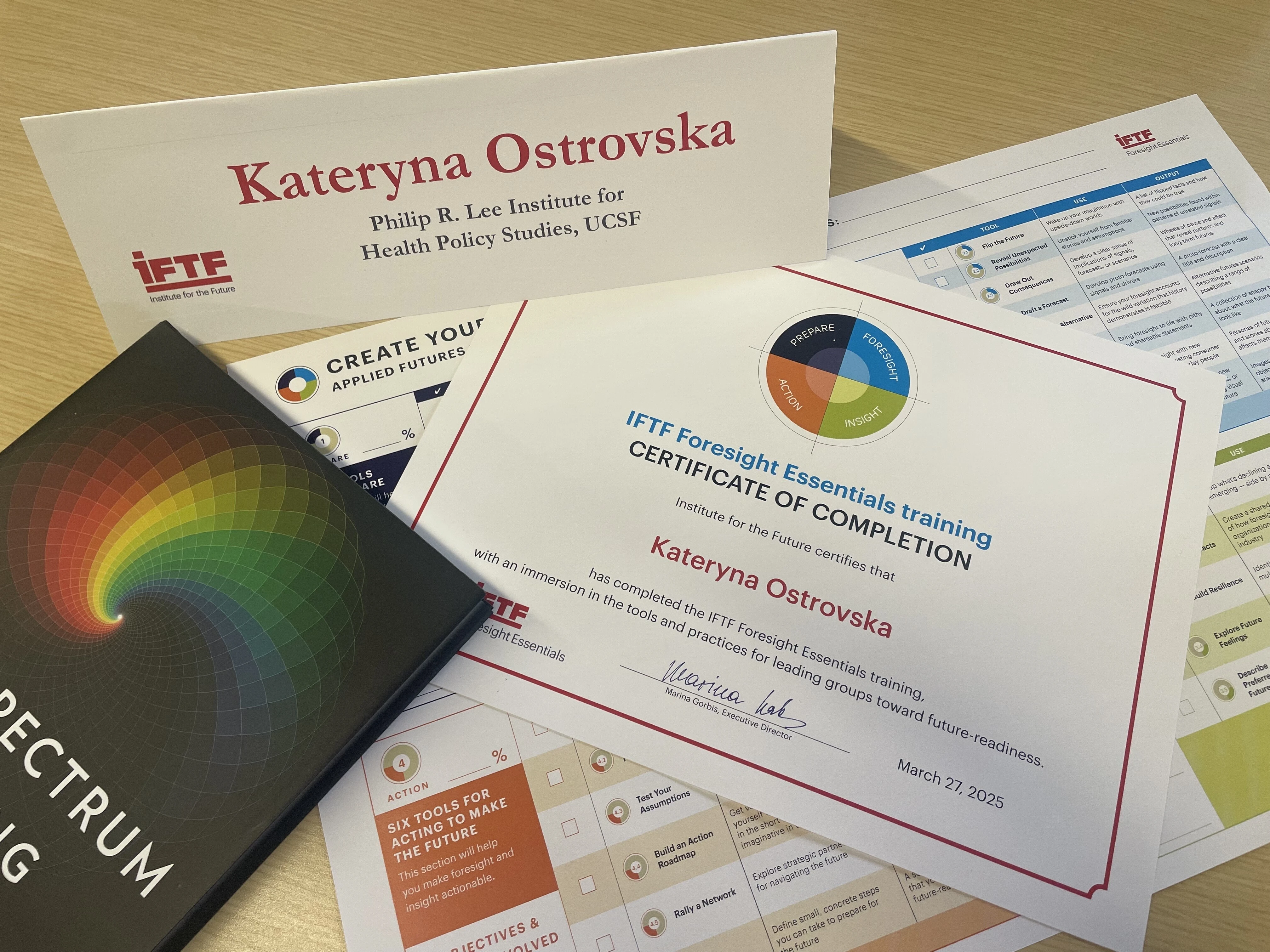
When the opportunity arose to pursue the IFTF Foresight Essentials training at the Institute for the Future in Palo Alto in March 2025, I embraced it wholeheartedly. It proved to be one of the most significant turning points of my professional life. I returned equipped with a foresight practitioner's toolkit, methods that enable organizations, governments, and businesses to prepare for what comes next in a coherent, structured way.
The fellowship did not end when I boarded the flight home. If anything, it was just beginning. In the months that followed, I joined the Association of Professional Futurists and the Foresight Europe Network and initiated the establishment of a Ukrainian Node of the Millennium Project.
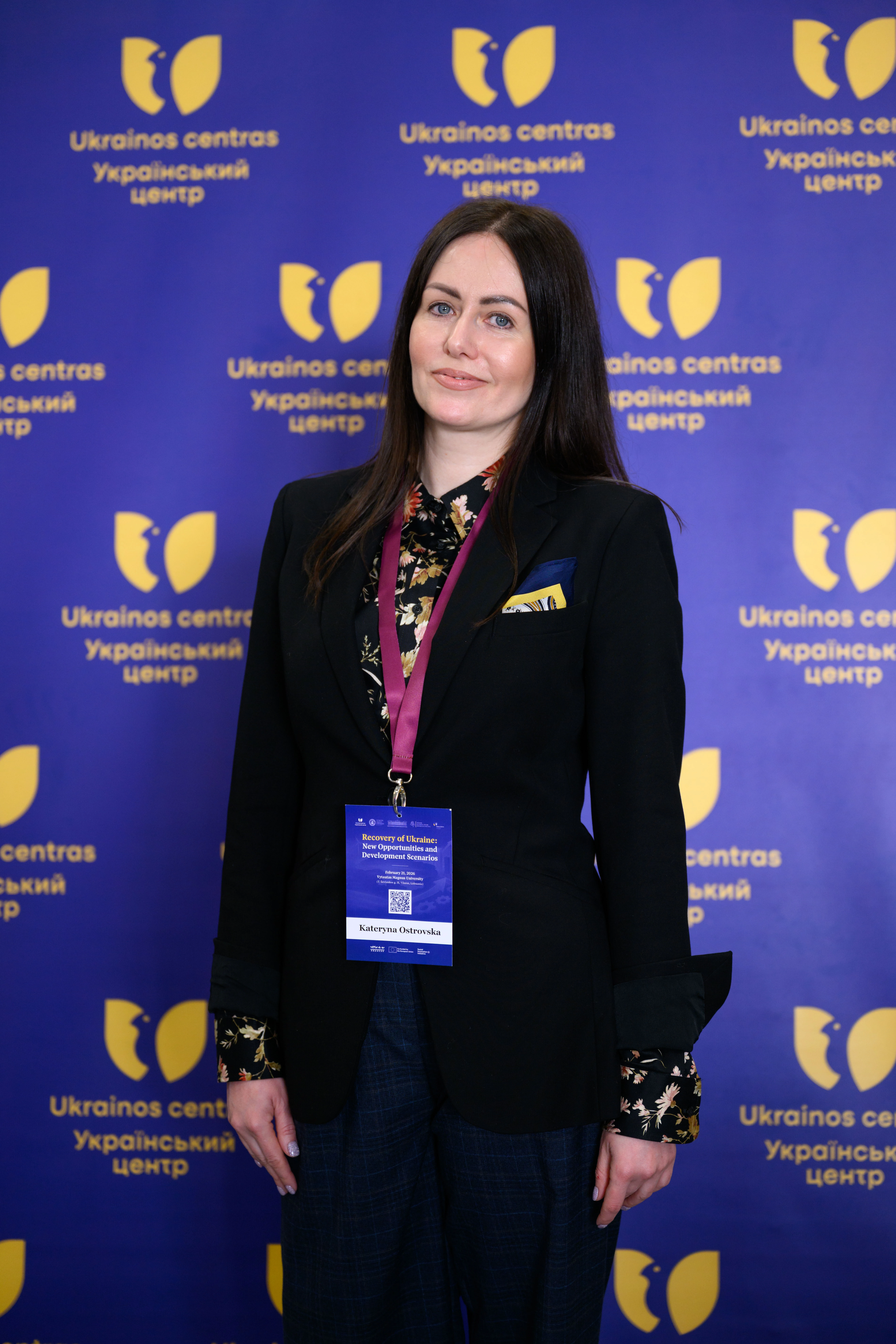
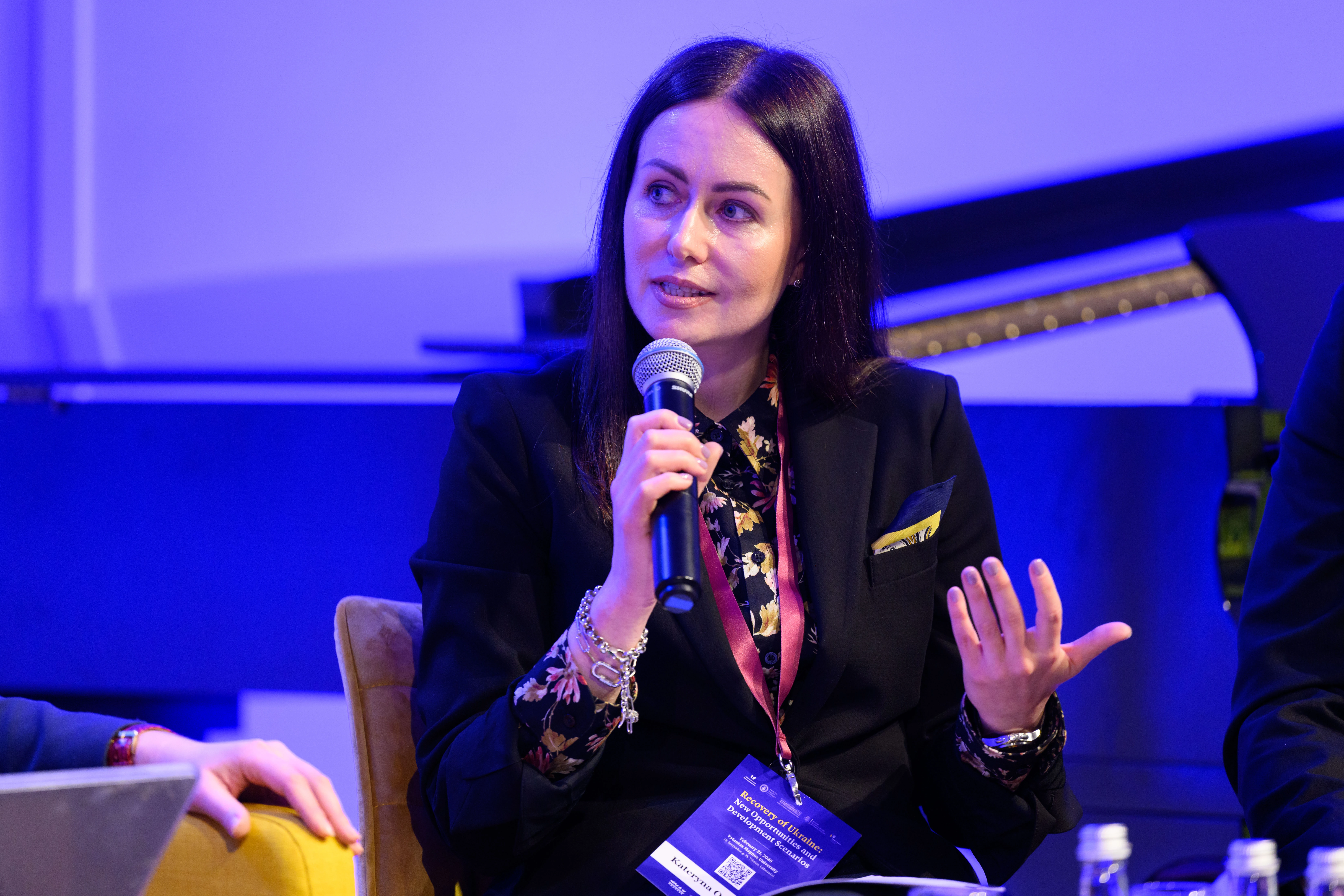
On February 21, 2026, marking the fourth anniversary of Russia's full-scale invasion of Ukraine, I had the honor of contributing to a panel discussion at the international forum "Recovery of Ukraine: New Opportunities and Development Scenarios," hosted by the Ukrainian Centre in Vilnius. The session explored potential pathways for Ukraine's EU accession, addressing the political, social, and demographic challenges that lie ahead.
A few weeks later, I served as a co-moderator during World Futures Day — a remarkable 24-hour global event hosted by the Millennium Project. Gathering at noon with friends and like-minded colleagues from across time zones, I was reminded of something the fellowship had quietly instilled in me: the power of shared spaces, shared ideas, and the long view.
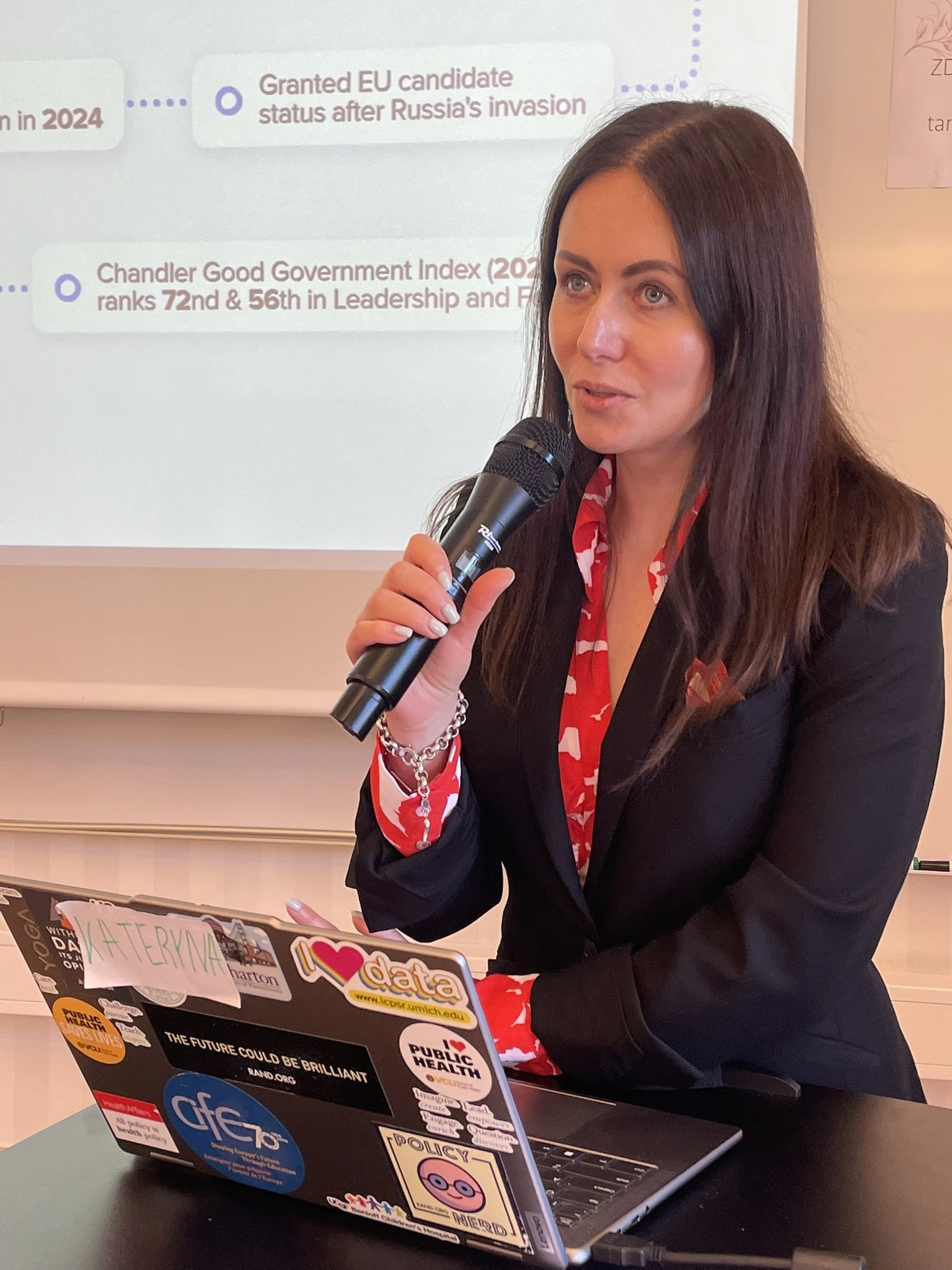
Then, on my birthday, April 21, I found myself in Stockholm, presenting a case on Ukraine's path toward European integration to my groupmates at the SI Academy for Young Professionals, organized by Södertörn University. The presentation focused squarely on Ukraine's anticipatory governance capacities and the institutional effort to embed long-view planning into policy. It felt, in the best possible way, like things coming full circle.
None of this would have happened without the fellowship finding its way to me. The long-term thinking mindset I now carry is the product of personal effort, a measure of luck, and the generous support of institutions, and the remarkable people acting on their behalf, who believed in investing in people: the Institute of International Education, the University of California San Francisco, and the Institute for the Future among them. California changed something in me. And I have never felt the same since.