
Brandon Carson on Connecting to His Lithuanian Roots Through Music
During his Fulbright grant, Brandon Carson, a composer from the U.S., allowed music to connect him to his Lithuanian roots. He learned how to play Lithuanian instruments, and composed new music for them. He also studied the Lithuanian language, which allowed him to communicate with musicians, and even to connect with his relatives. Upon his return to the U.S., he started working with Lithuanian American communities to help keep important folk music traditions alive outside of the European country.
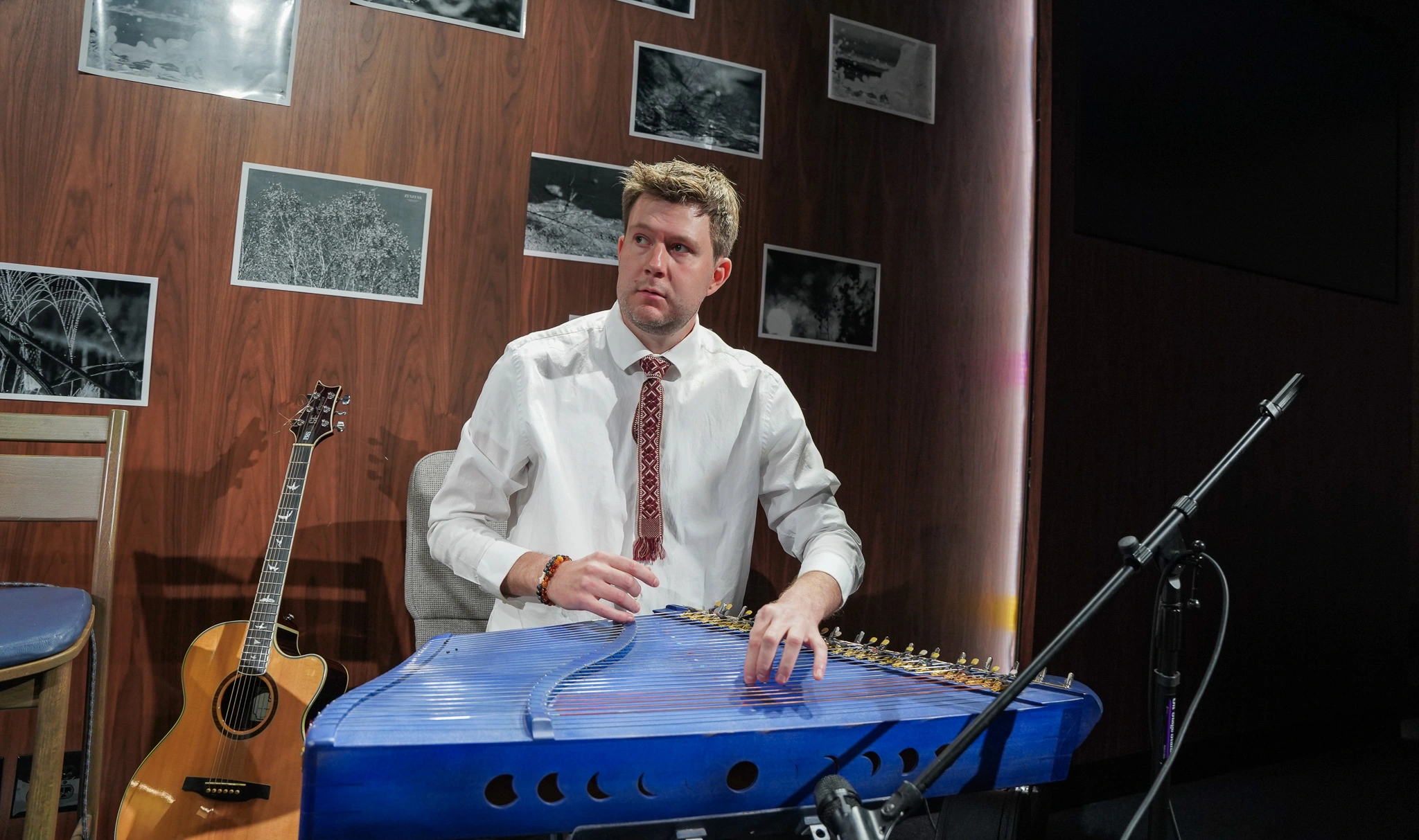
In this Q&A, he talks about his journey and what it's meant for him, both personally and profesionally. You can watch a video of him playing kanklės, a traditional Lithuanian instrument, at the end of this article.
How did you end up becoming a musician? Were you always drawn to music?
I felt especially drawn to music starting in middle school band class. Percussion was the instrument I chose, and every day was filled with fascinating new sounds to explore.
When did you first hear about Fulbright and how did you make the decision to apply?
I first heard about it through a summer music program while in college. However, it wasn’t until years later that I decided to apply for a Fulbright grant myself. The Fulbright program was a great way to begin my journey in Lithuanian music.
Your music is a mix of several elements, from different cultures. Can you tell us a little bit more about your main influences?
Learning from different cultures can help us look at music, and life, from another perspective. One of my main musical influences before my studies in Lithuania had been Balinese gamelan music. It was an incredible honor to study Balinese music with I Nyoman Wenten at California Institute of the Arts and in Bali. Without that experience, I would never have had the confidence to explore a new project in Lithuania.
You have Lithuanian roots and that was the country you decided to do your Fulbright Award in. What were the expectations you had going into the Award and how did reality compare to what you expected?
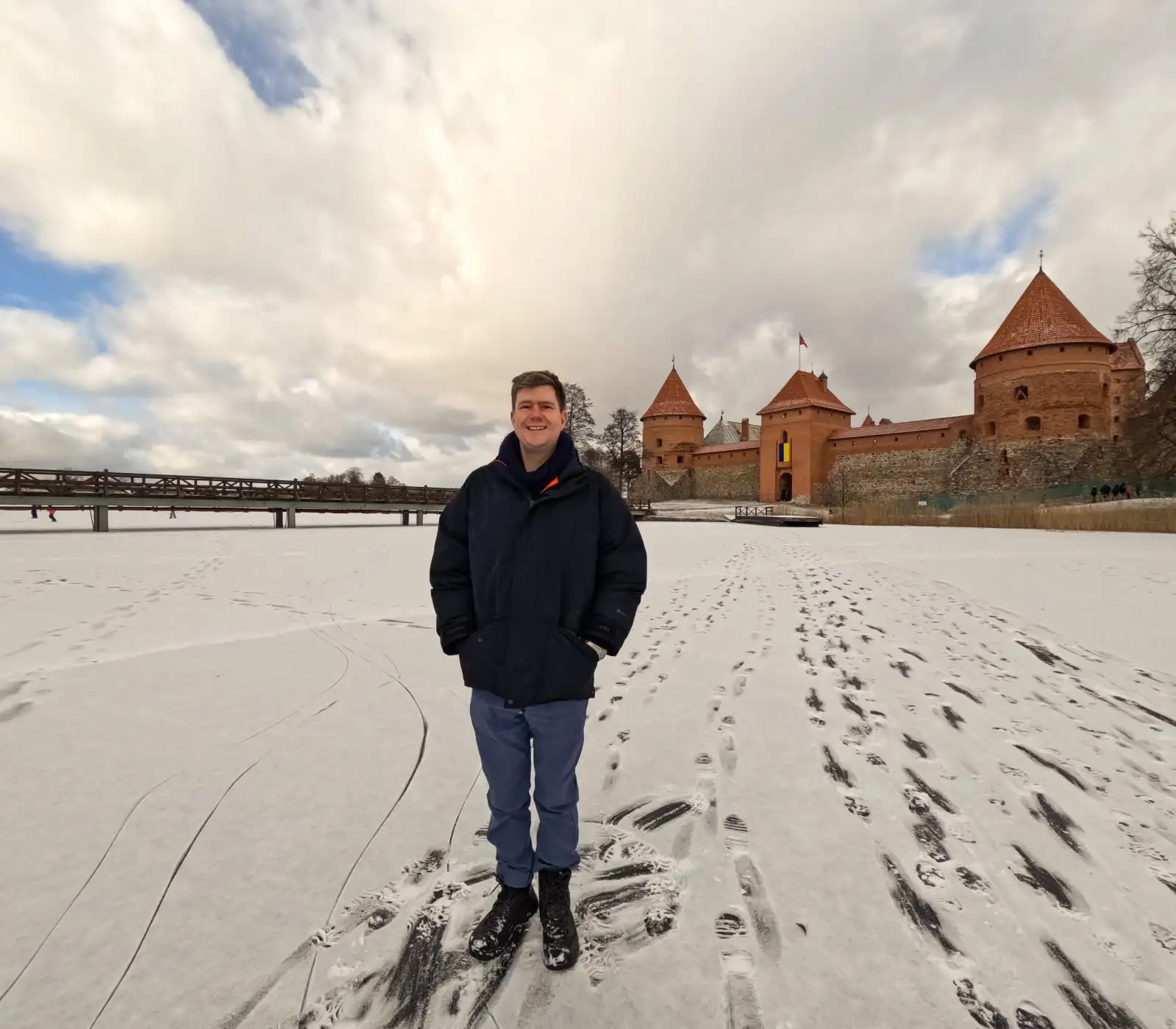
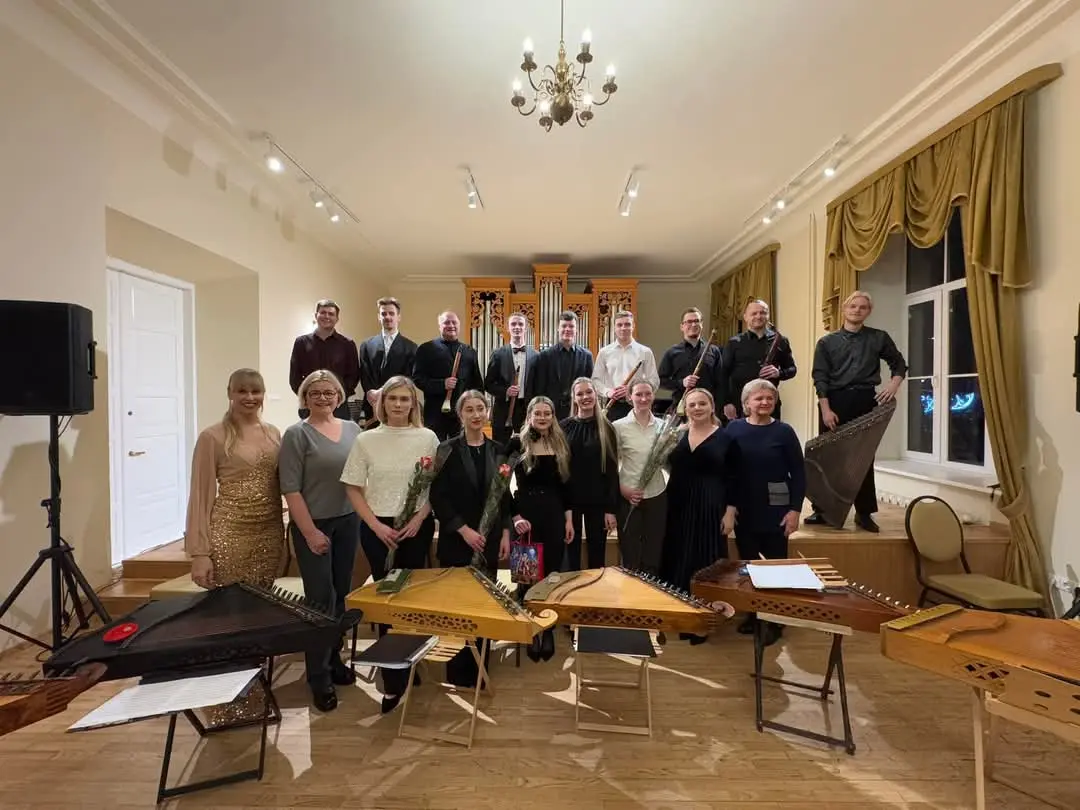
My project was about connecting to the Lithuanian roots I have, both musically and personally. Reality only exceeded my wildest expectations of the country. Even though I’d been told it can take time for Lithuanians to warm up to you, I made some very strong connections there. My interest in folk music and my effort to speak the Lithuanian language really helped deepen those connections as well. I did not expect to form such solid relationships with musicians, folk-instrument makers, my own Lithuanian relatives, and other Lithuanian-American diaspora like myself.
Please tell us a bit more about what you researched on your grant.
My grant was focused on folk instruments, language, and composing new music. For composing, it was my goal to create new pieces for Lithuanian instruments designed for beginners, and my book Kanklės Naujomis Akimis (Kanklės Through New Eyes) contributes ten new pieces to this repertoire. I was also interested in how Lithuanian instruments are made and who is making them. During my grant period, I spoke with several master instrument makers about the importance of carrying these traditions of making instruments by hand. I even got to observe this process for three different kinds of instruments.
What did you learn about Lithuanian culture, and most specifically music, while on your grant, and how did this affect your work?
I learned that music is very intertwined with Lithuanian culture. Singing is an integral part of Lithuanian identity. Lithuanians also tend to place a heavy importance on nature, which greatly affected my work. For example, being out in the forest and hearing the songs of new birds I hadn't come across in America inspired a few pieces in my book for kanklės.
What are the instruments you learned to play in Lithuania that you wish everyone had heard of? Why do you think they are special?
The three instruments I focused on the most were the Lithuanian skrabalai, birybnė, and kanklės. For such a small country, Lithuania has a very rich and unique folk music culture and that is why I think the instruments are so special. Each of the instruments has a very ancient history as well. Skrabalai, a set of tuned woodblocks that can be played like a xylophone, were once used like cowbells to herd sheep. The Birybnė, a wooden reed instrument with a bell made of horn, was once fashioned from straw and played by shepherds. The Kanklės, a stringed zither that may be plucked by fingers or strummed with a plectrum, also has a very ancient history. It is said that the trees from which Pagan Lithuanians constructed kanklės represented people’s souls, and that you could hear those souls singing when the instrument was played.
You learned to speak Lithuanian while on your grant; how was the process of learning a completely new language and how did it affect your overall experience?
Learning any new language is difficult, and Lithuanian was certainly no exception because of its incredibly complex and nuanced grammar. However, deciding to learn the Lithuanian language was the best decision I made while on the grant. After a year of intensive study through Vilnius University, I am now able to speak the language of my ancestors at a B1 level. Whenever I made an effort to speak in someone’s native language of Lithuanian, I felt a much stronger connection with them. People were impressed by that and were more willing to freely share about their culture. My favorite thing about learning Lithuanian was that once people realized I could understand and speak a fair amount, they would go out of their way to tell me their stories. This was especially true amongst older generations of Lithuanians that did not speak English, and their stories that were often the most valuable to me.
You have created music for several contemporary dance projects. How is this different from composing for other purposes?
Composing for dance is different from composing for the concert hall because music for dance needs to perform a certain function. This could be to heighten a specific emotion attached to a scene, as the music in a film might function. More specific to ballet, this function is to provide tempo and meter that support the movement within the dance. I especially enjoy this challenge because these constraints can actually provide more inspiration and creativity when composing.
What is your favorite thing about Lithuania and what surprised you the most about the experience living abroad?
My favorite thing about Lithuania was its nature. Lithuanian people have a special connection to that nature, too. Hike through the forest with a Lithuanian, and you’ll learn about every plant you pass (and which ones you can eat, too!). And of course my favorite food – Šaltibarščiai! (Lithuanian cold beetroot soup). When it comes to what surprised me, I'd say it was the kindness and sense of community I felt in Lithuania. It was incredibly humbling to experience such warmth from a new community. I always felt I could get whatever help I needed.
As the Award season for U.S. citizens is currently open, what would you say to someone considering applying for a Fulbright Award abroad?
Make it clear how authentic and unique your dream is. The Fulbright Award can be a great journey of personal growth and discovery. Let your passion for your own project fuel that desire for growth and discovery.