Itto Outini on Storytelling and Building Community
Article written by Fulbrighter Itto Outini.
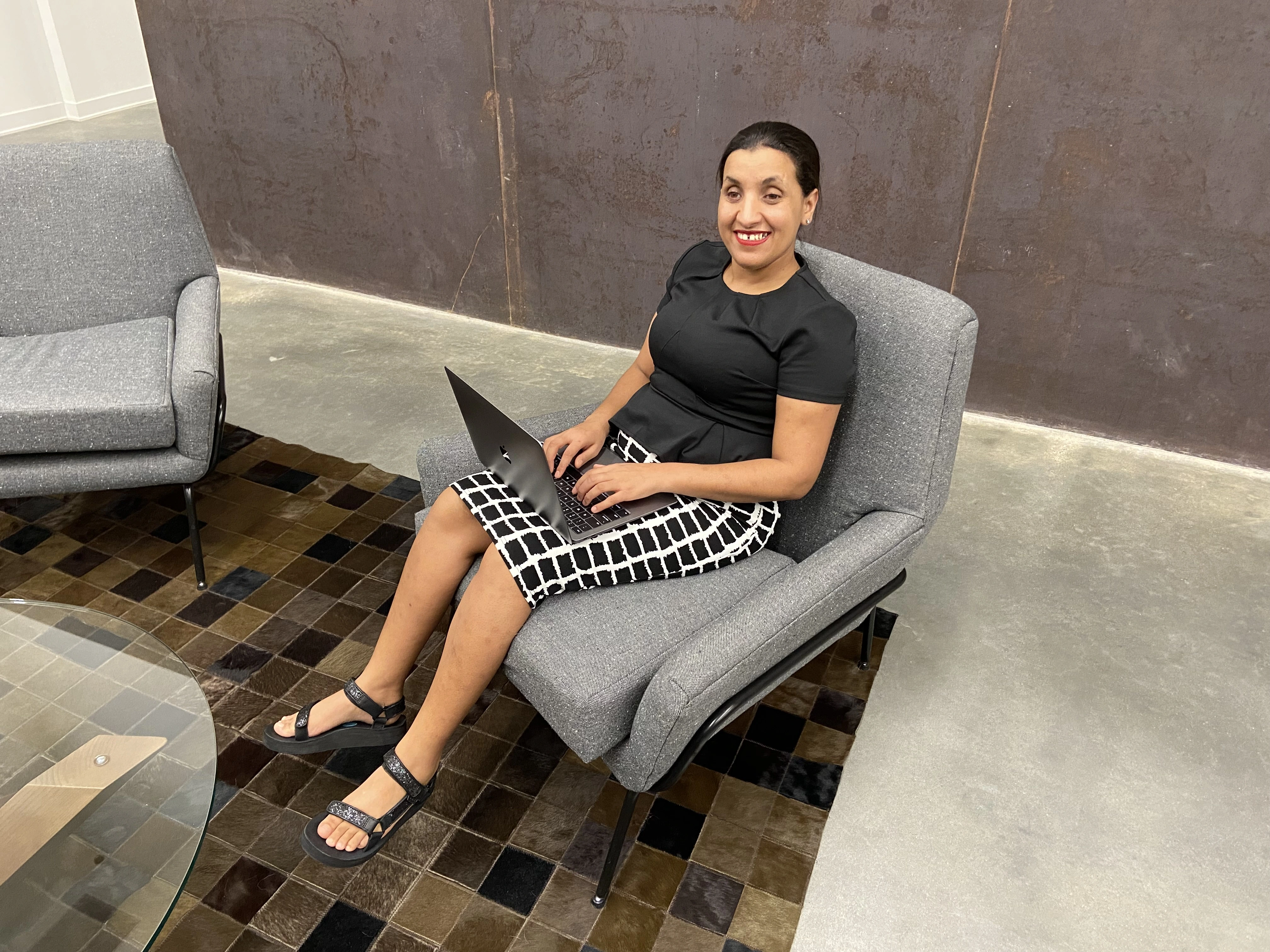
In 2020, we all found out the hard way how important in-person communities are. We also found out that we can’t all have access to in-person communities all the time, and that we needed to invest in other ways of connecting across social, cultural, national, and geographic divides. By that time, the Fulbright had, for three years, been the strongest in-person community I’d ever had. Now, in the midst of the pandemic, it became my first online community, too.
Five years later, when I set out to build an online community of writers and artists around the world, I found a model in the network of relationships I built with Fulbrighters while sheltering in place during COVID-19.
The big difference, of course, is that those relationships were built in private, whereas the podcast I’m now hosting, Let’s Have a Renaissance, is public-facing, but my husband and I are having the same types of conversations with our guests that I first started having with my fellow Fulbrighters: how to overcome isolation and forge communities, how to do something positive and useful with our suffering, how to look beyond what divides us and seek common ground. To the best of my knowledge, no other podcast is doing what we’re doing, bringing together writers, editors, visual artists, composers, musicians, performers, and other creative professionals from all around the world to learn from each other.
Before launching Let’s Have a Renaissance, we searched high and low for a podcast like it and found nothing. We’ve also talked to hundreds of people across the world of arts and letters, and no one has been able to point to another such venture. Most arts podcasts focus on a single discipline, writers talking to writers, composers to composers, and so on, but one thing I learned from the Fulbright is that we all stand to benefit from cross-disciplinary conversations. If, through the Fulbright, I’d met only other journalism students, I might not have survived what happened to me immediately following graduation.
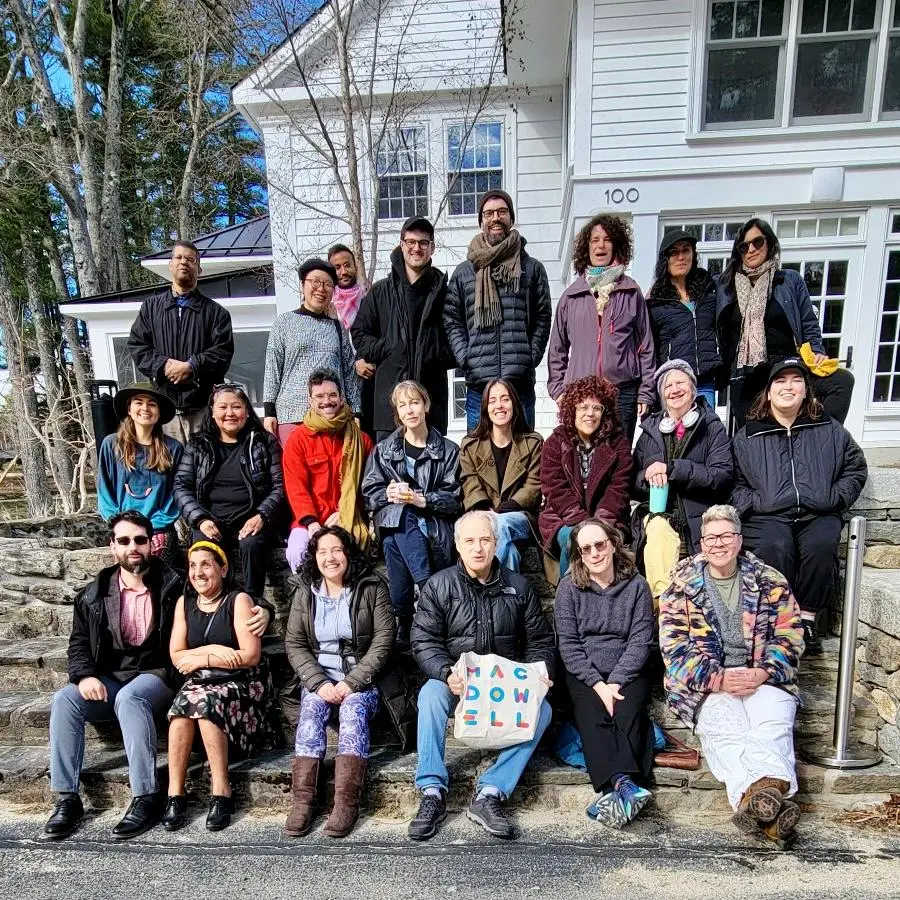 Itto and her husband with colleagues at MacDowell, an artist residency program
To become an audio journalist was my longest-standing professional ambition, sparked by the radio I carried around with me while fighting to survive on the streets of Morocco. The Fulbright gave me a foot in the door, granting me a ticket to study in the US, but when I graduated with my MA in journalism, one door after another started slamming shut. I was offered a job by a prestigious news organization, then ghosted. I spent months volunteering for a somewhat less prestigious radio station in hopes of being offered a job there, but never was. If my entire social circle had consisted exclusively of journalists and media scholars, I might’ve forgotten about all the other paths that one can take in life and plunged into despair. But I was surrounded by Fulbrighters who were thriving in other fields, from filmmaking to electrical engineering. This gave me the strength and perspective to keep going.
Whatever I did next, I knew it would have to involve stories. I spent my formative years in the Atlas Mountains, where a 9,000-year-old oral tradition is still going strong. Storytelling is in my bones. There’s nothing more powerful than narrative. Stories can be turned into weapons and used to divide us, or they can empower us to see one another more clearly, granting us glimpses of one another’s inner lives and reminding us that, at the end of the day, we are all human beings. I went into journalism because I wanted to use stories to bring people together. When I walked away, it was, in large part, for the same reason. Within the Fulbright community and beyond it, I’ve met countless people of extraordinary talent and passion who are doing meaningful and groundbreaking work and getting absolutely no attention from the mainstream media. I used to think the journalists just didn’t know where to look to find these stories. Now I know better. We can’t rely on journalists to tell our stories for us. We have to take our stories into our own hands and tell them ourselves.
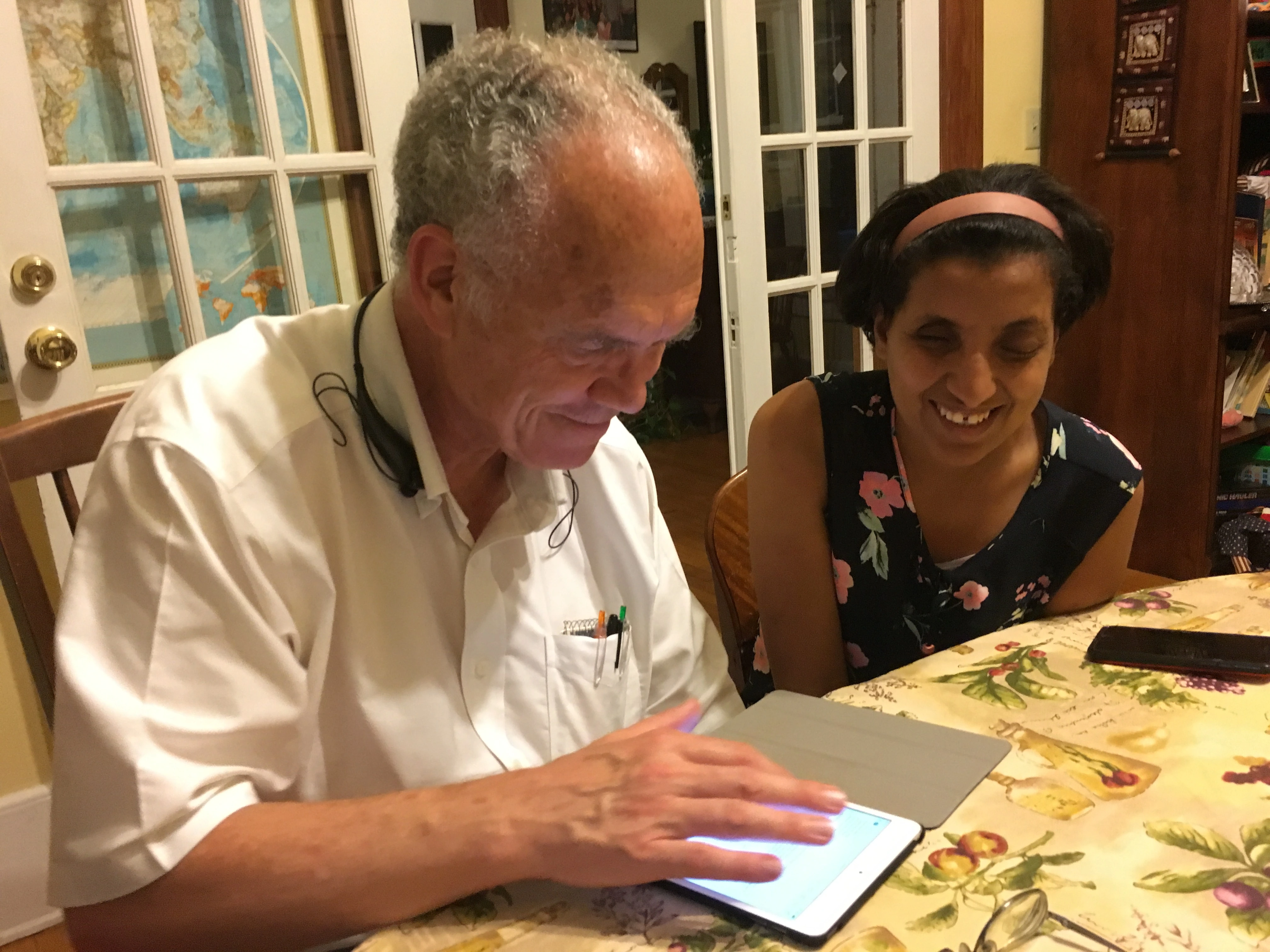 Itto in the U.S. with a member of the family who hosted her
The problem for most people is that storytelling is a skill, as is communication in each of the media—print, audio, visual, and audiovisual—through which stories can be told. I grew up telling stories, and I’ve always been good at it, but it took me years to master audio narration, and years more to master writing, to which I turned after letting go of my journalistic ambitions. Many people spend their entire lives mastering the skills they need to achieve great things in their chosen professions, but never learn the first thing about writing, public speaking, audio editing, visual design, filmmaking, or storytelling. When the time comes to share what they’ve learned with the wider world, they find out the hard way that they lack the ability to do so.
There’s another problem, too. No matter how good you are at telling your story, you need an audience. Most professions don’t come with built-in platforms, nor do most professionals take the time to build their own. Even in the arts, where most people understand the importance of storytelling, most practitioners hate social media, shy away from public speaking, and recoil in disgust from the mere thought of marketing. In the past, publishing houses, studios, galleries, and record labels took responsibility for most of these tasks, leaving artists free to concentrate on making art, but these days, it’s next to impossible to get a foot in the door unless you have a platform and an audience of your own.
I didn’t know any of this when I left journalism. It took me years of research, and several disillusioning forays into the darker corners of the for- and nonprofit worlds, before I began to understand that I was not alone. I can’t tell you how many people I’ve met, including many who, on paper, are a lot more accomplished than me, who feel small, invisible, and alone because they don’t know how to tell their stories and fear that if they did, no one would listen. That’s why my husband and I started our podcast: to give writers and artists a platform where they can share their stories with one another and with the world. It’s also why we started our business, The DateKeepers, an author support platform where we help people who’ve accomplished a lot learn how to tell their stories, build their platforms, find their audiences, write and publish their books, and turn their achievements into legacies that will be honored and remembered.
Busy work, labor that's empty of meaning, isn't something I know how to to. It's why I didnt't make it in the nonprofit sector, nor in the for-profit company where I was employed for a short time. These days, I wake up every morning energized, ready to take on the next challenge, because I can see the impact of the work I'm doing rippling through people's lives. I'm grateful every day to the Fulbright program for starting me on this journey and showing me what an international, interdisciplinary community looks like. It's more than I ever could've dreamed of in the Atlas Mountains, or while homeless on the streets of Morocco, but if I could have, this is the dream I would have had.
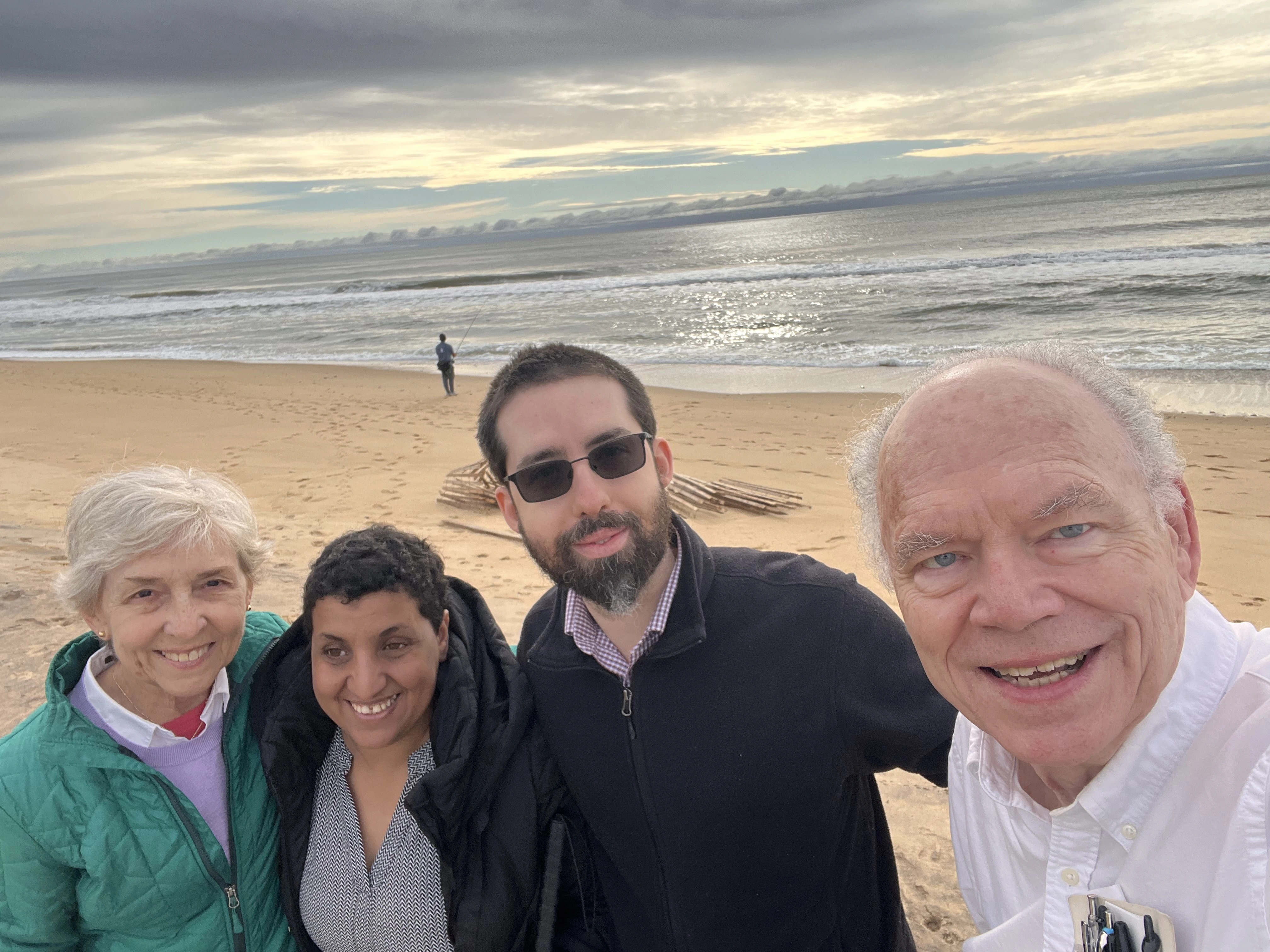 Itto, her husband and her host family in the U.S.