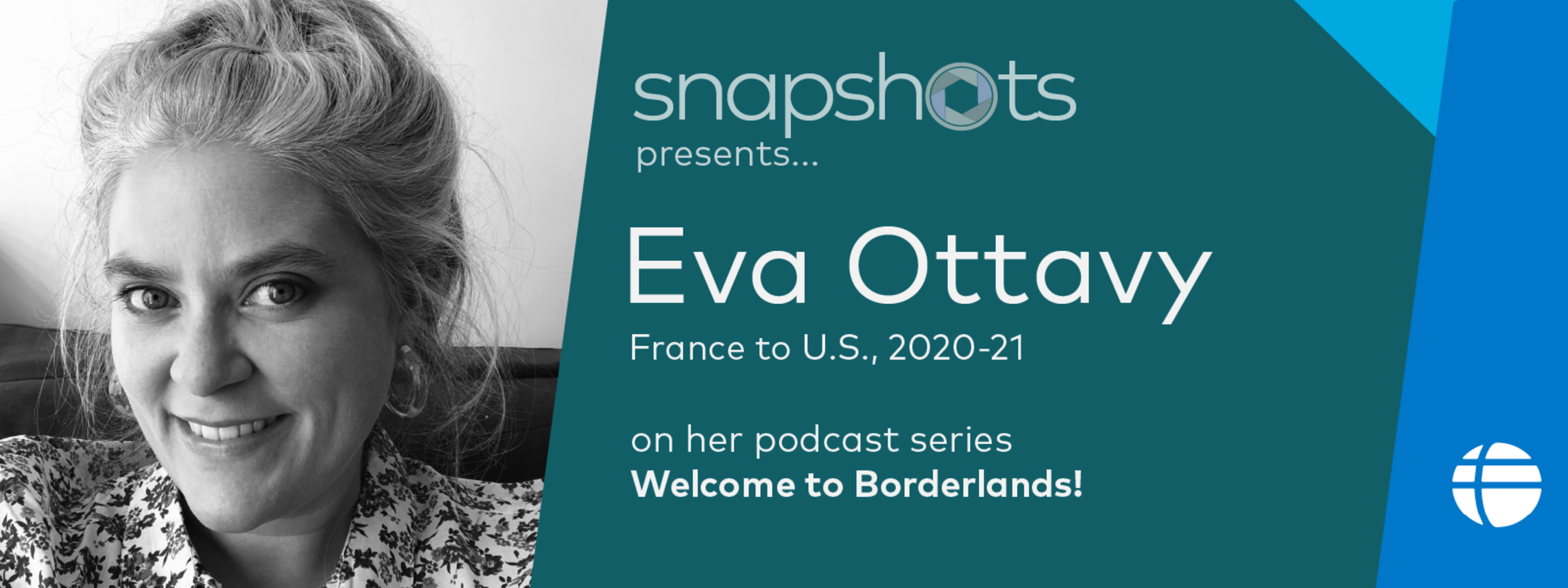
Snapshots presents Eva Ottavy (France to U.S., 2020-21) on her podcast series Welcome to Borderlands!
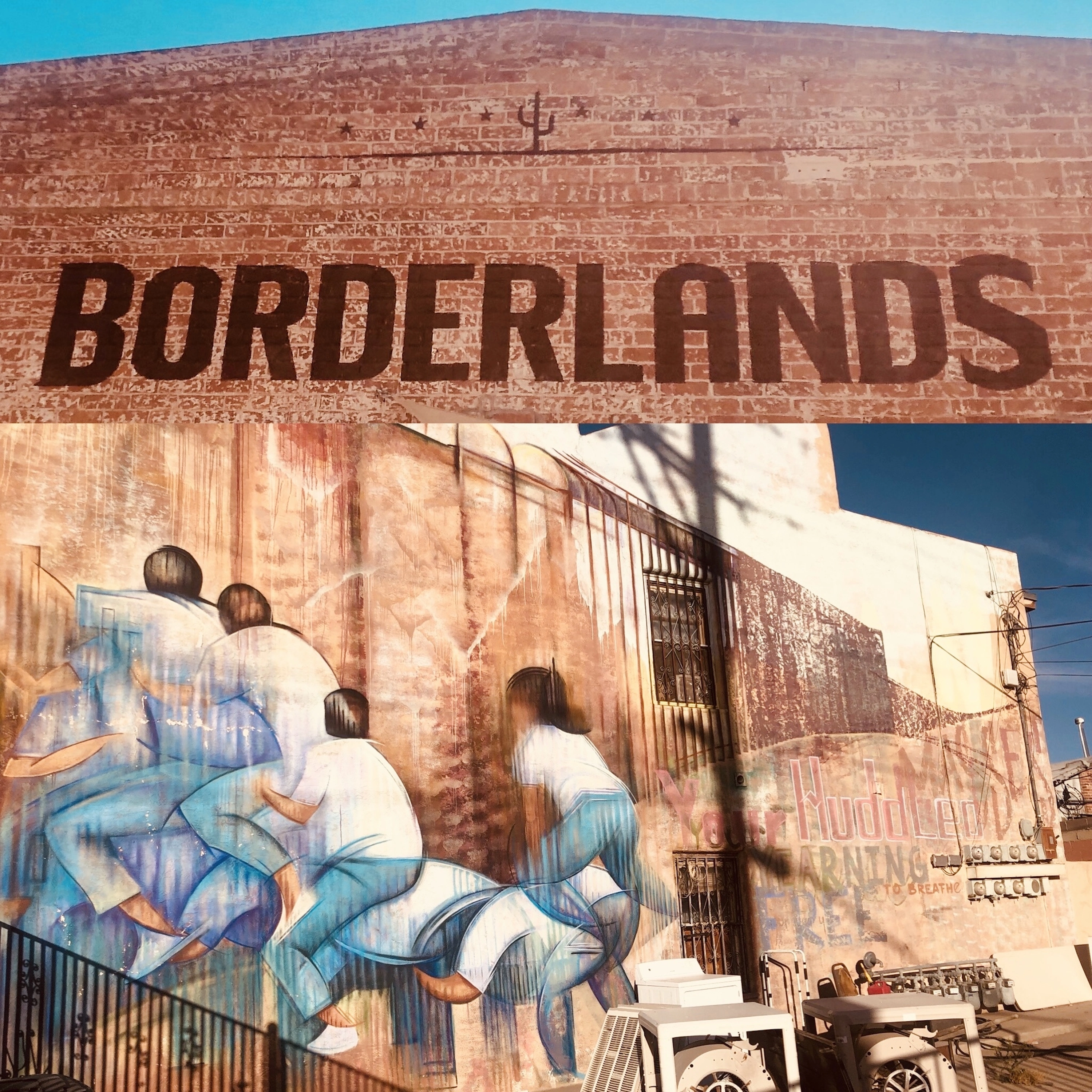
I said to myself that the podcast should address the question of the border zone more broadly by letting the actors, living and working in the field, explain from their point of view, what is happening there.
Can you tell us about your podcast series Welcome to Borderlands?
“Welcome to Borderlands!” is one of the first sentences I heard when I arrived in Tucson, Arizona. Sponsored by Fulbright and hosted by the American non-profit, the Colibrí center for human rights, in the US, I focused my work on death and disappearance at the US-Mexico border for 6 months in 2021.
I wanted to share my experience by another vector than writing. I thought about video or audio. The audio seemed more accessible to me. So, I chose the podcast format, but I didn’t know anything about how to do it. Lucky me, I have good friends who helped for the technical issues like mixing the sound, for instance. Without that kind of support, it would have been more difficult for me to succeed.
“Welcome to Borderlands” is a 6 episode podcast series about the US-Mexico migration border policies and their impact on communities, in one of the most militarized, controlled and deadly counties of the border: the Pima county in the State of Arizona. From defining what the borderlands is to understanding the impact of the US migration policies in the region, the podcast tackles the sensitive subject of death and disappearance during the migration journey as well as the struggle of their families and supporters for answers.
Welcome to Borderlands podcast is available on SoundClound, Apple podcast, Spotify and Deezer.
Could you tell us about how your experiences as a Fulbrighter influenced the Borderlands series?
On the introduction day to the Fulbright program, before departure, Arnaud Roujou de Boubée, the former France Fulbright director, said “nothing will happen as you planned. Let yourself be surprised”. This is exactly what happened, I had to adapt my project, especially the podcast, to the pandemic but also to the encounters.
The podcast was the challenge I set myself when I proposed my project to the Fulbright in 2020. Thus, all the interviews carried out during the project were likely to be used for the podcast. 34 interviews were conducted, 19 of them directly used in the podcast.
At first, I wanted the podcast to focus only on the issue of dead and missing people. The subject is little covered in the media or often overlooked. It seemed central to me to show the struggle of families and supports. Not speaking Spanish, I could not speak directly with relatives of missing persons. I made the choice, while trying to respect as much diversity as possible, to make their supporters speak and the actors in the field that they can find on their way. However, it seemed impossible to me to talk about this subject without addressing more generally the geopolitical context of the border. Indeed, the status of Fulbrighter and its recognition in the United States has facilitated the building of trust and the meeting of certain institutions and people. The more people I met, the more they told me that in the United States the reality of the border is little known, that there were sometimes more foreign journalists than Americans. So, I said to myself that the podcast should address the question of the border zone more broadly by letting the actors, living and working in the field, explain from their point of view, what is happening there: what is this border zone? why is there a need for search and rescue (SAR)? what are the civil responses in terms of SAR? Etc. Beyond raising awareness, one of the objectives of this podcast is also to be grateful and give something to the people I met in the borderlands during these 6 months.
Who is your favourite writer?
People who know me would say I don’t read many books. I’m more comics, but definitely the last book series I really devoured was the Vernon Subutex of Virginie Despentes, so accurate and contemporary.
About Eva
Eva Ottavy has been working for non-profit organizations for 15 years. Specialized on issues related to the respect of the migrants’ rights at borders in the Euro-African region, in the last eight years, she has been focusing on different aspects in relation to death and missing at the borders in the frame of her work at the French non-profit La Cimade as the head of the international department. In 2020/2021, Eva received a Fulbright scholarship under the “NGO leader” program.