Sammy Lee on Identity, Displacement, and Longing as a Korean-American
Sammy Lee explores sculpture, bookbinding, and installation in her interdisciplinary practice as an artist. She first heard about Fulbright during her college and graduate school years. "Fulbright was always mentioned with reverence, like a gold standard of intellectual adventure", she recalls. "Many artists didn’t even realize the program was open to art professionals. It carried this mythical aura". But it wasn’t until she reached a moment in her practice where questions of identity and belonging demanded not just studio time, but a relived experience, that Lee finally applied for a Fulbright Award. The timing felt less strategic and more like a magnetic pull — she was heading back to Seoul 32 years after she had left.
In this interview, Lee discusses the importance of going back to her roots for her artwork and expands on feelings of identity and belonging in the Korean-American community.
Read the full interview below and make sure to reach out to her on Fulbrighter if you want to learn more about her amazing work!
Tell us a bit about your Fulbright grant and what you were aiming to research.
I was a recipient of the Fulbright U.S. Scholar Award to South Korea in 2023–24. It allowed me to live, observe, and create in Korea — my country of origin, though one I had been estranged from for over three decades. In many ways, it felt less like a grant and more like a purposeful homecoming. I am an independent researcher and artist, and Chung-Ang University in Seoul invited me. My initial research focused on diasporic memory and traditional Korean art materials — especially hanji paper and its varnishes — which I’ve adapted and reinvented in my practice in Denver.
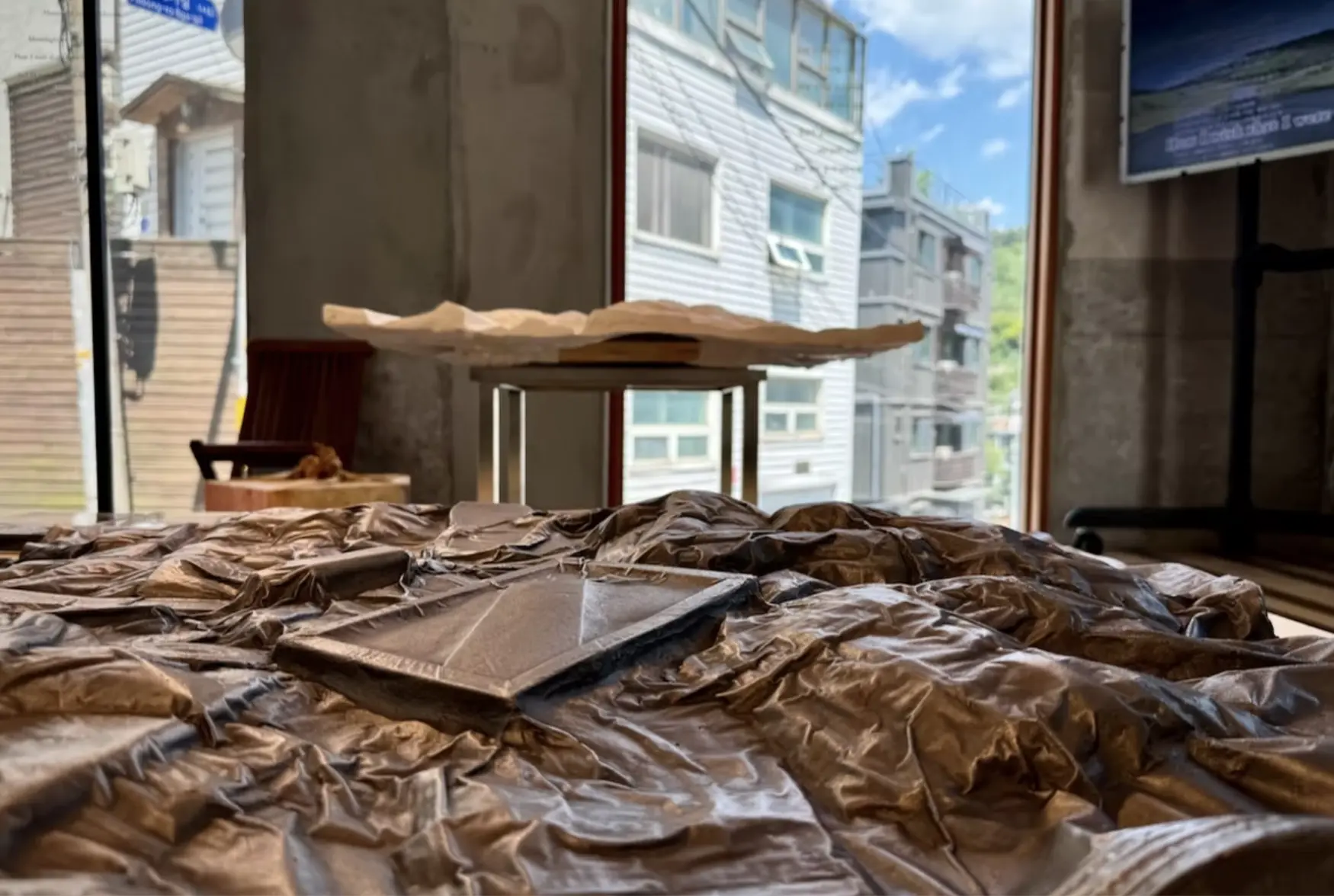
I set out to deepen that exploration and bridge it with questions of hybrid identity. But over time, the project evolved — organically and at times mischievously — into a multi-sensory installation titled Moonlight in Colorado. Inspired by an old American folk song beloved by postwar Korean generations (including my mother’s), the work includes a karaoke video with intentionally mismatched subtitles. It's layered with longing, humor, and a dash of cultural critique. Being in Korea expanded the emotional register and material language of the project. What started as an extension of my studio practice became a deeply resonant and experimental body of work, warmly embraced and supported by the Fulbright community in Seoul.
When did you first leave Seoul?
I was sixteen years old when I came to Southern California. I came as a student, and, at a young age, I wanted to make art in freedom, without the constraints of art school entrance exams and competition.
What drove you to apply for a Fulbright Award in South Korea, after 32 years in the U.S.?
It was about reconnecting with a version of myself I’d left behind. After immigrating to the U.S. in the early '90s, I spent decades orbiting around questions of home, place, and identity. Korea became a sort of phantom limb — I could feel it, even when I couldn’t see it. I wanted to return not as a visitor, but as a local, embedded in Korea’s contemporary art landscape. Fulbright allowed me to do that. It gave me time, space, and purpose to ask personal questions inside a public and creative framework.
How was your arrival in the U.S. in 1991? Did you find it difficult to settle?
Arriving in Southern California as a teenager felt like stepping into a TV screen without knowing the script. I learned English the way most immigrants do — through necessity, confusion, and plenty of embarrassment.
I remember one moment in high school math class: I was the only student who knew the answer, but couldn’t explain it in English, so everyone assumed I was bluffing. Or how I had to pause for two seconds before saying “chicken,” just to make sure I wasn’t blurting out “kitchen.”
I waited and waited for the day I’d dream in English. Even when Tom Cruise appeared in my dreams, he spoke fluent Korean!
Eventually, the language came. Then humor. Then confidence. I lived on both coasts before unexpectedly settling in Denver. Eighteen years later, it’s the longest I’ve lived anywhere — even longer than my years in Korea.
Your video and installation project, Moonlight in Colorado, explores “identity, displacement and longing”, in your own words. You define life as an immigrant as “confusing, funny and unsettling”. How did it feel returning to the U.S. after your time in South Korea?
It was like waking from a vivid dream and realizing the dream is real — but in a different language. I returned to Denver changed, not just by Seoul’s energy or the materials I touched, but by the memory work I’d done. There was humor in the confusion, melancholy in the familiar. That’s the permanent condition of the diasporic artist: your sense of home and identity keeps shapeshifting — like the moon. And just like how the moon appears to follow you when you’re in a moving car, identity shadows you — even when you move across borders. Since coming back, I’ve been thinking about the moon a lot. It’s becoming a metaphor I’m exploring deeply in my work.
What did you cherish the most about the time you spent as a Fulbrighter in South Korea?
The small things. Morning walks through Euljiro watching vendors set up shop. The ritual of making art and taking coffee breaks. The surreal familiarity of hearing city sounds I hadn’t heard since the ’80s. And the people — artisans, collaborators, strangers on the subway — offering unexpected insights. But above all, time. Time to create. Time to sit in discomfort. Time to let memory resurface. I brought my then 8-year-old son with me, and now he shares in those experiences. He won’t return to Korea as a visitor anymore — he’ll return with memories of his own.
Revisiting familiar streets seems to have brought back unexpected memories. Could you describe specific memories that resurfaced during your time in Korea?
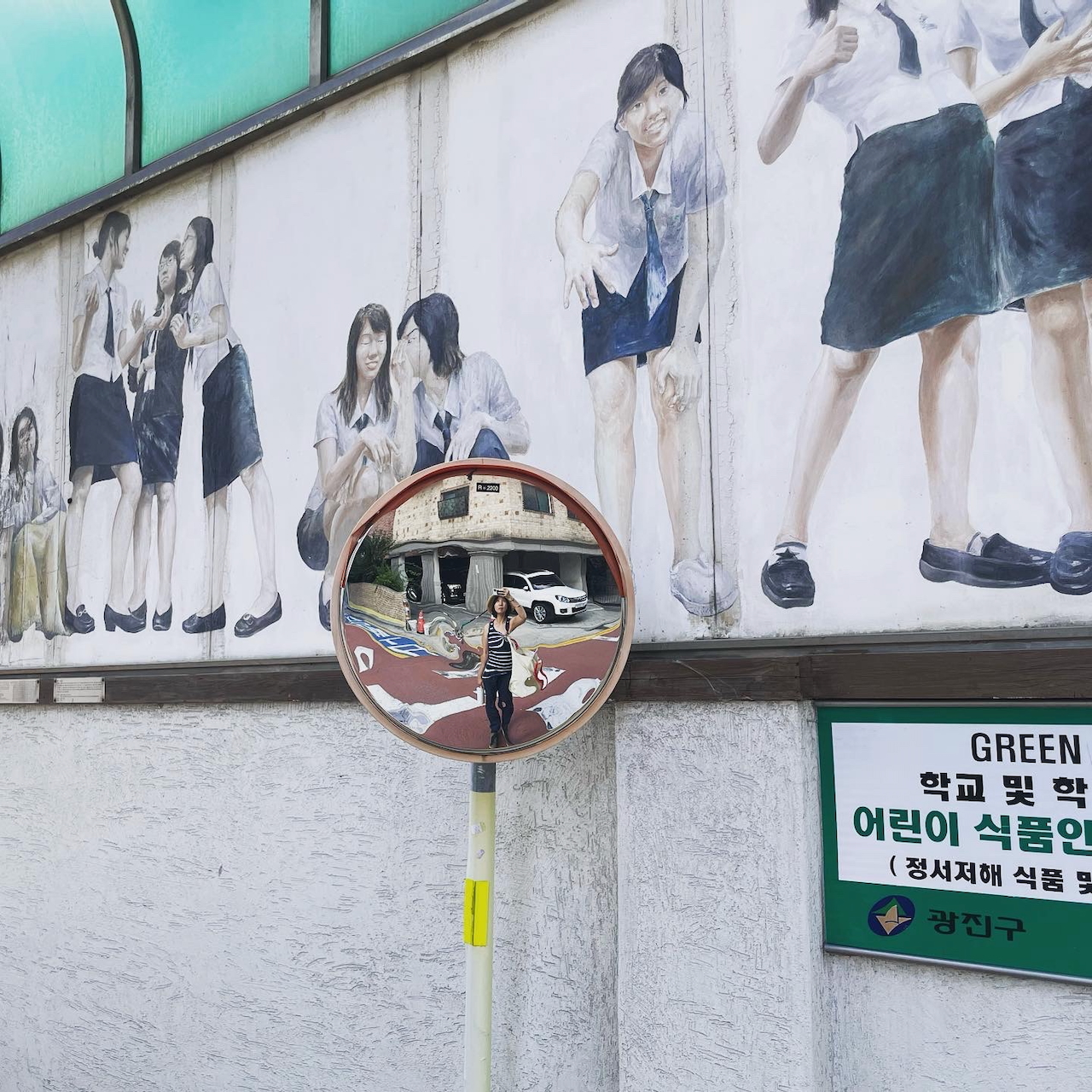
One day, crowds of schoolgirls wearing the same uniform I once wore walked down the opposite direction, and I stood still amongst them for a few seconds. It hit me like a jolt. Suddenly I remembered racing to the cafeteria between bell rings, hiding in secret spots to avoid P.E. class, clutching forbidden snacks. That one image opened the floodgates: the awkwardness, the shyness, the early acts of defiance. It reminded me how much of our identity is stored in muscle memory — in sounds, places, textures we forget we remember.
What is your favorite thing about South Korea? And about the U.S.?
In Korea, I love the food — and the unapologetic intensity: the speed, the precision, the readiness, the devotion to craft. In the U.S., I love the room to breathe. The permission to experiment without needing immediate mastery. Put the two together and you get my ideal working environment: obsessive but playful.
Can you share some more details about your solo exhibition in Denver? When will it take place and what can visitors expect to see?
The exhibition is called BecomingMotherland and it opens in March 2026 at the Museum of Contemporary Art Denver. It expands on Moonlight in Colorado — blending sculpture, video, sound, and installation into a poetic, slightly disorienting narrative. Think memory meets mistranslation, from ten thousand kilometers away and three decades apart. It’s my attempt to map the Korean-American psyche in all its contradictions.
The karaoke video from this installation is especially dear to me. It’s playful but deeply layered- portraying Utopia and “home”. The visuals are mismatched with the lyrics. The translations are intentionally off. The result? Viewers are left a little lost, a little amused, a little disoriented. That, to me, captures the immigrant condition. It’s a ballad wrapped in irony — just like memory. (The video is available at the bottom of the page).
Did you also have your work exhibited in Korea? Tell us a bit more about it.
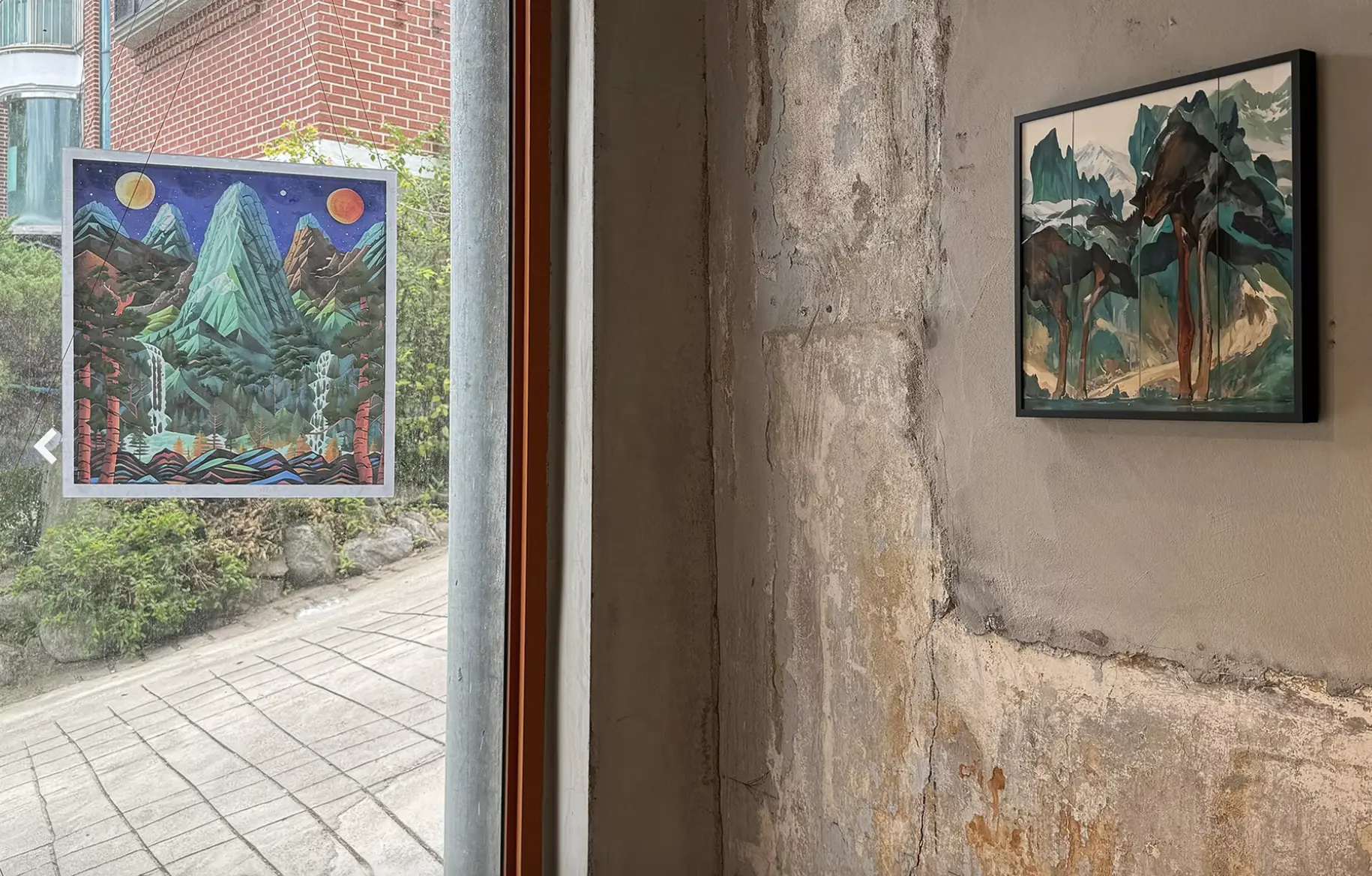
Yes. At the end of my residency in Euljiro, I was invited to stage a solo exhibition in May 2024 in a small gallery tucked into the hillside of Seoul’s Namsan Mountain. It was intimate, informal, and very local. Collaborators, fellow artists, neighbors, even passing hikers came through. The response was warm and inquisitive. The work felt not just like mine, but part of a shared experience of transition, uncertainty, and imagination.
Still, I'd love to return to Seoul showcasing the materials from this upcoming MCA Denver exhibit, as it is an outcome of my Fulbright experience. I want to invite and share my exhibit with the Fulbright staff and all the collaborators and friends I made from Fulbright time.
You’ve mentioned previously that, for you, “Fulbright wasn’t just a research term away from home — it was a gift of time to excavate memory, reconnect with the place that shaped me, and turn that experience into something new”. How do you hope your work resonates with Korean-American audiences? And do you think it’ll also connect with immigrants besides the Korean-American community?
I hope it resonates as both a mirror and a whisper — a way to see oneself reflected and reimagined. For Korean-American audiences, I hope it offers both recognition and complexity. For other immigrant communities, I believe the emotional architecture — longing, translation, misalignment, humor — is universal. We all carry the scent of somewhere else. We all invent home as we go.
What advice would you give to someone thinking about applying to a Fulbright Award in South Korea?
Be open. Be specific in your proposal, but elastic in your heart. Korea is a country of layers — fast-moving but deeply historical. The more you’re willing to listen, the more it will surprise you. And eat everything, even if you don’t know what it is.
You can check out more about Sammy Lee's Moonlight in Colorado installation, including the karaoke piece, also available below, by clicking here.