
Petra Kern on her work with Sinfonía por el Perú and music therapy
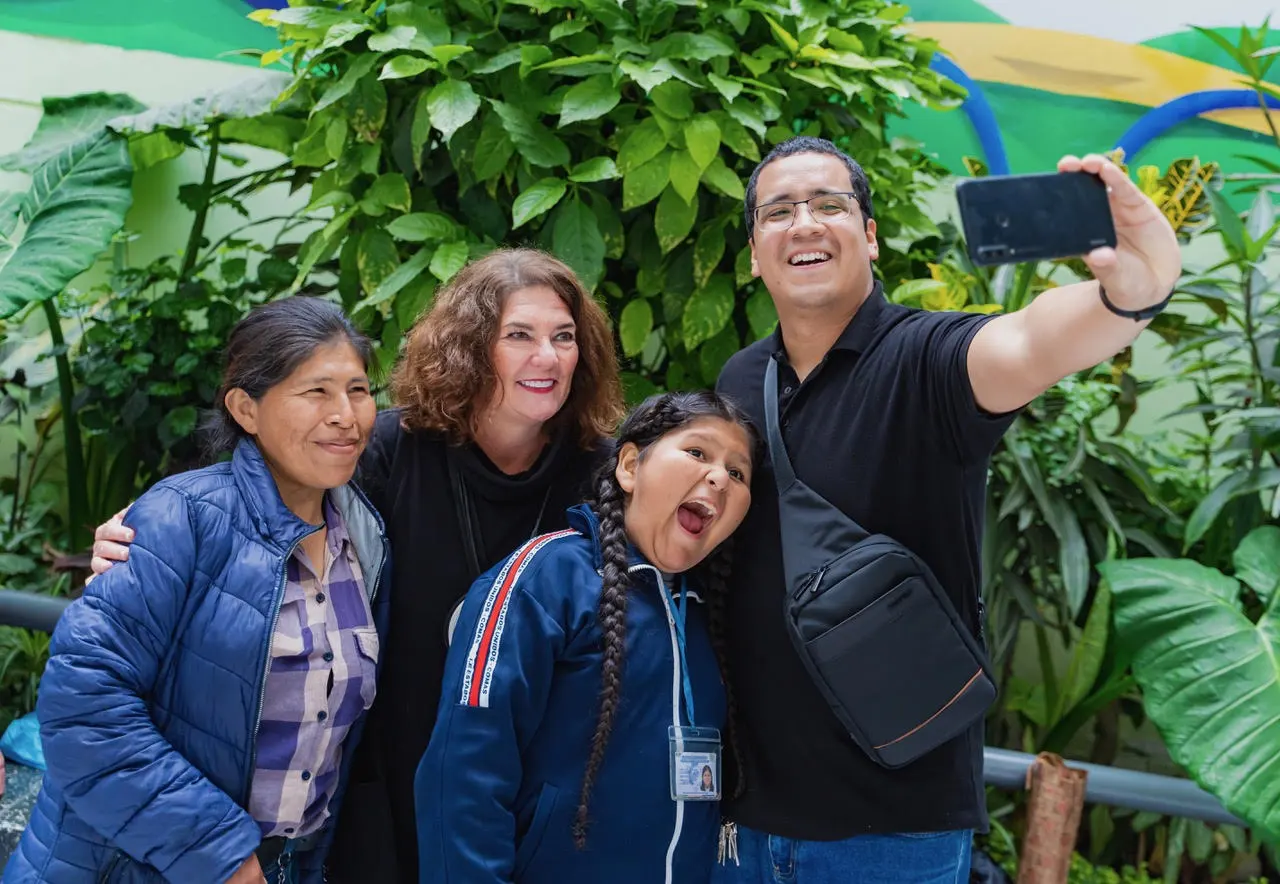
Dr. Petra Kern, 56, is a certified music therapist who took her knowledge all the way from California to South America. While working with Sinfonía por el Perú during her time as a Fulbright Specialist in Lima, she helped find ways to make the organization more inclusive. “Fulbright aligned perfectly with my vision of building bridges across disciplines and cultures through the arts”, she says. You can watch a performance by the projects' participants at the end of this article.
Read the full interview below and make sure to reach out to her on Fulbrighter if you want to learn more about her inspiring work — or ask for tips on where to get the best ceviche while in Lima!
What did you plan on researching when you set off to Lima, Peru, to kick off your grant?
The original aim was to support Sinfonía por el Perú's Special Education Program by enhancing inclusive practices in music education. This involved evaluating existing efforts, providing staff training, and offering guidance on strengthening parent involvement. However, as our collaboration progressed, the scope of the project expanded significantly.
Working closely with the Special Education team, we co-created a parent package, developed a beneficiary-focused evaluation tool, and conducted interviews with students and parents to better understand their experiences and aspirations. These insights shaped not only our understanding of the program’s impact but also informed a preliminary pilot inclusion model.
Recognizing the potential for broader impact, Sinfonía’s leadership requested support to design a five-year strategic roadmap guiding their evolution toward full inclusion. The goal was to ensure that all participants — regardless of ability — could fully engage in the program’s musical life, as part of one artistic community.
How did you start in music therapy and how did you first connect with Sinfonía por el Perú?
My journey into music therapy began with a passion for music and an understanding of its transformative potential beyond performance. Early in my career, I focused on how music supports development in early childhood and neurodiverse populations. These experiences led to clinical, research, and academic roles around the world.
My connection with Sinfonía por el Perú emerged organically through mutual interests in community-based arts programs. The organization's mission of "transforming lives through music" resonated deeply with my values. Their international reach and emphasis on social change through music made them a compelling partner for my Fulbright engagement.
During your grant you started working on the “Sinfonía por la inclusión” project. Can you tell us more about this and what were the challenges you faced?
The idea for this project emerged through conversations with Sinfonía’s Special Education and leadership teams. We identified a shared aspiration: moving from inclusion as a side program to inclusion as a structural, integrated value. Together, we envisioned "Sinfonía por la Inclusión" as a long-term commitment to transforming organizational culture and community perception through music.
The key challenges were shifting mindsets and redefining established policies, all while preserving the integrity of artistic excellence. This involved building internal consensus, developing customized tools, and gathering stakeholder data within the constraints of a limited budget and lean staffing. Cross-cultural collaboration also demanded a high degree of empathy, sensitivity, and adaptability throughout the process.
What would you say was the biggest achievement of this project and what is in its future?
The most impactful achievement was reframing the concept of inclusion within Sinfonía — from a parallel track to a model rooted in shared participation and community. What lies ahead is the expansion of the pilot program, with findings now guiding its adaptation across additional centers in Peru and potentially influencing similar efforts across Latin America. Our recent presentation at the International Inclusion Institute marked a pivotal step in positioning this work within a global dialogue on inclusive arts education.
I continue to support Sinfonía por el Perú on a monthly pro bono basis, providing ongoing consultation as the organization refines and implements its inclusive music education model. In parallel, I have shared key findings and strategies at international events, including in Singapore and the United States, highlighting how inclusive music practices can be culturally adapted while preserving their core impact.
Looking ahead, my goal is to develop adaptable, evidence-informed frameworks that can be transferred to other countries seeking to use the arts as a catalyst for social participation and equity. By building cross-border collaborations and aligning efforts with international policy goals such as the UN’s Sustainable Development Goal 4 (inclusive and equitable quality education), I hope to contribute to a broader movement where access to music and the arts becomes a shared right, not a privilege.
How important is it for children with disabilities to have their family supporting them on their journey to become involved in music and art as a whole and what did you find while working with families in Peru?
Family support is essential. In Peru, I witnessed how actively involved families became not only advocates but also key facilitators of their children’s development. Many parents made significant daily sacrifices — commuting long distances, rearranging work schedules, and navigating barriers to accessibility — all to ensure their child could participate in music classes. Their deep belief in music as a catalyst for growth was both powerful and inspiring.
What struck me most was how families evolved alongside their children. As they saw improvements in communication, attention, and social interaction, their involvement deepened. They became more engaged, more vocal, and often inspired other families to participate. This growing network of support created a collaborative environment that extended well beyond individual progress, nurturing a sense of shared purpose and community transformation.
Why do you think music is an important path for inclusion and how can people support that process in their daily lives?
Music invites participation from everyone, allowing people to contribute based on their abilities. When thoughtfully structured, it creates a shared space where all voices matter — like instruments in a symphony. This fosters connection, belonging, and mutual respect, making music a natural and powerful tool for building inclusive communities.
What would you say are the positive impacts music therapy can have on children with disabilities? How does it influence or impact their behavior or development?
Music therapy is an evidence-based clinical practice that addresses functional outcomes across communication, social, emotional, and cognitive domains. For children with disabilities, structured musical interventions can facilitate expressive and receptive language development, improve joint attention, and support emotional regulation through predictable auditory cues and affective engagement. Group-based music therapy also promotes prosocial behavior, including turn-taking, cooperative play, and empathy development, which are foundational to inclusive learning environments. Neurologically, music engages multiple brain regions simultaneously, enhancing neural connectivity and plasticity. Importantly, music therapy provides strength-based, accessible entry points for participation, enabling children to demonstrate competence and agency. In inclusive music settings, children also develop mutual respect, patience, and a sense of belonging.
What advice would you give to someone thinking about applying to a Fulbright Award in Peru?
Come with curiosity, cultural humility, and a willingness to learn as much as you share. Peru offers a wealth of cultural depth, artistic richness, and a spirit of collaboration that invites meaningful engagement. The success of your work will depend not only on your expertise but on your ability to build trust, adapt to local rhythms, and honor the knowledge already present in the community.
You may arrive with a plan, but what unfolds will likely exceed your expectations in ways both professionally profound and personally transformative. If you approach the experience with openness and respect, Peru will not only welcome your contribution — it will leave a lasting imprint on your worldview.
Lastly, what is your favorite thing about the country?
What I appreciated most about Peru was the warmth and generosity of the people — colleagues, families, and students alike welcomed me with open arms and genuine collaboration. I was deeply inspired by the country’s rich and diverse musical heritage, and how deeply music is woven into everyday life. There is a collective spirit of striving toward something better, paired with an unwavering cultural respect for the arts. And yes — sharing the best ceviche and lomo saltado I have ever had definitely made the experience unforgettable. Peru nourished both my purpose and my palate.