
Snapshots presents Jerome Krase on 'COVID-19 in Brooklyn'
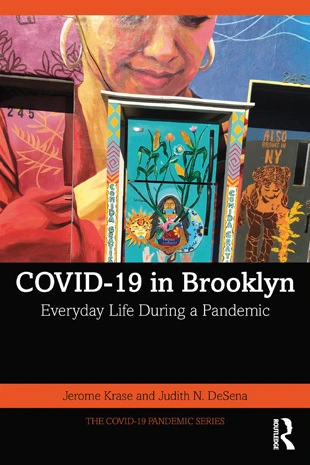
Although some of my photographs might be appreciated for their aesthetic values, it is accidental. Photographs, like text or numerical data, can be both documentation of an event as well as data to further explore
Could you tell us a little about your new co-authored book, COVID-19 in Brooklyn: Everyday Life During a Pandemic?
Judith N. DeSena and I begin with a global perspective and drill down to see how Brooklynites coped with the pandemic from the lockdowns in 2020 through reopening stages. Special attention was paid to relatively privileged people, like ourselves, living in two iconic gentrified Brooklyn neighborhoods --- Park Slope and Greenpoint/Williamsburg. We believe that what happened there is informative for understanding pandemic social life, and by comparison, provides insight to the many more less advantaged localities. Globally and locally, death and infection rates as well as other negative impacts were greater among people marginalized in terms of class, race, and gender.
City-wide local reactions to mandated preventive measures such as mask-wearing and social distancing, as well as concurrent Black Lives Matter and other protests were also studied. We recorded how mundane activities such as neighbouring, shopping, working, and recreation were changed by the pandemic. Our investigation clearly demonstrated how relative affluence or poverty affected residents' ability to cope as the impacts of the crisis grew and then eased. For example, we lived in spacious, well-appointed homes with our own front and back yards to use during the lockdown and were near large public parks. We continued to receive our regular income and worked remotely. In contrast, the less affluent, especially more "essential" workers, lived in crowded dwellings and most had to continue working in low-paying jobs. Many were exposed to the virus at work and carried it back to their vulnerable families. Reports show that during the pandemic in New York City poor and working-class neighbourhoods, dominated by People of Colour, were short-changed in terms of access to testing, vaccination and medical treatment.
During lockdowns, field observations were limited as even taking a walk around the block while wearing a mask was challenging. As restrictions eased, we ventured beyond remote communication and analysis of digital material, to conduct informal street interviews and photo-document local scenes. In the book, we describe, discuss, and give examples of how the COVID-19 pandemic changed attitudes towards common social denominators such as distance and nearness and public vs private spaces. Now we wonder how that pandemic, and guaranteed future ones, might necessitate changes in local and global social life.
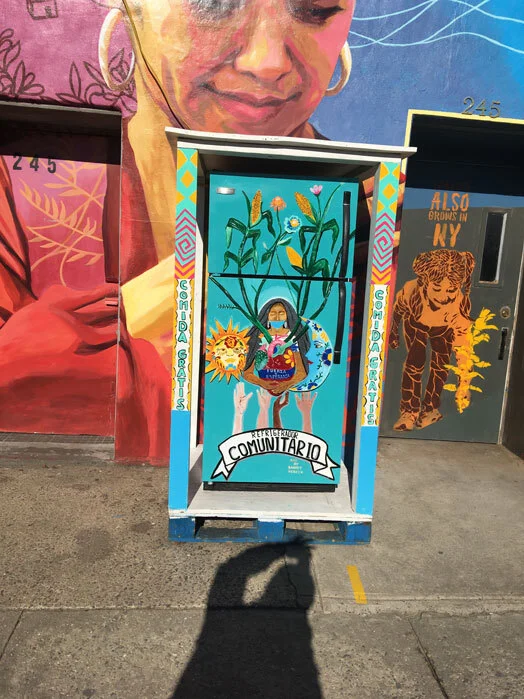
In less privileged neighbourhoods, community groups provided food aid.
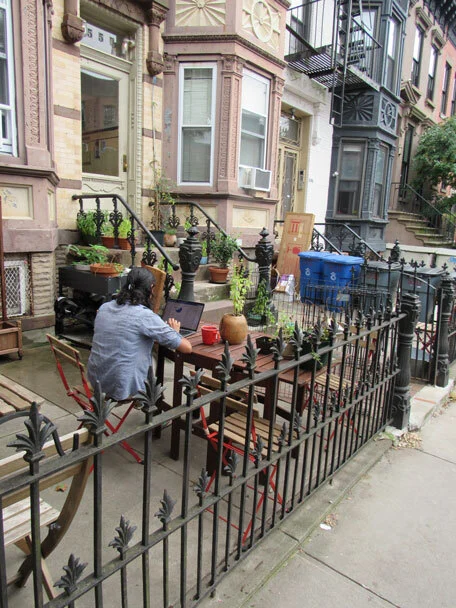
Some people were able to work remotely and at the same time enjoy the fresh air in their front yards.
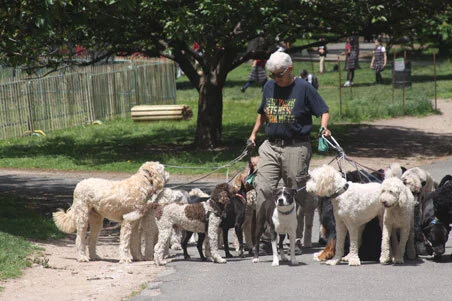
During the pandemic, dog ownership increased dramatically, creating a lucrative employment opportunity for dog walkers.
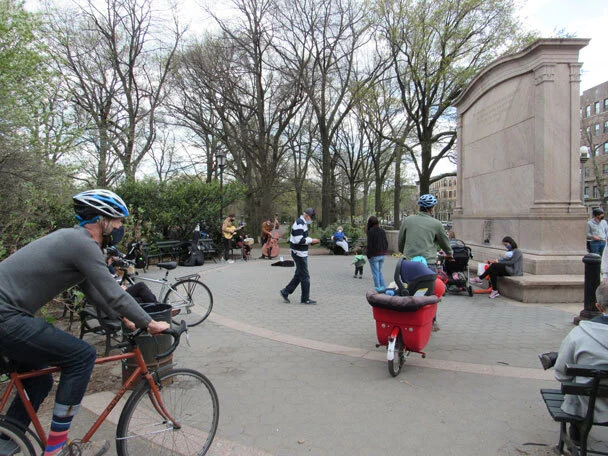
Living in Park Slope near a large public park was an exceptional luxury when public transportation was limited.
How did your experiences as a Fulbright Specialist in Prague deepen your understanding of urban culture?
Every city is unique and reveals itself in different ways to tourists as opposed to locals. It was easy for me to revisit Prague's historical Jewish spaces in 2018. However, the more sober Jewish Quarter, Josefov, I had visited in 1964 was not only very gentrified but featured a bustling touristic market where one could buy Golem shaped biscuits at the Golem Bakery. As with all Fulbright experiences, my modest contributions to faculty, students, and the public were returned to me four-fold.
As I have done in other venues, I gave a workshop on visual research. In return, one of the doctoral students, David Platil, gave me an off-the-over-beaten path tour to the see the remnants of informal housing for railroad workers and other fascinating sites in the multi-layered landscape of Palmovka. As to unexpected ethnic diversity in a Central European capital, my gracious host Zdenek Uherek, took me see Prague’s SAPA "Little Vietnam" market. I must also note that throughout my photo-walks in the city, I pay special attention to workers, most of whom are seldom noticed.
I was invited to Charles University for a workshop on “Diversity and Local Contexts: Adaptation and Heritage,” at the Institute of Sociological Sciences and World History sponsored by The Czech Division of the UNESCO-MOST Program. I gave a guest lecture on “Nations and Nationalism" and presented a visually enhanced lecture “Seeing the Image of Cities Change. Again.” to the Ernest Gellner Seminar. An important outcome of this project was the publication of Diversity and Local Contexts: Urban Space, Borders and Migration. Palgrave Macmillan (2017), which I co-edited with Zdenek Uherek.
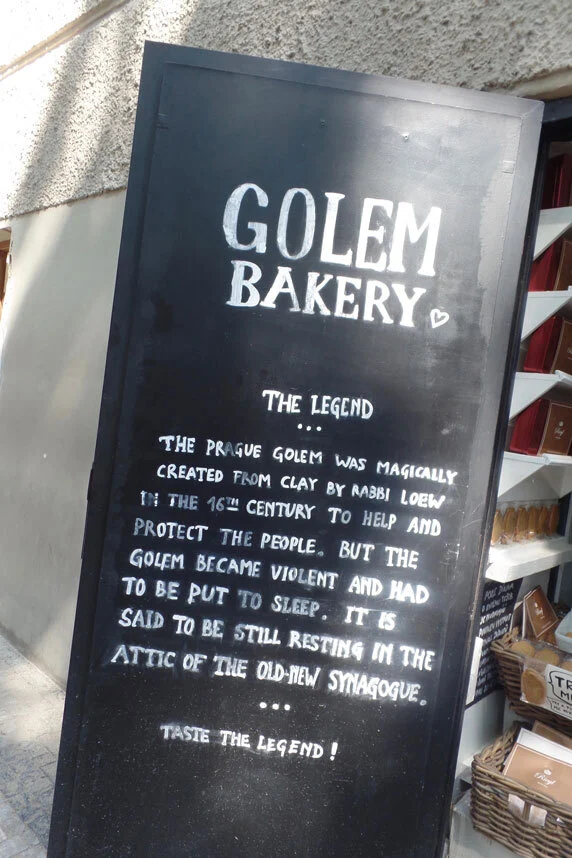
Surrounding the many significant Jewish landmarks in Josefov are many shops and restaurants catering to large number of tourists. I was especially intrigued by the Golem Bakery embedded among several less than reverent souvenir markets.
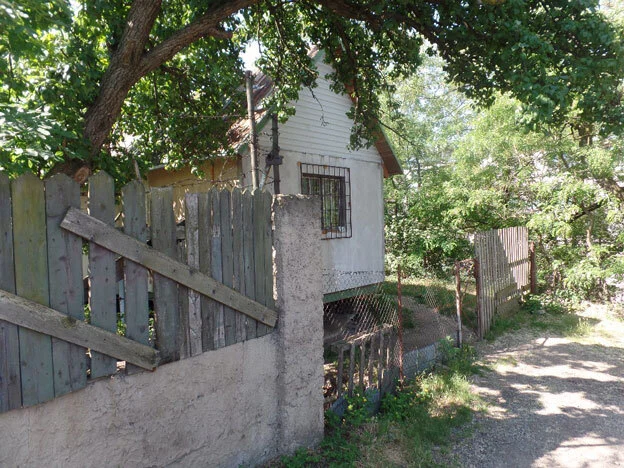
On a hill in Palmovka, workers building the railroads into Prague a century ago, established a community of informal houses.
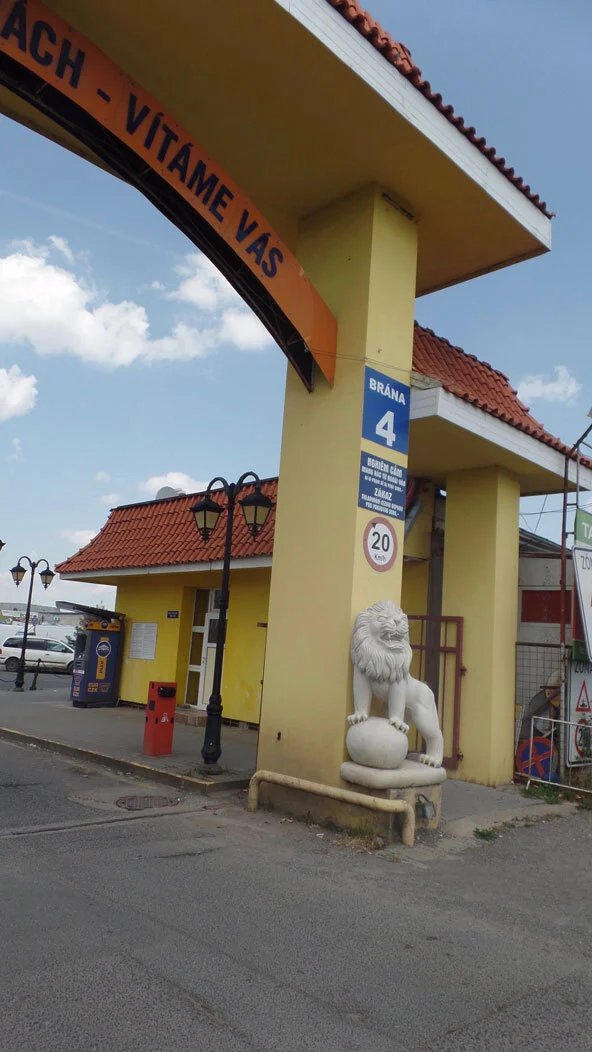
In and around the 86-acre SAPA market, often referred to as "Little Hanoi," is a large Vietnamese enclave. This is the colourful main entrance to restaurants, shops, and even a Buddhist temple.
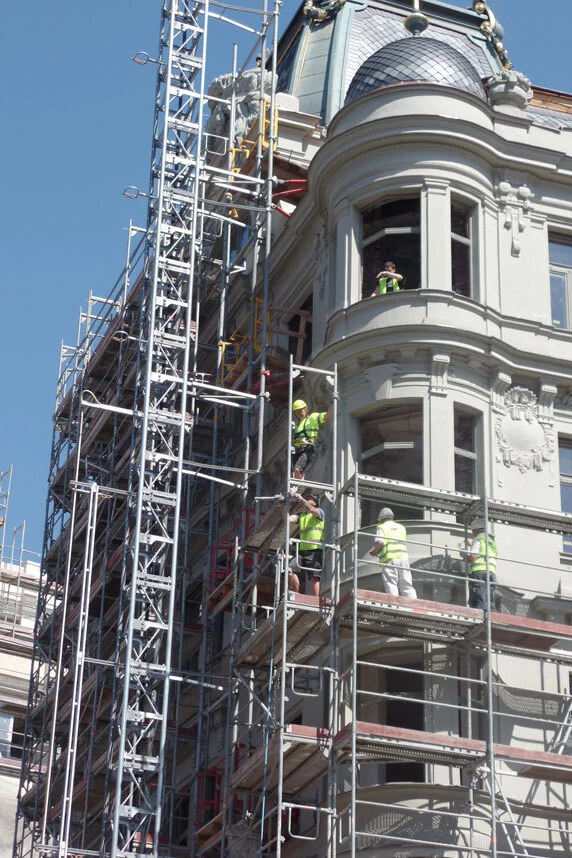
Prague has rapidly become a global city and as a result many of its once deteriorated central city buildings are being restored and renovated to meet rising demand for offices and apartments.
Your research – including COVID-19 in Brooklyn – makes significant use of photography to capture urban moments. What, for you, is the value of the photograph, and are there particular photographers that have influenced your own craft?
In cities around the world, I have photographed, what J.B. Jackson called "vernacular landscapes." Although photojournalists, documentary and street photographers have engaged in similar practices, as opposed to their aesthetic and artistic accomplishments, I connect my images to the social sciences. For Howard S. Becker the differences between “Visual Sociology, Documentary Photography, and Photojournalism" were "(Almost) All a Matter of Context.” While both artists and scientists use cameras to capture light in order to create images, our differences concern the goal of image-making. Although some of my photographs might be appreciated for their aesthetic values, it is accidental. Photographs, like text or numerical data, can be both documentation of an event as well as data to further explore. Over the decades, I have taken many photographs of the same "subjects" as did Jacob Riis, Dorothea Lange, Evans Walker, Camilo Vergara, Gordon Parks, and Garry Winogrand. However, mine have yet to be exhibited in an art gallery.
Here are a few street portrait photos that might have a foot in both art and science.
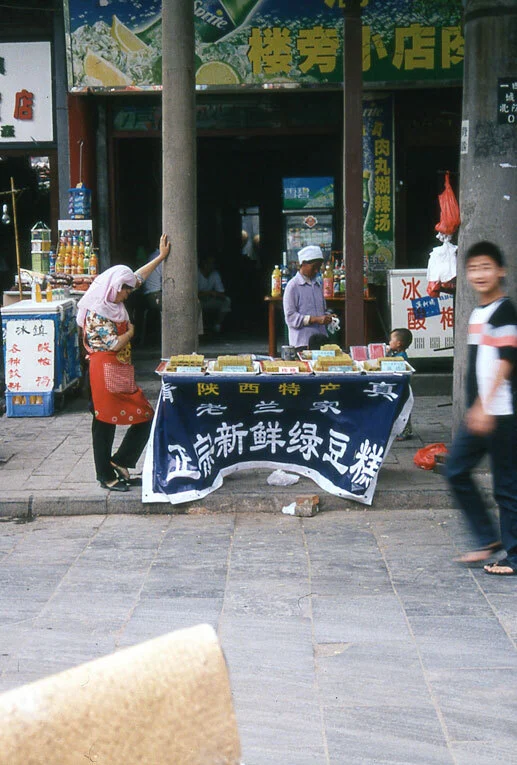
For more than a millennium, the Silk Road has brought visible Islamic influences to many cities in China. Here I caught a glimpse of a fascinating female street vender in Xi'an.
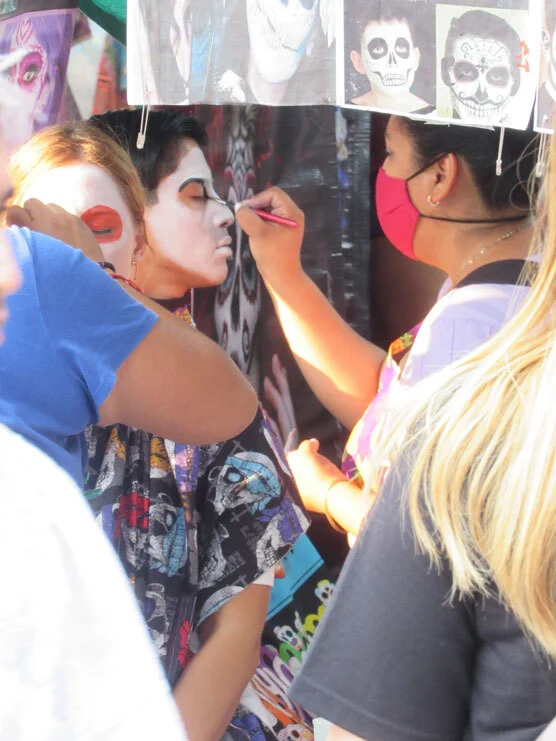
The Day of the Dead is a major holiday in Mexico. For three days the street and Park across from my hotel was filled with revellers of all ages. This an example of the many face-painting studios on the sidewalks.
About
Jerome Krase, Emeritus and Murray Koppelman Professor, Brooklyn College CUNY, BA Indiana University, PhD New York University is an activist-scholar who lectures, writes and photographs about global urban life and culture. Representative books include Seeing Cities Change (2017), and Gentrification around the World, Volumes 1 and 2 (2020) coedited with Judith N. DeSena. He co-edits Urbanities, is Visual Studies Honorary Editorial Board Member, President of the European Academy of Sciences of Ukraine, and is active in many American and International Sociological Associations, H-NET Humanities on Line, and the American Association for the Advancement of Science (Wikipedia).
Articles about Jerome's work:
“Visual Sociology of the Vernacular Urban Landscape: An Interview with Jerome Krase,” Les manières de faire vernaculaires: Vernacular Ways, Interfaces: Image, Text, Language, 44, 2020. With Jordi Ballesta and Eliane de Larminat. https://journals.openedition.org/interfaces/1437
“Storymaking and Photography: The Visual Essay and Migration,” in Visual Methods in Migration Studies edited by Karolina Nikielska-Sekula and Amandine Desille, Springer IMSCOE. 2021: 141-159. With Timothy Shortell. https://link.springer.com/content/pdf/10.1007%2F978-3-030-67608-7_8.pdf
All images in this article are credited to Jerry Krase.