
Snapshots presents Joseph Schmitt on 'Under a Zambian Tree'
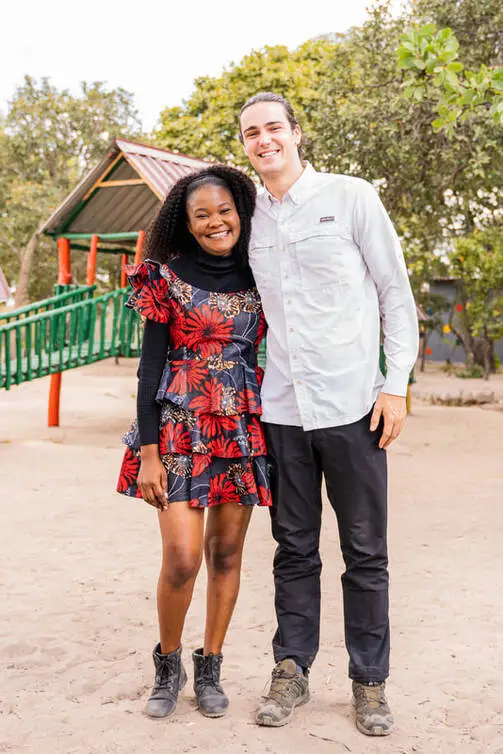
'Under a Zambian Tree' is a testament to Dora’s incredible resilience and tenacity. Readers will not only be inspired by Dora's story, but will finish reading feeling empowered to initiate positive change under their own "Zambian Tree."
Could you tell us a little about Dora Moono Nyambe and your new book, Under a Zambian Tree?
Under a Zambian Tree is the inspiring and emotional account of Dora Moono Nyambe's quest to educate and empower rural village children. Dora began her NGO, Footprints of Hope, without funding, a school building, or much of a plan. She was bolstered only by an unwavering belief 'that kindness should drive humanity and development.' Her goal was to prevent child marriages, reduce malnutrition and empower children through education. I met Dora just two years after she had taken a leap of faith and moved to Mapapa, a remote village, built a mud hut and began her journey.
Dora is widely recognizable as the ‘village tiktoker’. While working to establish the school, she began posting updates online via tiktok. Quickly people around the world began to take notice and her once small aspirations began to grow as donations and support began to trickle in. When I met Dora she had already amassed 3.4 million followers in January of 2022.
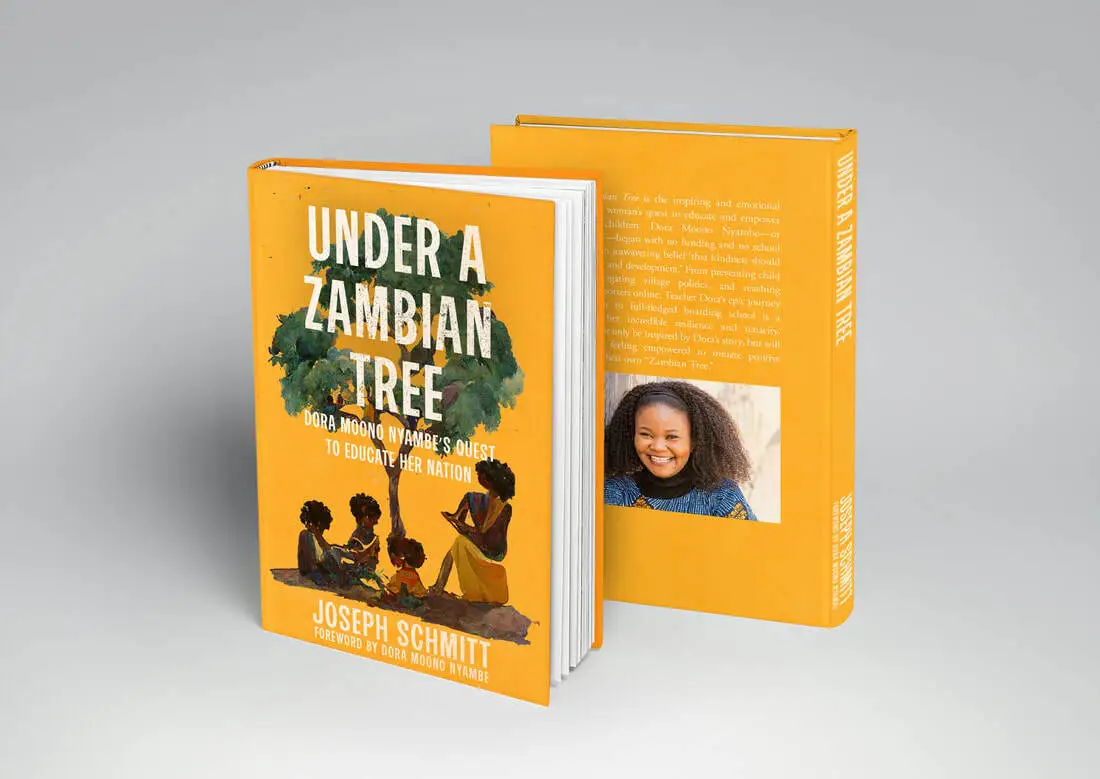
Under a Zambian Tree takes readers through an incredible journey. It shares intimate details of Dora’s past while grounding her work in the present timeline. As a writer my focus was to amplify Dora’s voice and share elements of her work and story that were overlooked and underserved online. I was drawn to her story because there were so many things I felt weren’t being communicated to people watching her journey from afar. Writing this book was an opportunity to drive incredible impact and become part of an amazing mission.
Under a Zambian Tree is a testament to Dora’s incredible resilience and tenacity. Readers will not only be inspired by Dora's story, but will finish reading feeling empowered to initiate positive change under their own "Zambian Tree."
How did your experiences as a Fulbright researcher in Zambia influence your development as a writer and as a researcher on ecotourism?
As a Fulbright researcher I had the unique opportunity to lead research in the remote Western Province of Zambia. My research titled “Perceived Economic Impacts of Ecotourism in Sioma Ngwezi National Park”, utilized a survey experiment to examine four key issues– ecotourism’s perceived impact on: local economic development, cost of living, revenue/benefit sharing principles and conservation efforts. Over the course of 2022, I conducted data collection for the study, 200 participants were surveyed and I conducted eight semi-structured interviews. The survey was available in three languages and accommodations were made for illiterate participants. The survey measured perception of local development, perception of economic opportunity & employment, and overall perception of ecotourism.
The surveys were administered to four communities, two that were within the boundaries of the National Park and two communities on the boundaries of the National Park. My research extends and expands research conducted in Cameroon on the perceived economic impact ecotourism has on rural communities. This study provided an in-depth look at the interaction between the development model goals and perceived benefits ecotourism actually provided to local people (Harilal & Tichaawa, 2020). A similar study on the perceived economic impact of ecotourism had never been completed in Zambia and more broadly in Southern Africa.
In writing Under a Zambian Tree my research greatly influenced my perspectives on Dora’s community and my overall outlook on the various levels of development within Zambia. Zambia is a hugely diverse country and without first hand experience of that I would’ve found it hard to fully appreciate the massive differences in education, language, wealth and social customs. My research provided me with greater visibility as to the important role that Zambian culture, history and politics played in Dora’s journey.
You’ve traveled widely through parts of North, Central and South America, Africa, and the Middle East. Is there a place that you’ve visited that you found particularly inspiring and/or beautiful, and why?
I’ve been extremely fortunate to have traveled to some truly breathtaking regions that are both ecologically and culturally diverse. One country that really stands out is Sudan. In 2020, a trusted Dutch colleague and I spent just over two weeks in Sudan. We crossed into the country through the northernmost border with Egypt on a cargo vehicle. At the time, the US did not have diplomatic relations with Sudan and it was deemed a ‘terrorist stronghold’. During the course of planning the trip and talking with trusted partners, we deemed that the risk was low and the opportunity to connect with Sudanese locals and learn about their culture and natural landscapes was worth it. During our 16 day journey we were met with some of the kindest and most incredible hosts. Military officials, local leaders and village teachers showed us extreme kindness and generosity. We explored abandoned ruins and slept in sand dunes at the foot of the Nubian pyramids. As an avid scuba diver, I enlisted the help of some locals and went diving 14 miles off the coast on a small fishing boat.
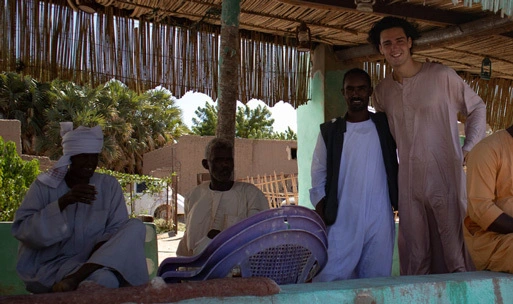
The trip also posed many challenges. As foreigners we were unable to access any banking and thus had to carry all of our money in cash when entering the country. Transportation was also a challenge and we covered long distances by hailing down strangers and hitchhiking. Over the course of our journey, we had many open discussions about social issues, culture and religion. In one small village, I met a man who had been displaced by the genocide in Darfur. Hearing him talk about his experience and the need he felt to share this with foreigners was extremely moving. I will forever be grateful to my colleague Noud Goosens, without whom, this expedition would not have been possible. Most importantly I am grateful to the Sudanese people, who took the time to share their stories, culture and kindness during our journey.
About Joseph
Joseph Schmitt is an American writer, ecotourism researcher, and expedition traveler. He was born and raised in Wisconsin before attending Northeastern University in Boston, Massachusetts. Joseph is the author of Under a Zambian Tree, a book inspired by Dora Moono Nyambe. Today, he continues to conduct research, write, and seek adventure.